Dive Brief:
- Anaergia and its project partners received approval from the California Public Utilities Commission for a renewable natural gas procurement contract with investor-owned utility Southwest Gas. It's the first operational project approved for the state's Biomethane Procurement Program established under SB 1440.
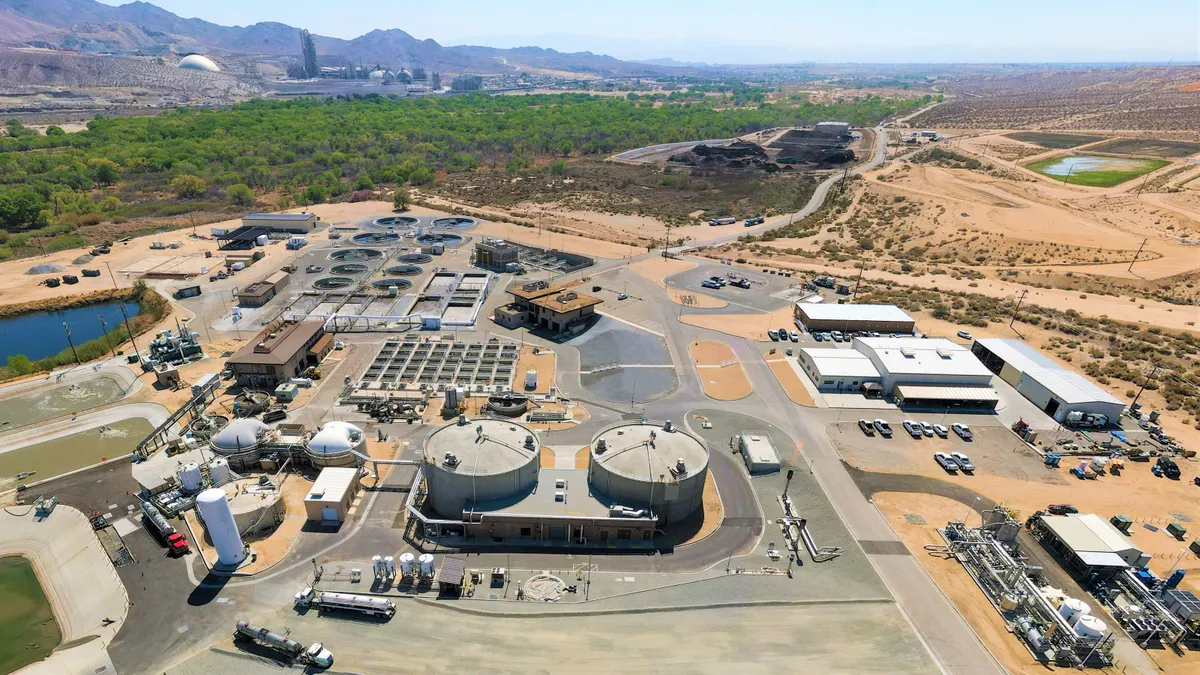
- The Anaergia project is a codigestion facility processing wastewater and organic waste at the Victor Valley Wastewater Reclamation Authority. It can handle up to 104,000 tons of diverted organic waste annually.
- SB 1440, passed in 2018, enabled the commission to set biomethane procurement targets for investor-owned utilities to support California's broader goal to reduce emissions of short-lived climate pollutants. In 2022, CPUC set an annual procurement target of 72.8 billion cubic feet of biomethane by 2030.
Dive Insight:
California is developing a variety of strategies to address the prevalence of short-lived climate pollutants, particularly methane. SB 1383, passed in 2016, addressed such pollutants by instructing regulators to restrict emissions from organic waste in landfills, among other strategies.
SB 1383 set targets for the state to send 75% less organic waste to landfills and recover 20% of unsold, still-edible food by 2025. The state has since blown past those targets, and subsequent laws and policy tweaks around compost procurement and other provisions have attempted to help the state meet them.
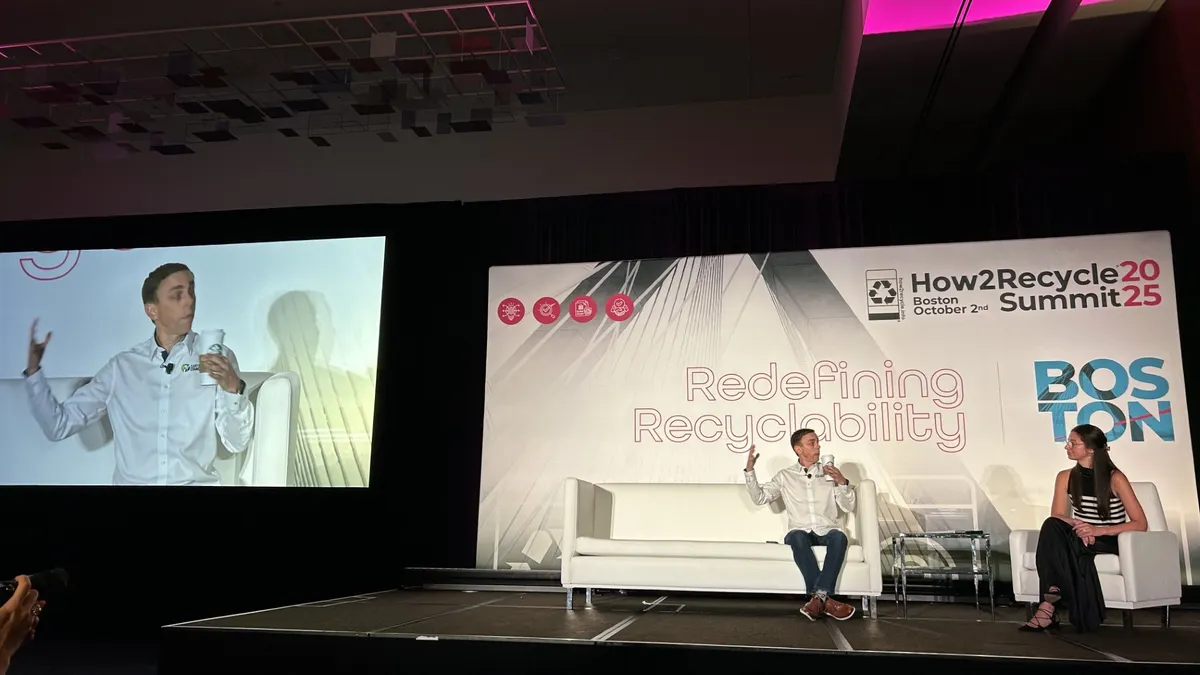
Local jurisdictions across the state have begun collecting separated organic waste from businesses and residents at the curb for processing. But the state is struggling to develop the capacity to manage the material, said Yaniv Scherson, chief operating officer of Anaergia.
The state's Biomethane Procurement Program will be a key tool in incentivizing organic processing infrastructure development, Scherson said. It follows similar programs in British Columbia and Quebec, which biogas groups have cited as key to developing projects in those Canadian provinces.
Organic Energy Solutions' digestion project involving Southern California Gas Co. became the first approved contract under the program in May 2025.
“It is really the lynchpin and the key to unlocking the success of anaerobic digester infrastructure in California,” Scherson said.
The economics of an anaerobic digester for food waste can be difficult to pencil out based solely on tipping fees, Scherson said. Anaergia has experience in this regard — the company's Rialto Bioenergy Facility, built to process organic waste from the Los Angeles area, filed for bankruptcy in 2023 amid the slow ramp of feedstock volumes. Anaergia sold the facility in 2024 and secured a contract to continue operating the facility for new owner Sevana Bioenergy as part of Anaergia’s new asset-light strategy.
But Scherson said feedstock levels for organic waste are improving as collections increase, and biogas companies now have an opportunity to secure favorable contracts with utilities to finance digestion projects.
Anaergia predicts that by 2035, as many as 55 facilities the size of the Victor Valley plant may need to be producing RNG in order to meet the procurement requirements in California. The company has made strides to grow its portfolio of such projects in the state in light of that growing demand.
Anaergia has also made progress improving its financial performance. In the third quarter of 2025, it reported positive adjusted earnings before income, taxes, depreciation and amortization for the first time in more than a year. CEO Assaf Onn told investors on the company’s last earnings call in November that Anaergia “is no longer a company in transition,” citing a growing revenue backlog as proof of customer confidence.
Scherson said the company’s financial performance continues to improve. Anaergia is set to hold its fourth quarter and full-year 2025 earnings call on Thursday.
Correction: A previous version of this article erroneously identified the first contract approved for California's SB 1440 Biomethane Procurement Program. Organic Energy Solutions' contract with Southern California Gas was the first.