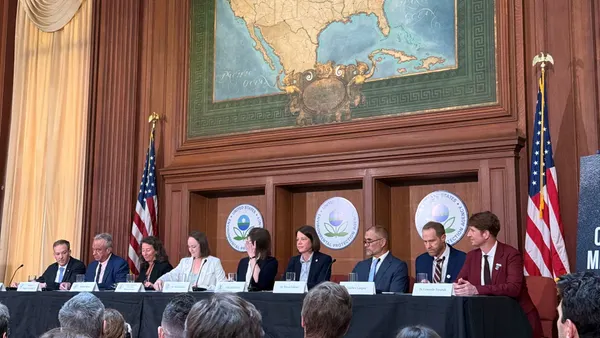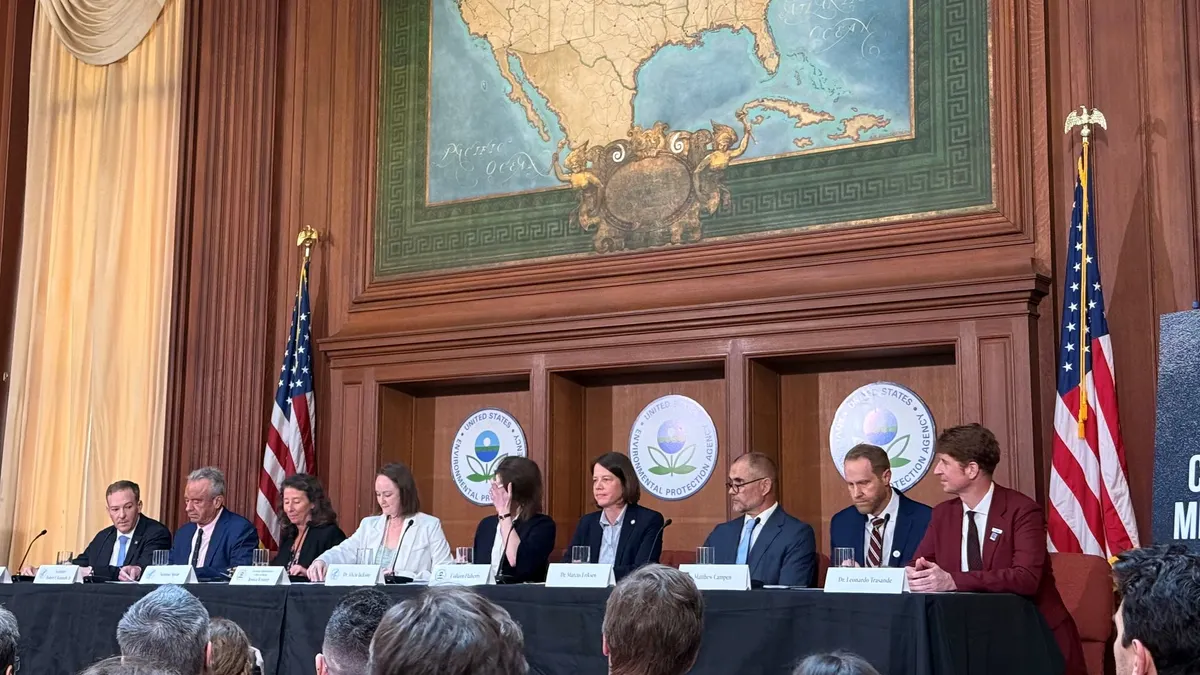
WASHINGTON, D.C. — The U.S. EPA proposed adding microplastics and certain pharmaceuticals to its Contaminant Candidate List during a Thursday event at EPA headquarters in Washington D.C. The draft The CCL-6 is now open for a 60-day public comment period.
This move could lead to future regulations of these substances in drinking water. The proposed list also names certain per- and polyfluoroalkyl substances and some “disinfection byproducts,” along with 75 other chemicals and nine microbes the agency says may be found in drinking water.
Though some of these substances, namely certain PFAS, have been on previous iterations of the CCL, it’s the first time microplastics and pharmaceuticals are listed as “priority contaminant groups.” That’s driven in part by public concerns over the health impacts, said EPA Administrator Lee Zeldin.
Adding substances to the CCL may guide EPA’s funding and research priorities, giving industries insight into how future regulations could form. Researchers and EPA officials who spoke during the Thursday event say the specific impact of microplastics in drinking water are not well understood, but current science indicates likely negative impacts to human health.
“For too long, Americans have been ignored as they sound the alarm about plastics in their drinking water,” Zeldin said during the event. He described the new CCL proposal as “a major step forward for drinking water” that would provide “regulators with the tools they need to act.”
The EPA proposal to add microplastics also aligns with a new $144 million microplastics research program helmed by the Advanced Research Projects Agency for Health, which is under the U.S. Department of Health and Human Services. The program, known as STOMP, or the Systematic Targeting of Microplastics, aims to identify and measure microplastics and develop ways to remove them from the human body.
HHS Secretary Robert F. Kennedy Jr. announced the program alongside Zeldin on Thursday, saying that Americans deserve better information about how microplastics affect their health.
“The science has not kept pace with the scale of exposure. We're now going to close that gap,” Kennedy said.
EPA and HHS see these concurrent actions as the “most comprehensive federal effort to date to understand and combat the risks posed by microplastics to public health.”
It’s unclear how potential future microplastics actions could affect waste industry operators. Yet changes to drinking water standards are generally relevant to the waste industry because many landfill operators send their leachate to water treatment facilities that are subject to such standards.
The last time the EPA updated the CCL was in 2022, when it expanded its focus on PFAS. That move aligned with the agency’s plan to later finalize drinking water regulations for certain PFAS in 2024.
Under the Trump administration, the EPA rolled back part of that drinking water standard and called for extending compliance timelines. The issue is part of an ongoing federal lawsuit brought by water utilities.
There has also been some public concern over impacts from pharmaceuticals, which can enter water supplies when humans excrete them or dump unused medications down the drain.
If pharmaceuticals are added to the CCL, states, tribes and local water treatment authorities could benefit from “a critical new tool to assess risk and take action to protect their communities,” said Jessica Kramer, assistant administrator of the EPA’s Office of Water. Kramer stressed that the CCL is not a regulation, but proposed benchmarks could help authorities make decisions on conducting additional water monitoring, “ensuring the health of their community.”