Dive Brief:
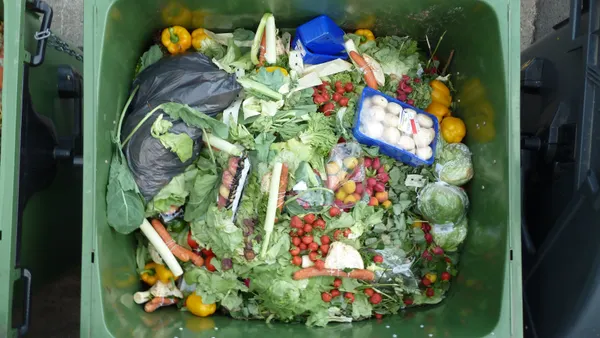
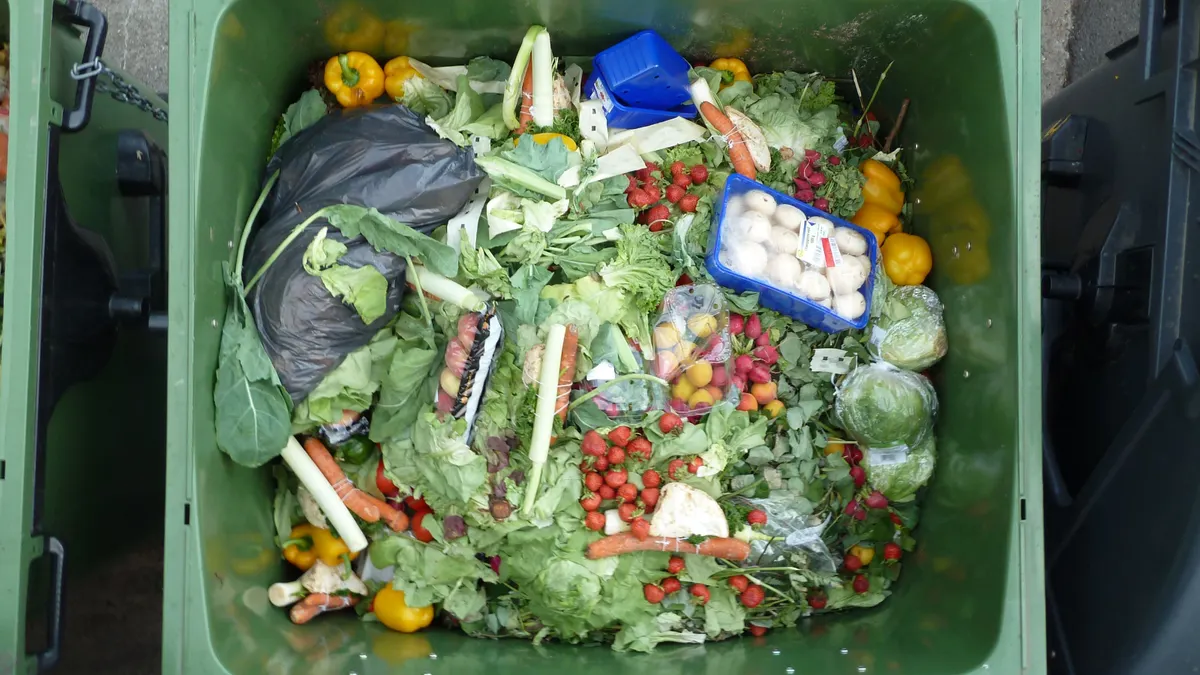
- Wisconsin residents sent more than 900,000 tons of food waste to landfills in 2024, representing about one-fifth of all landfilled waste in the state, according to a report from the Wisconsin Department of Natural Resources.
- The report was partially funded by a Solid Waste Infrastructure for Recycling Grant that the U.S. EPA awarded to the state in 2023. It builds on data collection and evaluation methods conducted for a previous statewide waste characterization study.
- Wisconsin is aiming to halve the amount of food waste it sends to landfills by 2030 based on 2020 levels, a goal shared by several other states around the country. The report highlights ways to improve food waste reduction infrastructure.
Dive Insight:
Interest in reducing food waste is on the rise in the U.S. for a variety of reasons, including addressing greenhouse gas emissions from landfills and preserving landfill capacity. The Trump administration has also acknowledged food waste reduction efforts in recent months as a means of reducing food insecurity.
Wisconsin generated about 3.05 million tons of surplus food in 2023, or 1,033 pounds per capita. That's compared to 73.9 million tons of surplus food generated nationally in the same year at a rate of 442 pounds per capita, according to data from food waste solutions nonprofit ReFed.
In Wisconsin, about 47% of food waste sent to landfills came from residential waste streams, followed by 41% from food service, 6% from manufacturing, 5% from retail locations and 2% from produce on farms.
The state also sent a lot of its food waste for land application, though — 1.4 million tons, or 44.4% of all food waste in the state, in 2023. That's compared to 14.6% of food waste sent to a landfill and 10.5% sent to anaerobic digestion, as Wisconsin's large agricultural industry enables the widespread use of land application. The state also reused 9.6% of its food waste as animal feed, such as spent brewer's grain and other food processing residuals.
The state has about 286 composting facilities, excluding some farm-based operations, about 30 of which can handle food scraps. In 2023, composters in Wisconsin handled about 23,630 cubic yards of food scraps and 10,585 cubic yards of food processing residuals.
The report's recommendations spanned multiple methods of addressing food waste, including prevention, donation and diversion to animal feed. It also recommended that food waste processing infrastructure like composters and anaerobic digesters should be prioritized over landfills.
To support those efforts, the report further recommended raising landfill tipping fees to make composting and anaerobic digestion more competitive. The report noted composters in particular complained that low landfill tipping fees limit the waste they receive.
To further support such processing facilities, the report also recommended boosting end markets by incentivizing the use of finished compost in public or state-funded projects and educating agricultural businesses on the benefits of finished compost. It also proposed reinstating the Wisconsin Recycling Market Development Board, an entity active in the 1990s and early 2000s, to provide financial incentives to entities that assist composters, and exploring a landfill food waste ban.
Regulators also recommended streamlining siting, zoning and permitting laws for processing infrastructure, an issue that composters have complained about in several states.
The report was prepared by HDR, which also consulted data from the EPA and ReFed. Wisconsin DNR is hosting a webinar to discuss its findings on Feb. 3.