New York City Mayor Zohran Mamdani's administration is eager to continue the containerization drive that his predecessor Eric Adams began four years ago. Starting with wheeled bins for small buildings and businesses before expanding to larger bins last year, the "trash revolution," as Adams called it, is remaking New York City's streets.
Yet Adams' administration did not set aside money in previous budgets to realize the ambitious plan to roll out big on-street containers for large buildings and schools, officials say. That task falls to new leadership at the Department of Sanitation and City Hall, which in addition to negotiating the budget with the city council must deal with transatlantic supply chains and questions about the best path forward.
“The lift is a bit heavier than we had anticipated,” Deputy Mayor of Operations Julia Kerson told Waste Dive. “Despite talking a lot about containerization, the resources and the planning work had not been put in place in the last administration.”
The city's containerization drive began in earnest in 2022, when the agency announced it would push back the set-out time for waste unless buildings bought trash containers. The agency subsequently contracted with bin manufacturer Otto and partnered with retailers to provide city-branded rolling bins. Those will become mandatory in June for residential buildings with one to nine units.
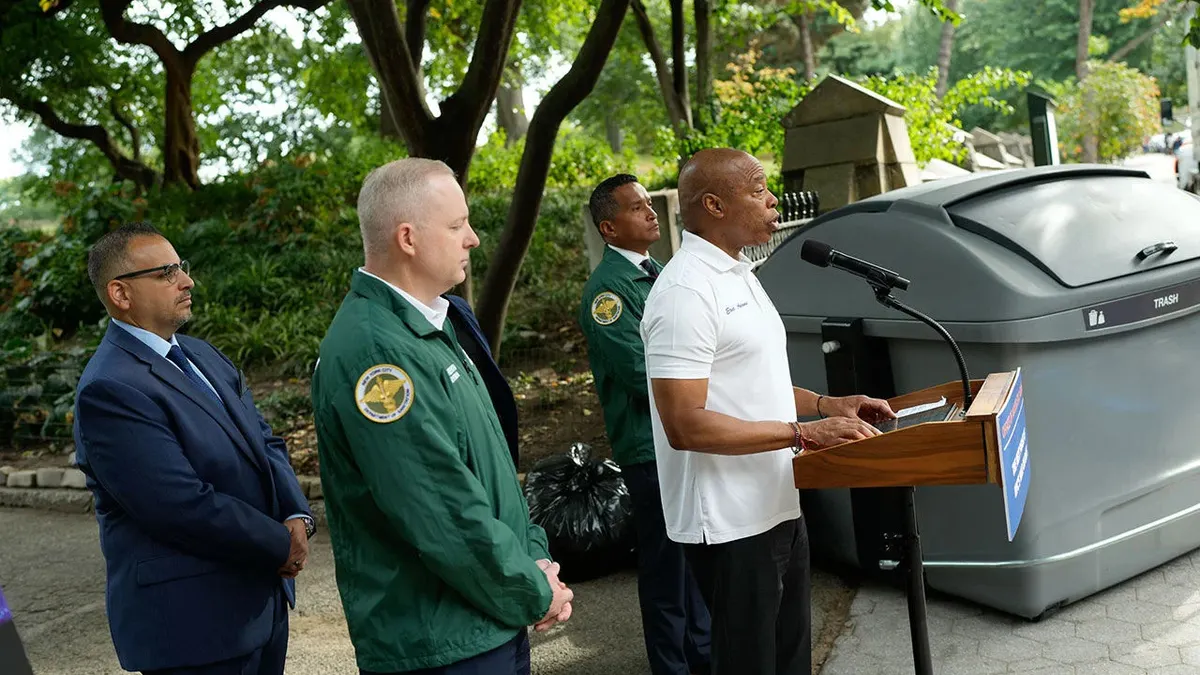
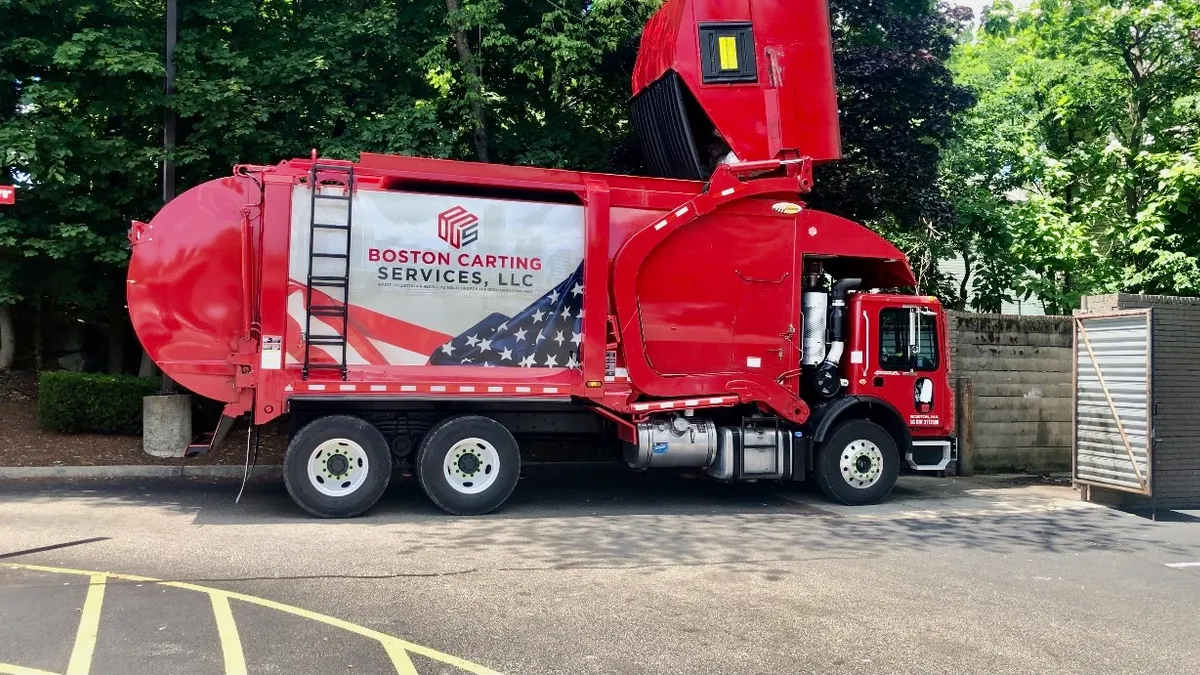
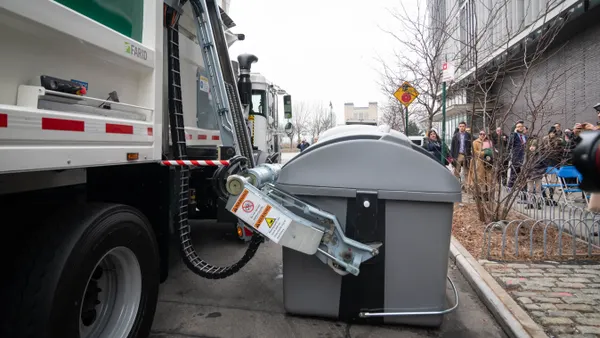
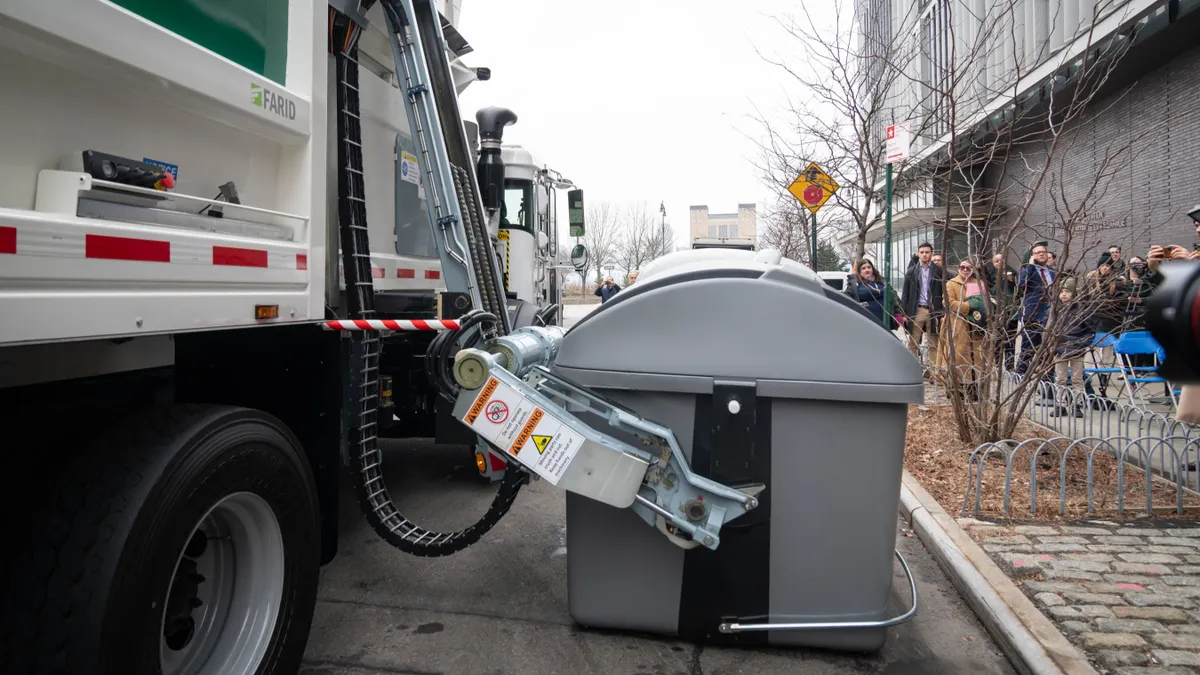
DSNY also procured "Empire Bins" from European manufacturer Contenur capable of holding up to four cubic yards of material, equivalent to about 45 plastic refuse bags, according to city documents. The department also worked with several manufacturers to acquire automated side-loading trucks capable of handling those bins.
Those were rolled out in a Manhattan community district last year, placed in parking spots in front of the buildings that used the containers. The area now has 1,100 Empire Bins serving large multifamily buildings and schools, with 16 trucks hauling the waste.
The containerization pilot was considered a success: The Adams administration said 311 calls reporting rats declined for eight straight months in 2025, and said feedback from residents was positive. City council member Shaun Abreu, who represented the district and was chair of the city's sanitation committee in the last council session, previously said he was pleased with the results.
Following that response, officials announced in September that they would expand the large-bin containerization rollout to one Brooklyn area, referred to as community district two. That program started at select schools in the borough, but was meant to grow to encompass large and midsized residential buildings. The question of how to expand that task was left to the Mamdani administration, which began Jan. 1.
Bins on the ground
Despite eagerness to see the program continue, city officials say more time and money are needed to complete the rollout of Empire Bins in Brooklyn community district two, let alone the rest of the city.
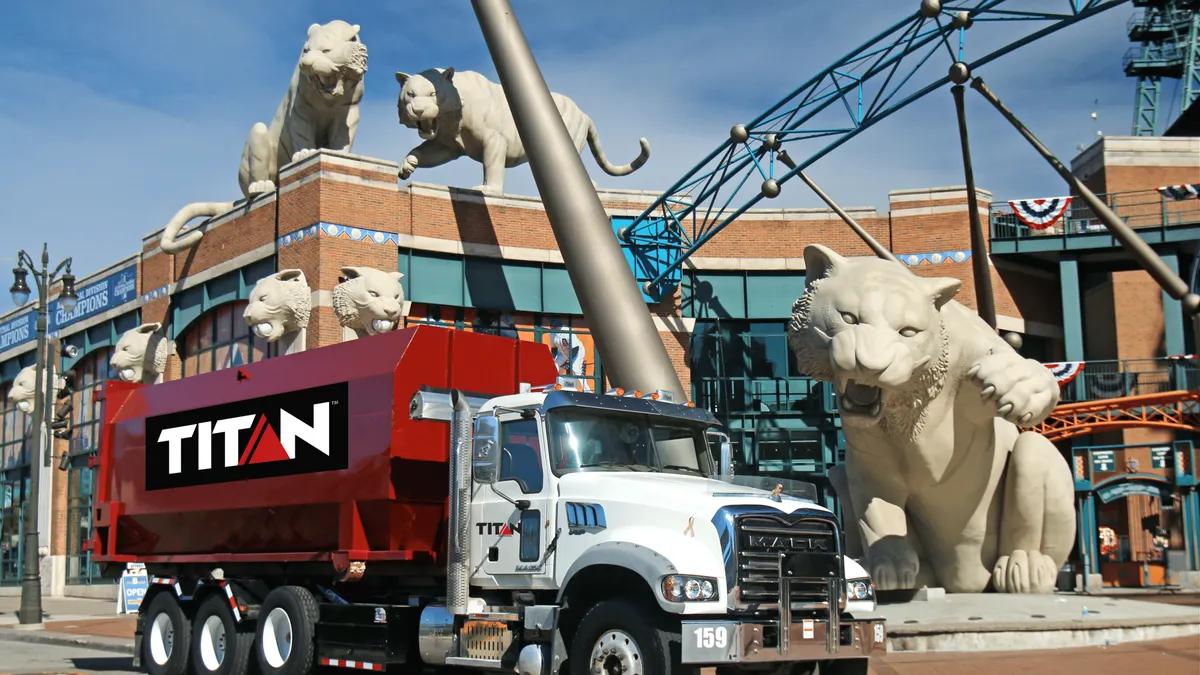
DSNY recently renegotiated its contracts for the trucks capable of lifting the bins, and struck a $25 million deal with Gabrielli disclosed in January. The dealer will integrate a chassis from Mack Trucks and a body and arm developed by Farid, which is based in Italy.
The department also must procure more bins from Contenur. But it won’t know exactly how many are needed until it reaches out to owners of midsized residential buildings that have the option of using Empire bins or a collection of wheeled bins. The Empire bins, too, are currently manufactured in Europe.
“These are brand new containers and trucks that have never been used in the United States before. So we're having to look at supply chains that cross the Atlantic Ocean,” DSNY Commissioner Greg Anderson, who was appointed to his role on March 18, told Waste Dive.
DSNY expects to begin outreach to building owners this summer. When it’s complete, the city expects to place more than 1,000 bins served by 19 trucks in the Brooklyn pilot area.
In the early stages of containerization, the city will have to procure new trucks for each new district that gets the Empire bins. But over time, Anderson expects the department to identify efficiencies that lower the amount of new trucks it needs for each expansion. Manufacturing of the Empire Bins could also shift to the United States if the department begins ordering enough, according to department officials.
Containerization has come with its share of critics. Some have voiced frustration with Otto, the manufacturer of the wheeled bins, which shut down operations late last year in the New York area after a dispute over the prices it could charge.
During a city council sanitation committee hearing on Monday, Anderson defended the department’s work to make wheeled bins available. They are available at Home Depot, the department says, which has also struck a partnership allowing residents to have their wheeled bin delivered to them from the retailer via Uber, DoorDash and Instacart.
The agency is also open to allowing smaller buildings to share Empire bins, something it has declined to commit to in years past. Officials did not say where or when such a pilot could take place.
Negotiating a budget
The city is in the midst of negotiating the budget for fiscal year 2027, which begins July 1. While the process can be contentious, lawmakers have been broadly supportive of containerization, which will form part of DSNY’s nearly $2 billion budget.
Anderson declined to say exactly how much money the department is requesting for containerization in this year’s budget, citing active negotiations.
The city council passed Local Law 180 last year that lays out a framework for future containerization efforts largely in line with DSNY’s own plans. It allows the department to collect fees from buildings that use the Empire bins, but does not set aside additional funding for containerization.
Council Member Justin Sanchez, who replaced Abreu as chair of the sanitation committee this year, also expressed support for containerization during Monday’s hearing. He told Anderson he was eager to see the Empire bins in his Bronx district. A spokesman for council speaker Julie Menin also told Streetsblog last month that containerization is “critical to improving quality of life across the city.”
DSNY has not said when it will roll out bins in another district, but Commissioner Anderson said it could be next year if the department gets the funding it needs. He also said DSNY was in touch with Sanchez’s office about ways to roll out containerization in his district.
“We're in Manhattan. We're moving to Brooklyn. I think the Bronx very well could be next on the list,” Anderson said.
A report released by the city last year notes containerization could take until at least 2032 to be fully implemented. Officials at DSNY declined to commit to a timeline, but Anderson said the department is looking to “get into the weeds, plan what this program looks like, and then actually achieve it in relatively short order.”