Dive Brief:
- Oregon lawmakers recently passed HB 4144, requiring producers of certain batteries or battery-containing products to join a responsibility organization and carry out an extended producer responsibility program.
- Under the bill, the EPR program would start by July 1, 2029. The first PRO plan would be due to the state’s Department of Environmental Quality by Sept. 1, 2028.
- Of the more than two dozen groups that submitted testimony, only two opposed the bill. Many haulers, recyclers and local governments supported it.
Dive Insight:
The bill aims to address an estimated 1.4 million pounds of single-use and rechargeable batteries disposed of in Oregon each year. It passed the Oregon State Senate just one day before the legislature adjourned and is now set to head to the governor’s desk.
The bill passed the House on Feb. 27 and passed the Senate on March 5. In 2025, a similar bill passed out of committee but did not cross the finish line in time.
HB 4144 would create an EPR program that covers portable and medium-format batteries, meaning rechargeable batteries that weigh up to 25 pounds and primary batteries that weigh up to 25 pounds.
It would exclude devices covered under the state’s existing electronics recycling program, as well as batteries in medical devices that are not marketed to consumers for personal use and batteries that are not intended to be removed from products.
The PRO would be required to submit an annual report, provide consumer education, and create “convenient and equitable service” throughout this state, meaning that 95% of residents are within 15 miles of a collection site.
In addition, the PRO would have to cover the costs of collecting, storing, managing and transporting covered batteries for collection sites, including creating agreements with “all willing transfer stations, landfills, household hazardous waste facilities and material recovery facilities” that want to be collection sites.
The membership fees the PRO sets are allowed to have elements of ecomodulation, the bill text noted, such as incentivizing covered producers to design for reuse and recycling or include recycled content in batteries, and discouraging “the use of materials that increase system costs.”
Under the bill, the state DEQ also must study other battery EPR programs and research from other states — such as Illinois, Vermont and Washington — and report to the legislature by May 30, 2028, on whether additional battery types should be regulated.
DEQ anticipates hiring a program analyst to manage the program.
Of the 25 submitted testimonies, only two groups opposed HB 4144: the Motorcycle Industry Council and Redwood Materials.
Redwood Materials, which recycles batteries, said it was concerned that “the legislation as drafted does not adequately account for battery collection and recycling services already being provided by trusted and experienced operators such as Redwood Materials.”
It suggested amendments to expand the definition of “battery producer responsibility organization” to include battery recyclers, allowing for multiple PROs, allowing for independent collection of batteries outside of the PRO, and requiring the PRO to coordinate with recyclers.
Industry stakeholders that supported HB 4144 directly or through trade groups included Recology, Republic Services, Waste Connections subsidiary Rogue Waste, WM and others. The bill was backed by the Oregon Refuse & Recycling Association, Association of Oregon Recyclers and several local governments, as well as advocacy groups such as the Oregon Public Interest Research Group and Beyond Toxics.
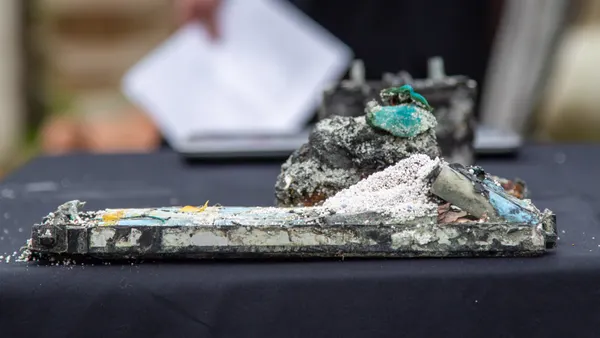
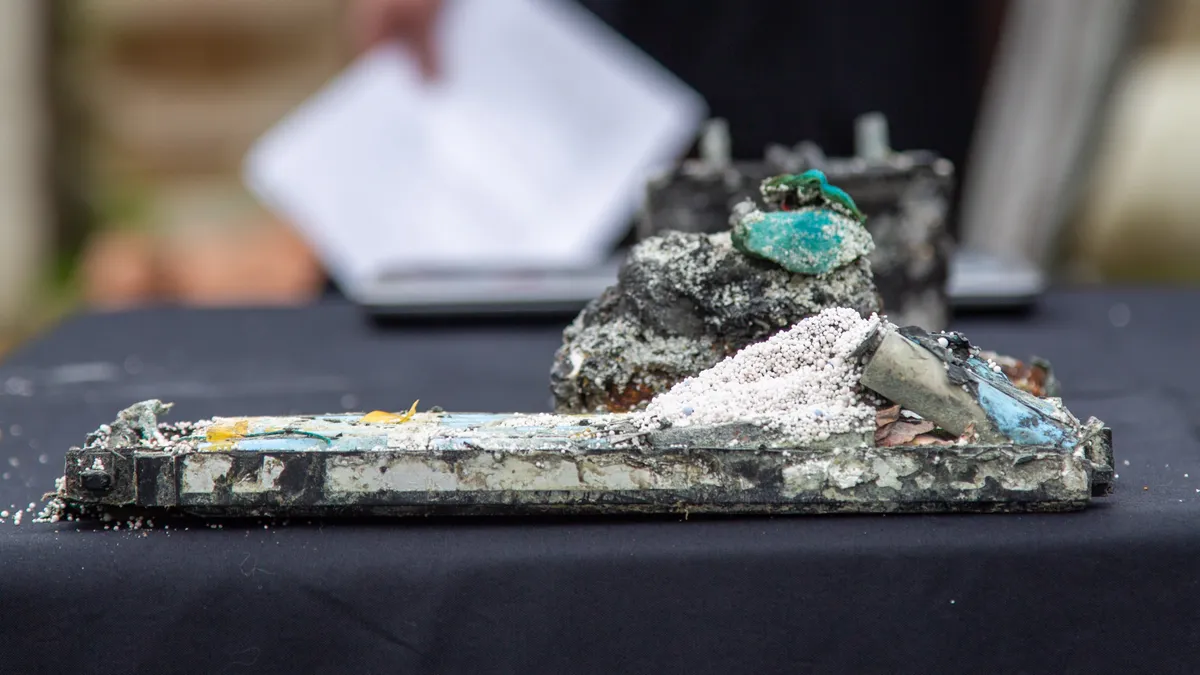
ORRA called the bill “crucial to addressing battery-caused fires that are putting communities, our customers, garbage and recycling workers, and public and private infrastructure at risk.”
The association represents over 90 solid waste management companies, including haulers and recycling operators.
Rogue noted that battery-caused fires occur an average of once a week at some facilities.
“We are particularly sensitive to the risks and threats of wildfire in and around our southern Oregon communities, and our trucks operate on routes daily throughout these communities,” Rogue’s testimony noted. “Just last year, a catastrophic battery-ignited garbage collection truck fire here in southern Oregon came perilously close to turning into a wildfire on its route in Jackson County.”
Recology estimated that more than 5,000 fires occur annually at recycling facilities in the U.S. and cited batteries as a likely culprit in many of those fires.
“Recology has experienced this risk firsthand at many of our Oregon locations, including 58 battery-related fires at the Metro transfer stations, which we operate, in the last 12 months alone,” its testimony added. “HB 4144 offers the solution Oregon urgently needs.”
Rogue pointed out that Colorado and Nebraska passed similar legislation in 2025, meaning that 14 states now have laws that address battery-caused fires in some way. Florida, Iowa, Indiana, Missouri, New Hampshire and Wisconsin are among other states considering similar bills this year.