Dive Brief:
- The PET recycling system in the United States is facing a prolonged period of instability that needs quick intervention in order to correct course, said speakers during a webinar from The Recycling Partnership on Thursday.
- Recent reclaimer closures have reduced domestic recycled PET capacity by about 25%, speakers said, and rPET imports now account for about 25% of the market, according to data from NAPCOR. Meanwhile, upcoming extended producer responsibility laws are designed to funnel more recycled PET into the system, but the systems for turning the material into new products is shrinking.
- Stabilizing and growing rPET markets will need a range of remedies, including establishing long-term contracts with brands, setting mandated recycled content laws in more states, and investing in alternate strategies like reuse and refill, said speakers from APR, Primo Brands, NAPCOR and the San Mateo County, California sustainability department.
Dive Insight:
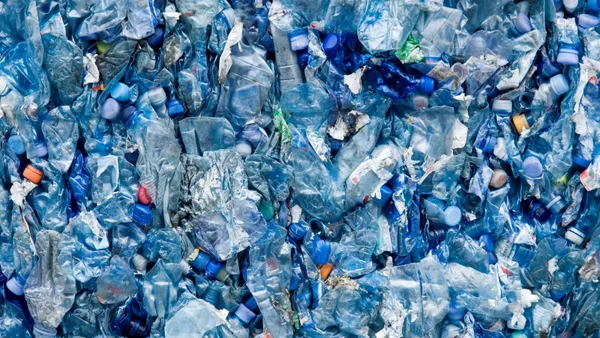
Recycled PET markets have faced layers of challenges in the past year, driven by weakened demand for domestic material coupled with increased imports of cheaper recycled resin from overseas.
These conditions have led to the closure or partial closure of five of the 30 major PET recyclers in the country, said Keefe Harrison, CEO of The Recycling Partnership. Those closures included Alpek’s Fayetteville, North Carolina, facility in July. rPlanet Earth, which closed in California in September and Phoenix Technologies’ Ohio facility, which closed in December. Another of Alpek’s PET facilities in Pennsylvania closed in January.
PET bale prices are “as cheap as it's ever been,” said Alistair Carmichael, program director at NAPCOR. “Over 20 years ago we were at these levels.”
At the same time, operating costs to process that material have gone up “tremendously,” with no major signs that rPET prices will recover significantly. In January, prices for curbside materials on both the East and West Coasts, along with West Coast bottle deposit bales, were still “not moving,” he said.
Meanwhile, some brands have been reducing or revising their sustainability commitments and recycled content initiatives, or extended the timelines to meet such goals, which adds to the chaotic demand environment, speakers said.
Establishing stable partnerships between brands, recyclers and reclaimers is an important way to maintain supply of recycled materials, said Molly Laverty, director of sustainability reporting and engagement for Primo Brands. The best way to do that, she said, is by inking long-term contracts for a high-quality supply of material.
Primo Brands is known for its bottled water and bottled beverage portfolio. Primo Brands aims for 50% of its beverage packaging to be made from recycled or renewable materials by 2035, which it says would eliminate about 1.5 billion pounds of virgin plastic.
“For us, looking at long-term contracts with suppliers is really important so that we don't lose access to the rPET supply in what's becoming a very competitive market,” she said. Reclaimer shutdowns have tightened supply further, she said.
Brands are also facing an increasingly complex global supply chain for their materials.
“The global supply chain is very interconnected, so even resin that is made or pelletized domestically could be relying on imported feedstock,” Laverty explained. “That introduces a level of compliance complexity for procurement and for traceability. Making public claims about where you're sourcing your rPET from is becoming more and more complex as we're seeing the market and the dynamic shift.”
High-quality recycled commodities are more important than ever, speakers added. When recycled content quality isn’t consistent, it can lead to problems with bottle production like holes and other quality control issues, she said.
That’s why MRF operators need to continue to focus on quality materials while also weathering market conditions, said Christopher Slafter, senior sustainability specialist with the sustainability department of San Mateo County, California.
“Success depends on market stability, right? And market stability depends on the material quality and contamination levels,” he said.
Kate Eagles, program director of policy and markets at the Association of Plastic Recyclers, added that policy updates are also a critical piece of the puzzle, particularly around mandatory recycled content laws. There are currently five states that require recycled PET in beverage containers, a key market driver for the material, she said.
“We really need to support our U.S. and North American systems, and that may include contracts. Anything that establishes commitment is important,” she added.
But not all recycled content policies are created equal. Some companies have started sourcing imported recycled PET to meet their commitments, which doesn’t help stabilize the domestic market, she said. It’s trend that became more apparent between 2022 and 2024, when recycled PET imports rose by 65%, according to APR. Figuring out ways to meet brand demand with domestic supply is a critical piece of the puzzle, she said.
Another factor is that recycled content mandates typically include penalties for brands that don’t comply, but “we hear from some [APR] members that some brands just pay the fines and don’t buy the recycled PET,” said Eagles. Policy adjustments that establish higher penalties could help, she added.
There’s another major factor that is speeding up the timetable to correct domestic PET supply chains and markets: the implementation of new EPR for packaging laws, now passed in seven states, Harrison said.
EPR programs are expected to generate funding that MRFs could use to upgrade equipment and processes, leading to higher quality. Yet these EPR programs are only designed to get material out of people’s homes and into MRFs, but MRFs still need reliable end markets to sell the material into.
“This isn’t an issue to figure it out over the next year and a half. This is a matter of, ‘let's move this right now,’” Harrison said.
Public trust is a less talked-about element of the process, Slafter added. Downstream challenges such as the diminishing value of PET bales and dwindling markets “go hand in hand” with the public’s perception of recycling as either a reliable service that turns materials into new products or a system that is overtaxed, sending plastic to landfills, he said. Building stronger recycling systems and communicating effectively with the public is an ongoing challenge, but a necessary step in building the success of PET markets, he said.
At the same time, Slafter said, the recycling industry must also turn its focus to complimentary, parallel solutions.
“We need to also advocate for reuse systems,” he said. “If we're reusing items instead of using single use items, that we're not creating material that needs to be managed, and if we're not having to manage as much material.”