Dive Brief:
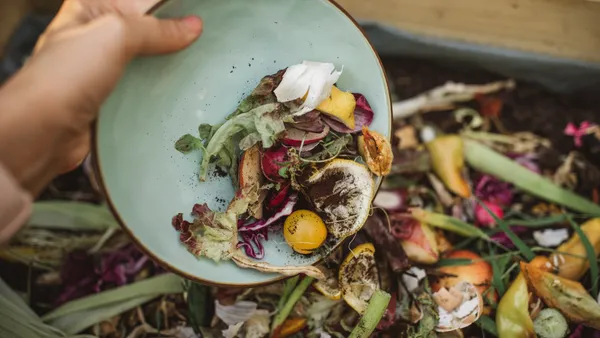
- Surplus food generation in the United States declined 2.2% in 2024 from the previous year to about 70 million tons, ending a post-pandemic trend of rising food waste, according to Refed’s U.S. Food Waste Report. Surplus food includes all food that goes unused by a business uneaten at homes or restaurants.
- The food waste solutions nonprofit released the latest edition of its annual report on Tuesday. It studied food waste across the supply chain, from production to residential disposal. About 85% of the surplus food generated was wasted, per Refed, while the rest went to donation, livestock feed or industrial uses.
- The reduction in overall surplus food generation, which equates to a 3.7% decrease in food waste per capita, was driven in part by a nearly 950,000-ton reduction in residential food waste. Refed noted a combination of supportive laws and growth in spending on solutions may be moving the nation past “peak food waste.”
Dive Insight:
The amount of surplus food generated across the supply chain reached a record high in 2019 at 74.6 million tons. That dropped steeply to 56.4 million tons in 2020 as the pandemic changed consumer behavior, but rose annually before reaching 71.6 million tons in 2023.
There’s still plenty of room to capture and divert more food waste, the nonprofit noted. That 70 million tons in 2024 is about 29% of the total U.S. food supply. The residential sector still generated roughly a third of surplus food at home, while farms generated 24.2%, manufacturers generated 18.8%, food service generated 17.9% and retail generated 5.7%.
The public and private sector are investing in solutions to capture and repurpose surplus food, preventing its disposal. Refed reported overall funding for solutions rose 6% in 2025 over 2024. That was despite a decline in federal funding, as the Trump administration canceled Inflation Reduction Act grants that would have gone to composters and other food waste solutions. The private sector upped its commitment to the issue by 16%, more than accounting for the lost funding, according to Refed.
The policy environment for reducing food loss and waste remains mixed. The U.S. EPA announced its Feed It Onward Initiative last year that would purportedly rescue food and donate it to military families, but has released few updates on the program since it was announced in September. Meanwhile, Trump's latest budget proposal took aim at supportive programs and called out at least one grant for a food recovery hub in Massachusetts as wasteful spending.
Opportunities continued to arise at the state level, though, with 24 supportive bills passed in 2025. Maine became the 12th state to pass a food waste diversion requirement, which kicks in July 1, 2030. Massachusetts also released a report finding positive results from its own food waste diversion regulation, and regulators there began publicly exploring a residential diversion requirement on par with California's SB 1383.
Refed has also worked with corporate partners to lower the amount of food they waste. In February, the U.S. Food Waste Pact, a voluntary partnership among food businesses organized by Refed, reported progress in wasted food rates. Yet challenges remain — about 85% of surplus food generated in the United States still goes to disposal.
As concerns about rising grocery costs and shrinking disposal capacity continue, policymakers may be more amenable to policy that will reduce food waste, Dana Gunders, president of Refed, said in a statement accompanying the U.S. Food Waste Report. She also noted C-suites are increasingly understanding that food waste reduction can make a material impact on their bottom line.
“This is an opportune moment to focus on wasting less food,” Gunders said. “The wind is at our backs, and it’s time to step on the gas.”