This is the latest installment in Waste Dive’s Biogas Monthly series.
The U.S. Department of the Treasury issued draft language this week guiding implementation of the Section 45Z tax credit, also known as the Clean Fuel Production Tax Credit. The credit provides a benefit to facilities producing alternative fuels such as renewable natural gas. It was created by the Inflation Reduction Act in 2022 and was an unlikely beneficiary of last year’s One Big Beautiful Bill Act, which extended the credit for an additional two years.
Biogas groups praised the Treasury department for releasing credit language this week. Developers have waited years for final guidance and are unlikely to claim the credit unless they're sure they qualify, said Patrick Serfass, executive director of the American Biogas Council. In a statement this week, he said Treasury’s guidance is a first step toward activating "hundreds of millions of dollars of private capital."
"There is room for improvement in the proposal and in related policies, but the most important thing the Trump administration can do is move this process forward," Serfass said.
Both ABC and the RNG Coalition submitted comments to the Treasury department last year concerning the guidance, and they're still waiting for a response on some suggestions.
This is not the first time the department has issued guidance for the tax credit. It did so last year in the final days of the Biden administration, only to have the credit’s statutory language altered by the One Big Beautiful Bill Act on July 4, 2025.
The tax credit could also be held up by work in another federal agency. The U.S. Department of Energy has yet to update the framework it uses to calculate life-cycle emissions for animal manure-derived feedstocks. That calculation is important, as it’s used to determine the amount of credit a project producing RNG can receive.
The new statutory language may also affect projects developing food waste-derived fuels, according to the RNG Coalition. Biofuels groups also say Treasury still must refine understanding of several key terms.
"The Treasury Department must ensure a flexible, practical program that serves to help unleash U.S. RNG and renewable gas-derived fuels, while also supporting local and rural economies," Geoffrey Dietz, senior director of federal government affairs at the RNG Coalition said in a statement.
Biofuels groups praised OBBBA when it was signed, but they are still waiting for its provisions to be carried out so they can know the level of benefit they can expect to reap from the 45Z tax credit. They’re hoping to gain that certainty soon.
Below is a selection of biogas industry highlights from January.
Waga Energy logs multiple project wins
Waga Energy, which was recently acquired by private equity firm EQT Infrastructure, has continued its busy project pace to start the new year.
The French company announced it received a 15 million Canadian dollar financial aid package from Quebec's Electrification and Climate Change Fund to begin work on a landfill gas project in Hébertville-Station. Once completed, the facility is expected to produce up to 188,000 mmBtus per year.
The landfill is run by the regional waste management authority of Lac-Saint-Jean. The project is in line with Quebec's 2030 Green Economy Plan, which seeks to incorporate 10% RNG into the province's gas grid by 2030.
Waga also announced an agreement with Hillsborough County, Florida, to build, own and operate a landfill-gas-to-RNG facility at the Southeast County Landfill in Lithia. The landfill is owned by the county and operated by WM. Under a 20-year contract, the facility is expected to deliver more than 610,000 mmBtus of RNG annually.
The company also struck an agreement with Lane County, Oregon, and the Emerald People's Utility District to upgrade a landfill-gas-to-energy facility to produce RNG. Waga will build, own and operate the facility at the county-owned and operated Short Mountain Landfill in Eugene. The contract runs for 25 years, and the facility is expected to produce about 407,000 mmBtus of RNG annually.
Global NRG to build out waste diversion system
The Ulster County Resource Recovery Agency in New York has selected Global NRG Renewables to develop a waste diversion project that includes an anaerobic digestion facility that will produce RNG, Hudson Valley One reported.
The county produces about 100,000 tons of municipal solid waste annually, and currently sends much of it to Waste Connections’ Seneca Meadows Landfill, which some locals have attempted to shut down. Global NRG intends to build a mixed waste MRF and use thermal hydrolysis to separate out organic waste and break it down ahead of digestion.
The county anticipates spending at least $100 million on the project. It has set a goal to divert 90% of its waste from landfills and incinerators by 2050, and anticipates the project will help it meet that goal.
South Jersey Industries employee to helm on-farm digester company
Christopher J. Pino is set to become CEO of private equity-backed BioTown Biogas after spending nearly 15 years at South Jersey Industries. Pino was most recently vice president of strategy and development for SJI, which has commissioned multiple RNG projects in recent years.
Green Rock Energy Partners invested in Biotown Ag in 2021, its first acquisition. It then spun off BioTown's anaerobic digestion business to form BioTown Biogas, which started up its on-farm anaerobic digester in 2023.
The digester is among the largest of its kind on farms in the U.S., processing 500,000 gallons of manure per day from five farms, according to a 2023 release. The facility, located in Reynolds, Indiana, is powered by the biogas it processes, and it also injects RNG into the grid.
BioTown Biogas did not respond to a request for comment on the company’s future plans.
Viridi Energy marks first tax credit sale
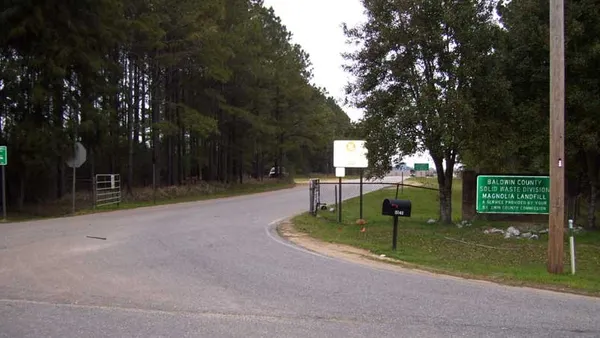
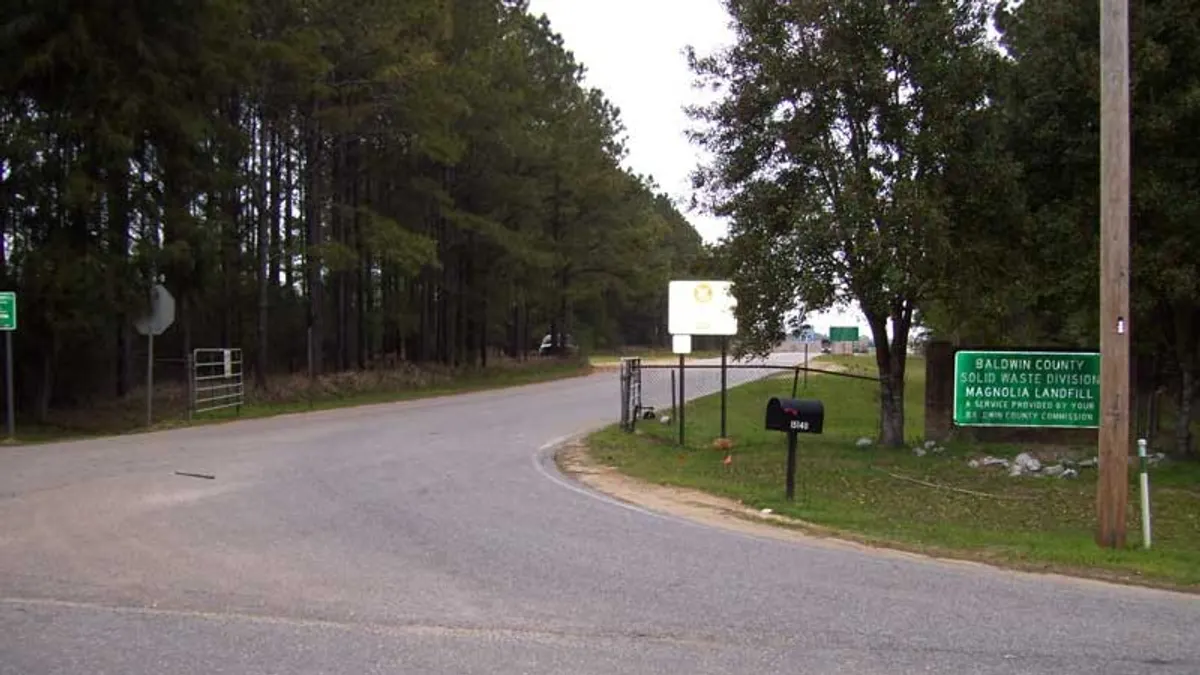
Viridi Energy, backed by private equity firm Warburg Pincus, announced its first sale of investment tax credits tied to its landfill gas-to-RNG project at Magnolia Landfill in Baldwin County, Alabama. The facility, which opened last year, can produce more than 160,000 mmBtus of RNG annually, according to a release.
The transaction improves Viridi's liquidity while lowering the undisclosed buyer's tax liability. Dan Crouse, CEO of Viridi, said in a statement that the transaction was a reflection of federal policy designed to support clean energy infrastructure.
"Selling our first ITC credits is an important milestone for Viridi and validates our ability to execute and finance projects that deliver real-world outcomes,” Crouse said.