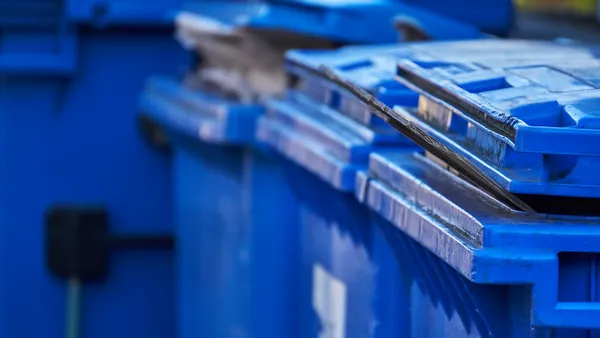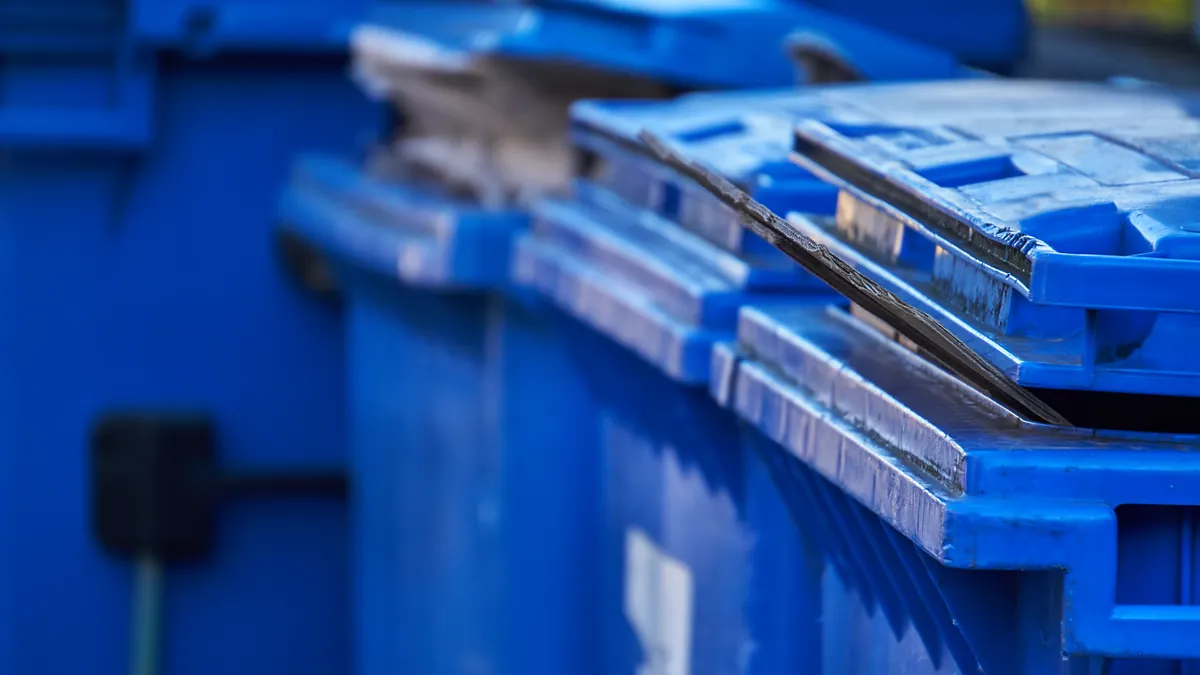
When the Oregon community of The Dalles rolled out 5,000 new 96-gallon recycling carts at the end of March, it became the first in the state to pay for that improvement using funding directly from packaging producers under Oregon’s EPR for packaging law.
Circular Action Alliance, the state’s producer responsibility organization, projects spending around $123 million for local recycling improvement projects through 2027. The EPR program requires brands and companies that supply packaging and paper products to help fund recycling system improvements.
The EPR program provided local hauler The Dalles Disposal with $200,000 to buy the new carts, which are about six times larger than the previous curbside recycling bins. Residents needed more space to recycle more materials after the state approved an expanded recyclables list in August 2025, CAA said.
The community was previously using 14-gallon totes, which “were not keeping up with all the material,” said Alex Bertolucci, communication manager for CAA’s Oregon program, in an interview with Waste Dive.
The funding injection from the EPR program has made a difference so far, said Jim Winterbottom, district manager of The Dalles Disposal, in a statement. “With producer funding through CAA, we can expand recycling options while continuing to deliver high-quality service, making it easier for residents to participate.”
Oregon is the first U.S. state to launch its packaging EPR program, so CAA expects to learn from the rollout of the The Dalles’ cart project to determine how future recycling improvement initiatives will go, Bertolucci said. Later this year, The Dalles is also expected to get a new recycling truck as part of the program.
CAA’s EPR program plan has mapped out how the PRO expects to disburse recycling infrastructure funding to communities through 2027, prioritizing local governments that “are not, or will not be, able to provide the opportunity to recycle,” without funding for upgrades, according to CAA’s program plan. That plan, published in 2025, estimated spending $81.5 million in producer funding across a range of projects in the state.
Yet the plan also noted that amount could end up being closer to $123 milllion when including contingency funding that assumes the cost of goods and services will increase over time, as well as to account for uncertainty around potential tariff impacts, Bertolucci said. The initial estimates also did not include funding for Tribal projects.
In the months since Oregon’s EPR program started, CAA has disbursed funding to order 14 trucks and about 50,000 carts and containers for communities around the state, Bertolucci said.
“A lot of the other funding has gone to drop-off recycling centers that were opening around the state,” such as new depots, he added.
Most MRFs in the state are also expected to receive funding for processing upgrades such as optical sorters, he said.
The state’s EPR program is a shared responsibility model, meaning producer investments cover about a third of recycling costs, Bertolucci said. Meanwhile, rate payers still cover the cost of aspects such as a recycler’s day-to-day operations.
Numerous other Oregon communities are expected to use the funding for new carts, collection trucks or improvements to transfer stations or depots through 2027. CAA will publish a new program plan after that time with a new budget and list of priority projects, he said.
“The Dalles was the first to see that curbside collection expansion, but there’s a lot more to come,” he said. In the future, “there will be other investments that we didn't make during this program plan period that could help modernize the system and improve it over time. So we'll continue to do needs assessments and work with the communities to say, ‘What else can we do, and how else can we make these investments over time?’”
This story first appeared in the Waste Dive: Recycling newsletter. Sign up for the weekly emails here.