
Dive Brief:
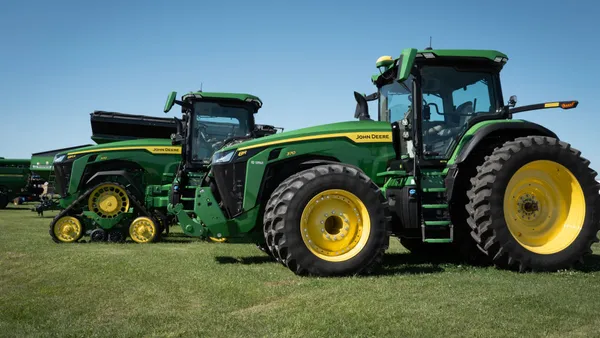
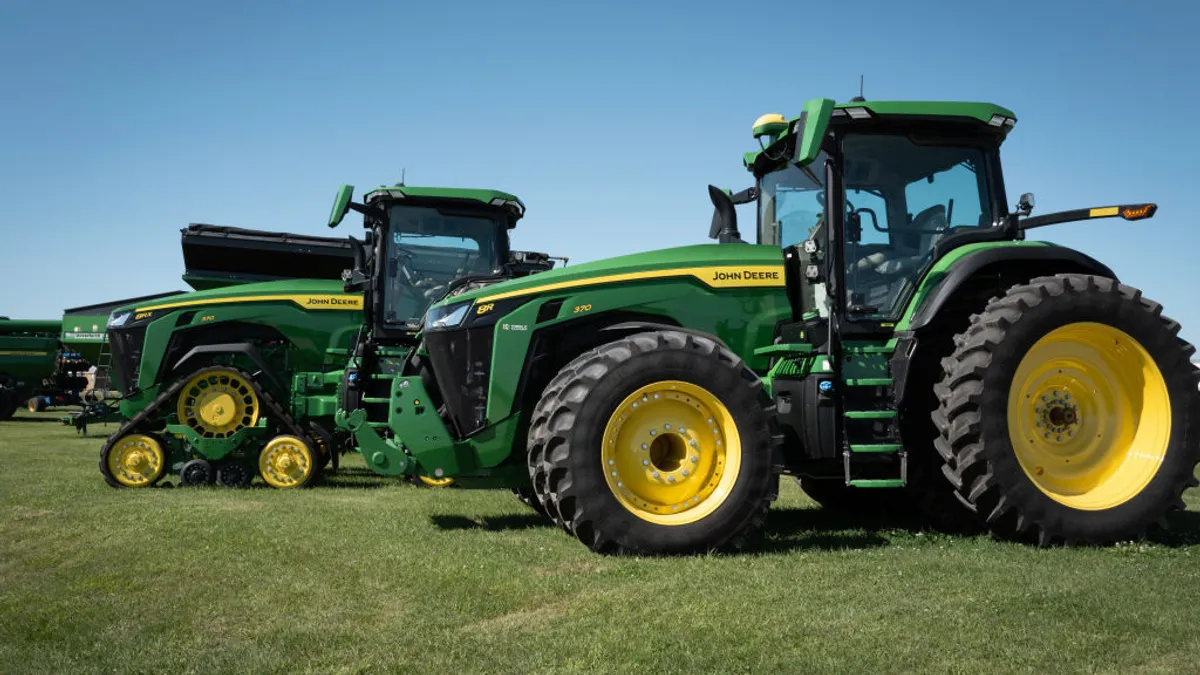
- Equipment manufacturers can no longer use the Clean Air Act to justify limiting farmers’ access to repair tools or software, the U.S. EPA said in guidance released Monday.
- The agency clarified that temporary overrides of emission control systems for tractor engines are allowed when they are for the “purpose of repair” and the equipment is subsequently returned to its certified configuration.
- The EPA said the law should not serve as a barrier to “timely” and “affordable” maintenance of non-road diesel engines, marking a win for farmers and consumer choice advocates. Deere & Co. requested agency guidance on the matter last summer following a number of right-to-repair lawsuits.
Dive Insight:
For years, companies have interpreted the Clean Air Act’s anti-tampering provisions in a way that prevents them from making their repair tools or software available to customers. This has forced farmers to take their equipment to manufacturer-authorized dealers to be fixed, when the repair could have been made in the field or at a nearby independent shop.
The companies’ interpretation has made repairs more costly and caused some farmers to opt for older equipment that lacks modern emission controls because they can fix that equipment themselves. The EPA said its guidance does not change the law, weaken emission standards or reduce compliance obligations.
“This is expected to save our farmers thousands in unnecessary repairs,” Agriculture Secretary Brooke Rollins said in a statement Monday.
The Public Interest Research Group, a Washington D.C.-based nonprofit advocacy group, applauded the EPA’s more definitive stance on right to repair, saying its guidance was similar to a letter the agency sent to the National Farmers Union in 2023.
“It’s clear that farmers and other Americans accessing what they need to fix their stuff isn’t an environmental threat,” PIRG’s Senior Right to Repair Campaign Director Nathan Proctor said in a statement Monday. “Now, it’s time for manufacturers to stop stalling and grant all of us access to the required parts, tools and information.”
In recent years, several states have passed broader laws affirming consumers’ rights to access the parts, tools and documentation needed to repair electronics and other goods. However, Colorado is the first and only state to have a law on the books specifically targeting agricultural equipment. The law passed in 2023.
That same year, the American Farm Bureau Federation negotiated a memorandum of understanding with Deere, CNH, Agco and other tractor makers as a solution to the right-to-repair issue. However, critics said the agreements were legally unenforceable and failed to provide farmers with full, unrestricted access to the companies’ diagnostic tools and software.
A number of lawsuits have since been filed against Deere, anchored by the Federal Trade Commission’s allegations of monopolistic practices that unfairly drove up repair costs and restricted farmers’ ability to seek repairs in a timely manner.
The EPA said its guidance was a direct response to Deere’s request for clarity around the Clean Air Act on June 3, 2025. Administrator Lee Zeldin in August urged manufacturers to revise their emissions control systems on their tractor engines to prevent sudden shutdowns. The change would allow farmers and other operators to repair their equipment without impacts to productivity or safety.
Deere, CNH and Agco did not respond to requests for comment as of publication.
Federal lawmakers in October introduced the Farm Act, which would require manufacturers to make certain documentation, parts, software and tools widely available to farmers and operators for repairs. The bill is awaiting futher action.