State lawmakers and recycling groups aim to tackle safety issues from vape waste in 2026 through a combination of new legislation, take-back programs and educational outreach.
The California State Assembly passed a bill last week to ban disposable vape pens, a move to reduce litter and prevent fires at waste and recycling facilities. Meanwhile, New Jersey’s legislature recently reintroduced its extended producer responsibility bill for e-cigarettes. And ongoing pilot programs from the Product Stewardship Institute in New York and Missouri also aim to more safely manage this complicated waste stream.
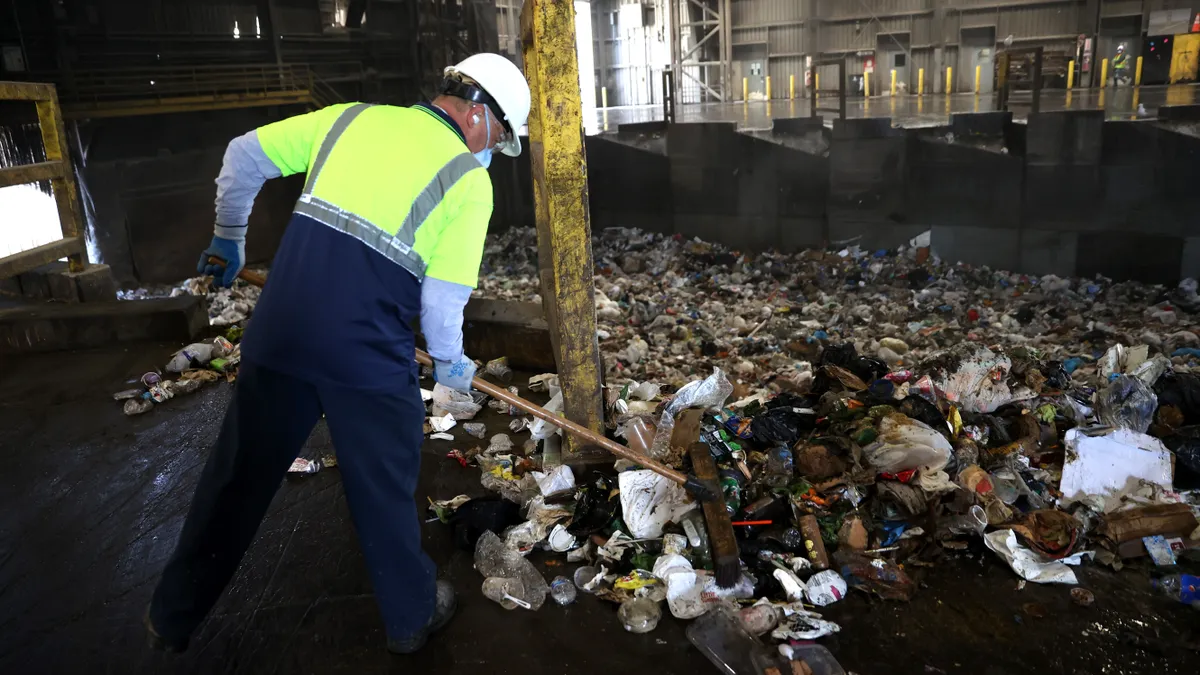
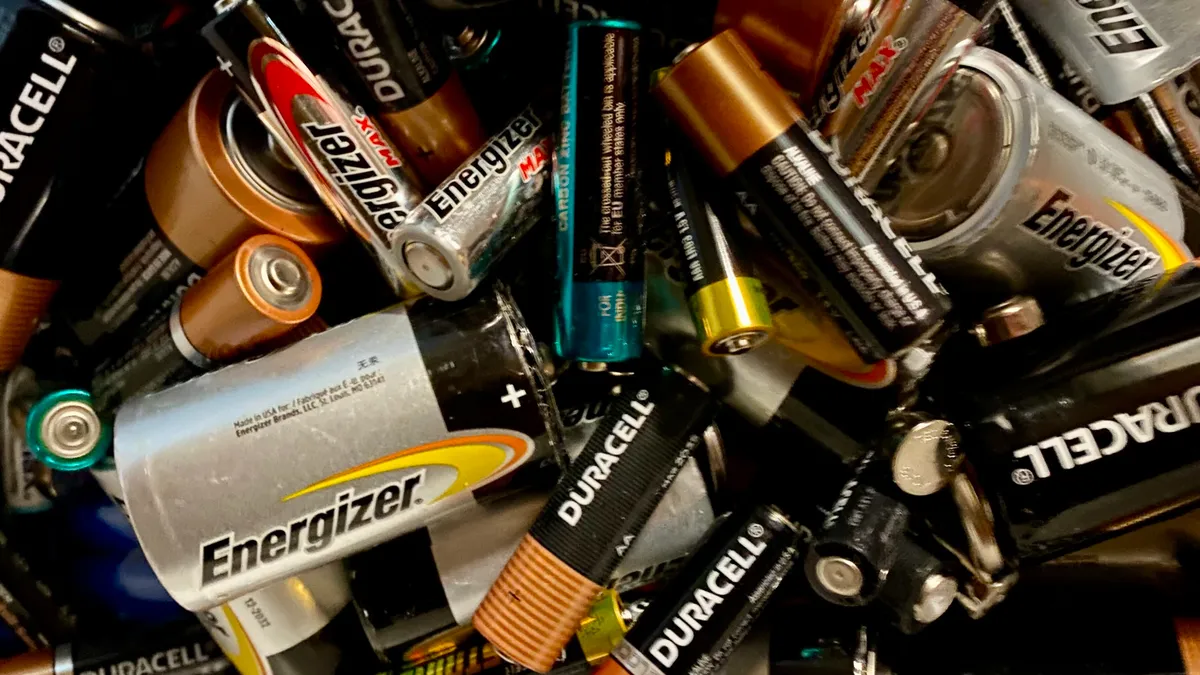
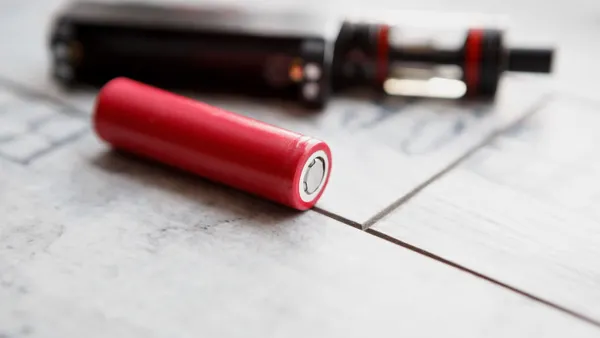
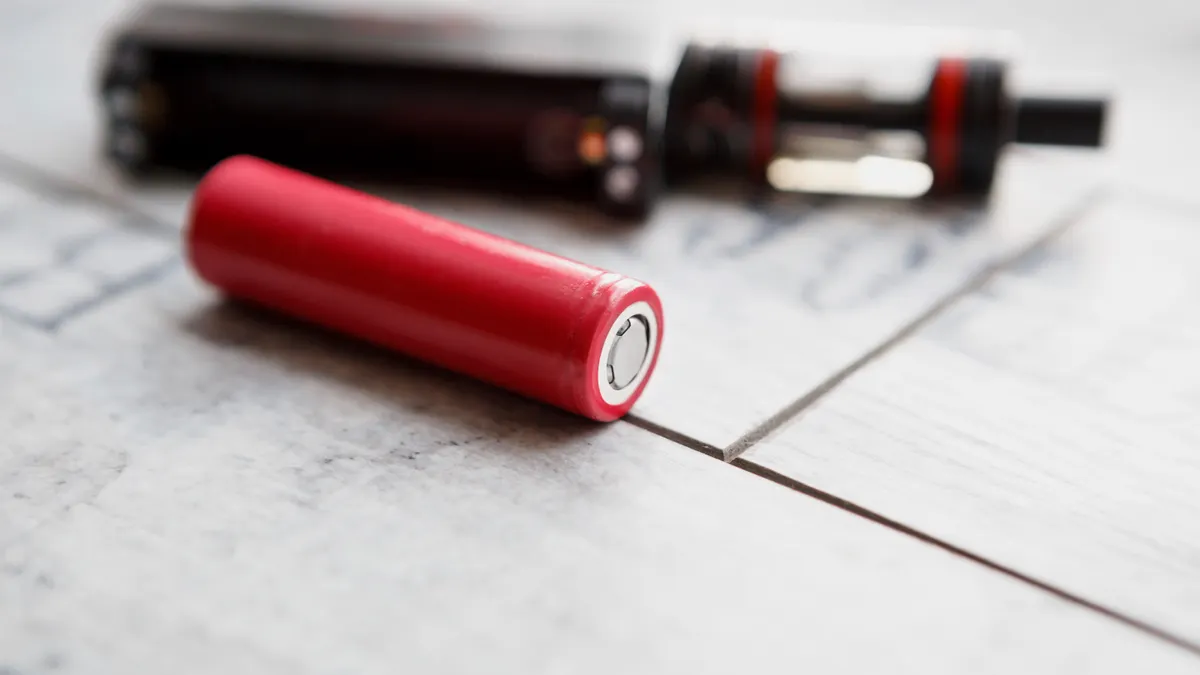
Vape pens, also called e-cigarettes, are a leading cause of waste and recycling facility fires due to the lithium-ion batteries inside. That’s because the small devices are difficult to identify on tipping floors and in processing equipment. The vape pens can also leak harmful chemicals including nicotine and certain metals.
At the same time, there are few outlets for users to safely dispose of these devices. The rising popularity of vape pens, particularly single-use models, are creating a “vape effect” that’s accelerating the number of fires at waste and recycling facilities, said Ryan Fogelman, partner at Fire Rover, which makes fire suppression equipment for waste and recycling facilities.
Fogelman also tracks publicly announced instances of facility fires at waste and recycling industry facilities in the United States and Canada. In 2025, he counted 448 incidents — the worst year since he first started compiling data in 2016.
Though numerous factors can be responsible for facility fires, vapes are a “relentless” and growing source in the waste and recycling industry, Fogelman said. “In my mind, waste and recycling operators are the victims of this, because they're having these hazards just dumped on their front door and they're being left to deal with it.”
The Solid Waste Association of North American and the National Waste & Recycling Association last year announced a joint effort to address lithium-ion battery disposal issues and have expressed general support for programs such as take-back programs and educational initiatives.
SWANA and NWRA will co-host a webinar with Fogelman to discuss his latest facility fire research on March 11.
California lawmakers aim for a ban
In California, lawmakers aim to ban disposable vapes by passing AB 762. The bill calls for banning the import or manufacture of such devices in the state starting Jan. 1, 2027, and banning the sale or distribution of the vapes by Jan. 1, 2028. The bill would cover disposable vapes that contain nicotine, but not vapes that contain cannabis. The bill now moves to the state Senate for consideration.
A similar bill introduced last year did not move forward. But Californians Against Waste, a sponsor of the bill, says this year’s version gained traction due to a coalition of groups aligned on the notion that such devices create risks to the state’s waste and recycling systems, as well as risks to public health and the environment.
The California Product Stewardship Council, California Public Interest Research Group and Rethink Waste also support the bill.
“AB 762 will move California toward safer, more sustainable alternatives that protect retailers, first responders, and our sophisticated waste facility infrastructure,” said Assemblymember Jacqui Irwin, a bill sponsor, in a statement.
The bill faces opposition from groups such as the California Distributors Association and some tobacco companies, which say a ban is unnecessary because it clashes with recently enacted laws in the state prohibiting flavored tobacco products and requiring manufacturers to follow new registry and enforcement rules.
Meanwhile, groups like California Norml, a marijuana reform group, has said it prefers to advocate for initiatives that redesign vapes and disposal systems. It calls for manufacturers to design vapes with removable batteries, as well as take the lead on providing proper waste disposal programs.
New Jersey tries EPR for vapes again in 2026
Meanwhile, in New Jersey, lawmakers are approaching the vape waste issue by calling for an EPR program for the devices. Lawmakers recently reintroduced SB 681, a version of an e-cigarette bill from 2025 that did not make progress before the end of the prior legislative session.
Supporters of vape EPR in the state say the growing popularity of the devices has burdened municipalities and businesses, which aren’t equipped to handle hazardous and combustible devices and “do not have ready access to an efficient, environmentally sound, and cost-effective disposal method for e-cigarettes,” according to the bill.
The bill calls for a program led by producers that will “promote the refurbishment, reuse, and recycling of e-cigarettes, including vaporizers and batteries, and will provide for the collection, transportation, and processing of discarded e-cigarettes.”
There are currently no EPR programs for vape pens in the United States. In Canada, Quebec has an EPR program which recently expanded to include cannabis-related vapes.
In 2025, lawmakers in states like Maine, Oregon and New York also introduced similar EPR bills, and new versions could be reintroduced again this year.
Fogelman is not directly involved in any vape-related legislation, but has publicly called for vape companies, distributors and the tobacco industry to share financial responsibility for vape waste.
“I do believe that we need help from the regulators, but we also need funding and support that will protect the waste and recycling operators,” he said.
Pilot programs aim to fill in data and collection gaps
Legislation can take years to pass and implement, but other efforts are underway that aim to safely remove vapes from waste streams through take-back and education programs.
The Product Stewardship Institute and the Center for Sustainable Materials Management at the SUNY College of Environmental Science and Forestry in New York recently announced a pilot program for collecting and recycling disposable vapes.
The program, which runs through August, will operate at schools, community organizations and in certain municipalities throughout the state. Researchers hope to “test practical, scalable approaches for separating lithium-ion batteries and nicotine-containing components for critical mineral recovery,” according to PSI.
The pilot will also gather data on collection volumes, consumer behavior, costs and processing pathways. PSI says the data will hopefully help lawmakers and other stakeholders who are working on legislation and other “long-term strategies,” including potential EPR programs.
“This pilot — built on collaboration across government, industry, and recyclers — will give New York the playbook to protect workers and residents while managing vape waste responsibly,” said PSI CEO Scott Cassel in a statement.
PSI is also working on a separate vape pilot program in Southwest Missouri, which aims to gather data about collection habits and waste volumes to inform future policy.