Carton recycling in California could be in flux as the state gets ready to implement a major law affecting recycling messaging on product packaging.
The state is getting ready to implement SB 343, the “truth in labeling” law, which goes into effect in October. It could potentially determine whether or not cartons will be considered recyclable in the state, with big implications for carton recycling markets. The law also pertains to labeling for other kinds of packaging.
SB 343 is meant to protect consumers from false recycling claims by prohibiting use of the well-known “chasing arrows” symbol, or other recyclability claims on packaging, unless approved through a complex state process.
The law also prohibits manufacturers from selling products or packaging labeled as recyclable unless the items are regularly collected and processed for recycling in the state. To label packaging as “recyclable”, it must be collected by programs that cover at least 60% of the state population and must be sorted into a “defined stream” by facilities that serve at least 60% of recycling programs statewide.
MRFs must also send the material to a reclaimer that follows the Basel Convention, which prohibits international exports of certain hazardous wastes.
Reports paint conflicting pictures of carton recycling markets
CalRecycle periodically reports on materials that are collected for recycling in California. The data can help manufacturers make “informed decisions” about their packaging under the law, the agency says. CalRecycle also states that such data is not meant to be interpreted as “any determination of recyclability” or as a way to determine the recycling rate for cartons or other materials.
Yet the report prompted scrutiny of cartons’ recyclability status. An update to the report, published in August 2025, showed that 68% of counties were served by MRFs that accept and sort cartons. The update also added mention of several MRFs, including the detail that WM’s Sacramento MRF had recently started sorting cartons after updating its equipment.
The Carton Council, a coalition of food and beverage packaging manufacturers, applauded the August update, saying it proved that cartons met statewide requirements for the labeling law and were widely recyclable in the state. The organization said at the time that the data would hopefully drive more Californians to recycle cartons.
But the update drew criticism from the Basel Action Network and The Last Beach Cleanup, two organizations that alleged in a Dec. 2 report that the state was allowing the illegal export of carton-contaminated paper bales to Malaysia and other countries that banned such imports, including from WM’s Sacramento MRF listed in the CalRecycle data update. The organizations said that practice is a violation of the Basel Convention.
California is “currently exporting massive amounts of mixed paper wastes to Malaysia, Vietnam, and Taiwan in violation of their national import laws,” the groups’ report states. It alleges that in 2024, California exported 134,903 metric tons of paper waste to Malaysia, as well as 13,988 mt to Vietnam and 39,247 mt to Taiwan. The state exported another 103,157 mt to Malaysia from January through July 2025, according to the report.
WM told the Los Angeles Times that its exports were not illegal and that it had approval from Malaysian customs authorities. But on Dec. 15, WM informed CalRecycle that its Sacramento MRF had paused its carton sorting due to “changes in market tolerance for the inclusion of materials like cartons in fiber bales.”
The WM letter states that cartons made up less than 1% of its paper bales, and “paper mills are able to process and recycle cartons given their low overall volume and minimal non-fiber content.” Yet some end users were concerned that “the inclusion of cartons, even at these de minimis volumes, may result in rejection of fiber loads by customs and other regulators due to strict standards for imported recyclable fiber,” WM said.
In the meantime, WM said it would send cartons from that MRF to the landfill “unless and until a viable end market accepting cartons is made available that is permitted and willing to provide [Sacramento Recycling and Transfer Station] with adequate market incentives to sort cartons.”
WM’s decision to suspend carton sortation at that location prompted CalRecycle to issue another SB 343 data update on Dec. 22, indicating that WM’s pause resulted in just 53% of Californians having access to beverage carton recycling, which falls below the 60% access threshold needed to be considered recyclable under SB 343.
Future of carton markets under SB 343
Meanwhile, recycling rates for cartons remain low in the state. Aseptic & gable-top cartons had a less than 1% recycling rate in the state in 2024, according to a CalRecycle report released last year. That report estimated recycling rates for a range of materials that will be covered under the state’s upcoming extended producer responsibility for packaging law, SB 54.
Jan Dell, founder of The Last Beach Cleanup, said the recent CalRecycle data, plus findings from the BAN and LBC report, show that cartons are “fundamentally not technically or economically recyclable” in the U.S. and that there are no viable facilities to recycle the materials. “This is not a failure of lack of collection or sortation capacity or ‘infrastructure,’” she said in an email.
Dell also called for the industry to talk about end markets for the material in concrete terms by being transparent about “specific factories” where collected cartons are finding homes.
But Brendon Holland, a spokesperson for the Carton Council, described the situation as a “temporary, facility-specific operational change at the Sacramento Recycling and Transfer Station [that] was motivated by the potential risk of recyclable fiber rejection at ports, not by carton recyclability or end market viability.”
He also pointed out that neither CalRecycle nor any MRFs operating in the state have raised concerns “about the ability of paper mills (domestic or international) to process and recycle cartons.”
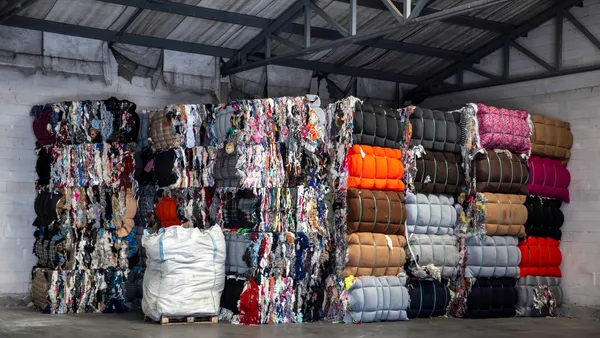
The Carton Council says there are several markets for cartons in North America and overseas. MRFs “have the flexibility” to mix cartons into a paper grade known as Grade 54, which Holland says “is purchased and processed by many domestic and international recycled paper mills.”
Grade 52 bales, which are carton-only, are commonly sold to customers such as Sustana, Kimberly-Clark and Essity, he added. Another buyer is ReCB, a company that uses recycled cartons to produce a roofing material called Everboard. That company, which has a facility in Iowa and is planning to open a facility in Lodi, California, has gone through several owners, including WM. It closed for about nine months in 2024 before reopening in August 2025. The Carton Council supports the project.
Holland said the Lodi facility’s opening has been delayed due to permitting hurdles, but it could be open “in a matter of weeks.” That facility is expected to recycle up to 9,000 tons of recovered cartons a year, he said.
Dell and the Basel Action Network have urged CalRecycle to do more to prevent illegal paper bale exports. But CalRecycle said in an email that it doesn’t have the authority to regulate, authorize or prevent carton exports under SB 343.
As for the future of cartons after the Oct. 4 deadline to enact the SB 343 labeling law, CalRecycle says its role isn’t to determine whether cartons are recyclable. Its role “is solely to develop and update information relevant to whether products, like gable-top cartons and aseptic containers, are eligible to be labeled and marketed as recyclable.”
Editor’s note: This story as been updated to add carton recycling rate data from CalRecycle.
This story first appeared in the Waste Dive: Recycling newsletter. Sign up for the weekly emails here.