Dive Brief:
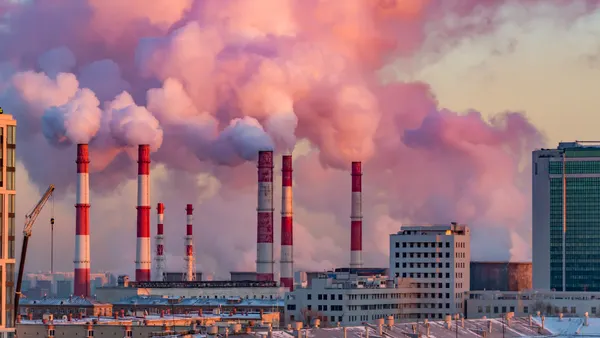
- The New York State Department of Environmental Conservation finalized rules requiring large greenhouse gas emitters, including many waste facilities, to report their emissions annually. The data collection program does not set reduction requirements, but will provide a backstop to shrinking federal reporting programs, the department noted in a release this week.
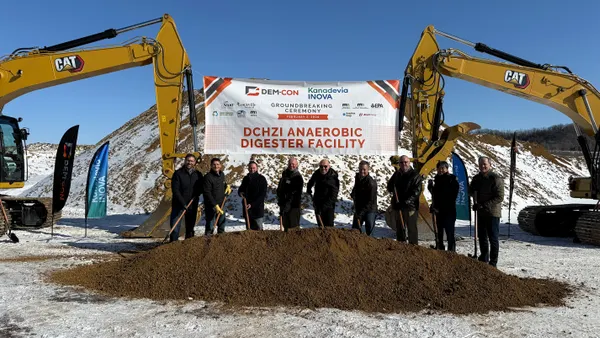
- The rule applies to owners and operators of landfills, waste-to-energy facilities and anaerobic digesters that generate 10,000 or more metric tons of carbon dioxide equivalent annually. Waste haulers and transporters that handle and send waste out of state that would generate 10,000 or more metric tons of CO2e are also required to report under the rule.
- The first year for which facilities will be required to collect data on emissions is 2026. Reports on that data must be submitted to the department by June 1, 2027.
Dive Insight:
The new rule comes as the Trump administration looks to wind down the federal Greenhouse Gas Reporting Program, a 15-year-old program that required large emitters across the country to track and report their emissions annually.
The federal government has annually published a report on greenhouse gas emissions, broken down into sectors, for more than a quarter century. The U.S. EPA’s Greenhouse Gas Reporting Program built on those efforts by requiring individual industrial facilities in a growing number of categories to measure their own emissions, providing more precise data that could be used to guide climate change mitigation efforts.
But this year, the Trump administration brought an end to that practice as part of a broader dismantling of federal climate change monitoring and mitigation efforts. As a result, states have looked to fill the gap on a variety of measures.
“DEC’s greenhouse gas emissions reporting program and subsequent data collection is critical to the State’s ongoing efforts to protect our environment and improve the health and quality of life of all New Yorkers,” DEC Commissioner Amanda Lefton said in a statement. “The Reporting Rule will enable DEC to collect the information necessary, despite proposed rollbacks on the federal level, and develop effective strategies that reduce harmful air pollution and direct investments where they are most needed.”
The Mandatory GHG Reporting Program was spurred by New York's Climate Leadership and Community Protection Act, signed into law in 2019. The act called for the creation of a statewide greenhouse gas emissions report, and gave DEC the option of requiring individual sources to report their emissions to the department. Gov. Kathy Hochul instructed the department to develop that regulatory requirement earlier this year.
In a fact sheet, DEC indicated the department would accept emissions data already reported under various state and federal programs — including the EPA’s Greenhouse Gas Reporting Program, should reporting efforts continue there — allowing emitters to avoid duplicating their efforts. In response to comments received during the rulemaking process, the department also shortened the number of years that closed facilities must report emissions from three years to one year, among other changes.
DEC also released its annual statewide greenhouse gas emissions report on Monday, which analyzed emissions from 2023. The report found the state's overall emissions were down 14% from a 1990 baseline.
Waste sector emissions totaled nearly 48.5 million metric tons of carbon dioxide equivalent, 14% of all statewide emissions. Waste sector emissions are down 9.5% since 1990, though landfill emissions have increased annually for the last five years, per the report. Many of the country’s largest waste companies operate facilities in New York and have worked to expand them.
Moving forward, the new reporting requirements will improve the data contained in the annual report, according to DEC.
New York is also working to increase the diversion of materials streams away from waste facilities, potentially reducing emissions. The state’s organics diversion mandate for large commercial generators will apply to more businesses beginning next year. New York’s 10-year solid waste management plan, finalized in 2023, also calls for a “disposal disincentive surcharge” for waste, among other policy changes.