Sludge disposal company Orbital Biocarbon announced a funding round led by Toby Z. Rice, who is president and CEO of EQT Corp. and was a seed investor in Archaea Energy before it was sold to BP for more than $4 billion.
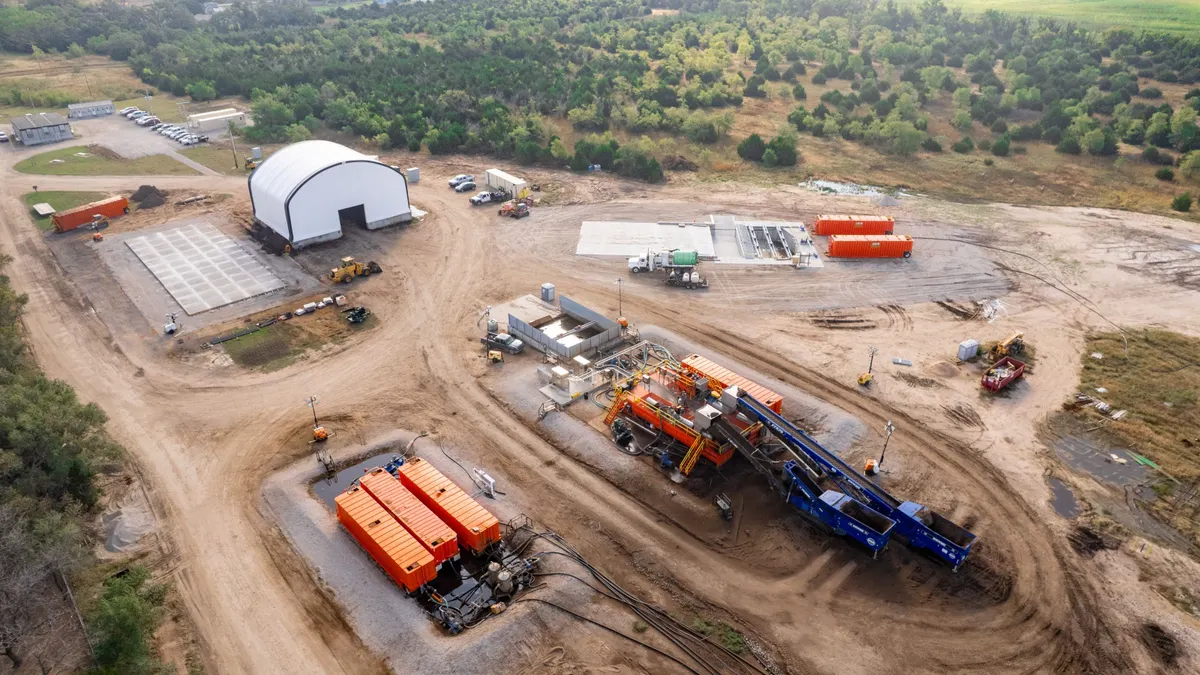
The deal allows Orbital to ramp up development of its sewage sludge processing facilities, which use a form of pyrolysis to turn dried sludge into biochar.
“I back operators who take on hard problems and deliver lower costs with better environmental results,” Rice said in a statement. “Orbital is turning one of the toughest waste problems in the utility space into critical infrastructure and essential services.”
The company currently has one facility in development in the Pittsburgh area which it projects will be commercially operational by mid-2027. But the new investment round will allow Orbital to pursue multiple projects at once in states from Pennsylvania to Maine.
"It’s allowing us to speed up that long project lifecycle," said John Day, president and co-founder of Orbital, in an interview.
More than half of all sewage sludge, known to utilities as biosolids, is applied to agricultural land in the U.S. today as a fertilizer. The rest is landfilled, incinerated or used in composting processes, according to the U.S. EPA.
Day said he launched Orbital in 2022 after learning about disposal capacity constraints in the Northeast. Concerns about contaminants like per- and polyfluoroalkyl substances in the sludge have led regulators to place more restrictions on disposal of the material.
The EPA further fueled those concerns with a draft risk assessment of PFAS in biosolids in January. The assessment found that concentrations of PFOA and PFOS — two PFAS chemicals — as low as one part per billion in biosolids used as fertilizer could be harmful to human health.
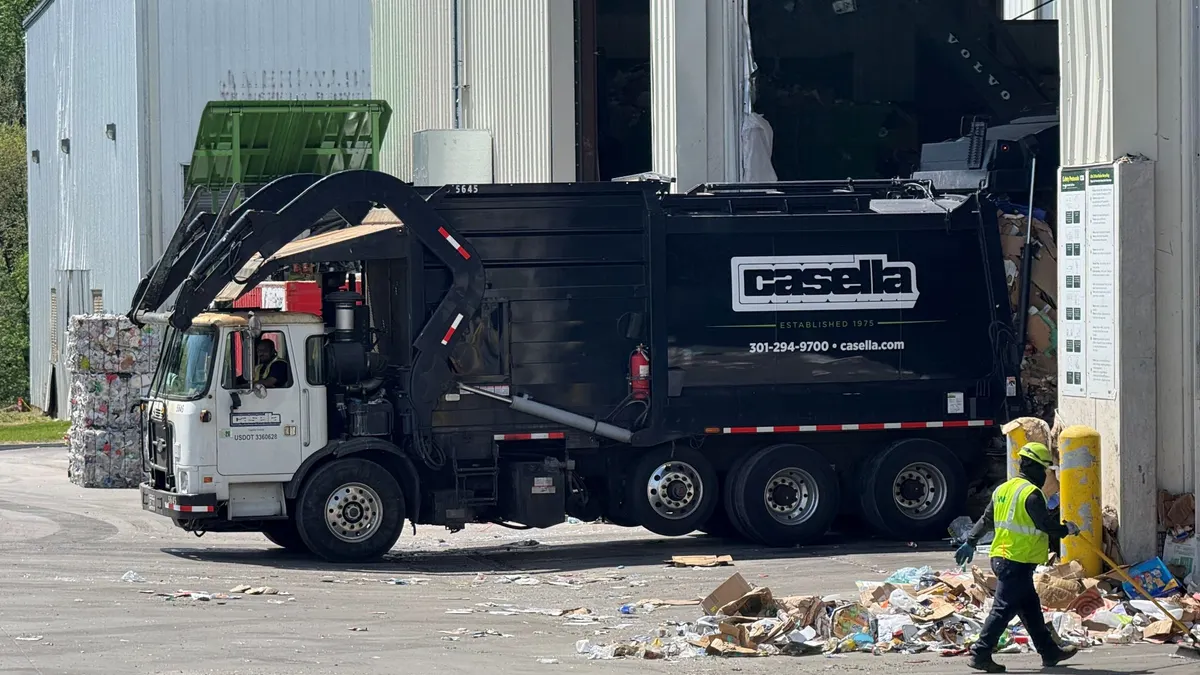
This year, at least a dozen states have debated PFAS-related restrictions on sludge disposal. Maine was the first state to ban land application of sludge, but the law triggered a disposal capacity crisis after the state's largest landfill operator, Casella Waste Systems, said it could not accept the material.
The shrinking number of facilities willing to accept sludge has led to high disposal costs for utilities looking to offload the material. Day said he's had a conversation with one Massachusetts utility that pays more than $200 per wet ton of sludge to landfill their material in Maine, but Orbital's process could offer a significant discount.
Day noted that if regulations continue to tighten, and particularly if the U.S. EPA enacts a nationwide restriction following its draft assessment, utilities around the country could be looking for a solution like Orbital’s. By building, owning and operating the facility, Day said Orbital can help utilities avoid the expense of building their own PFAS treatment equipment.
“Utilities right now in the U.S. are already outdated, and you have significant capital expenditure budgets to replace existing facilities. With regulation coming down the pipe and capacity for disposal shrinking, our business model provides a huge alleviation to that problem,” Day said.
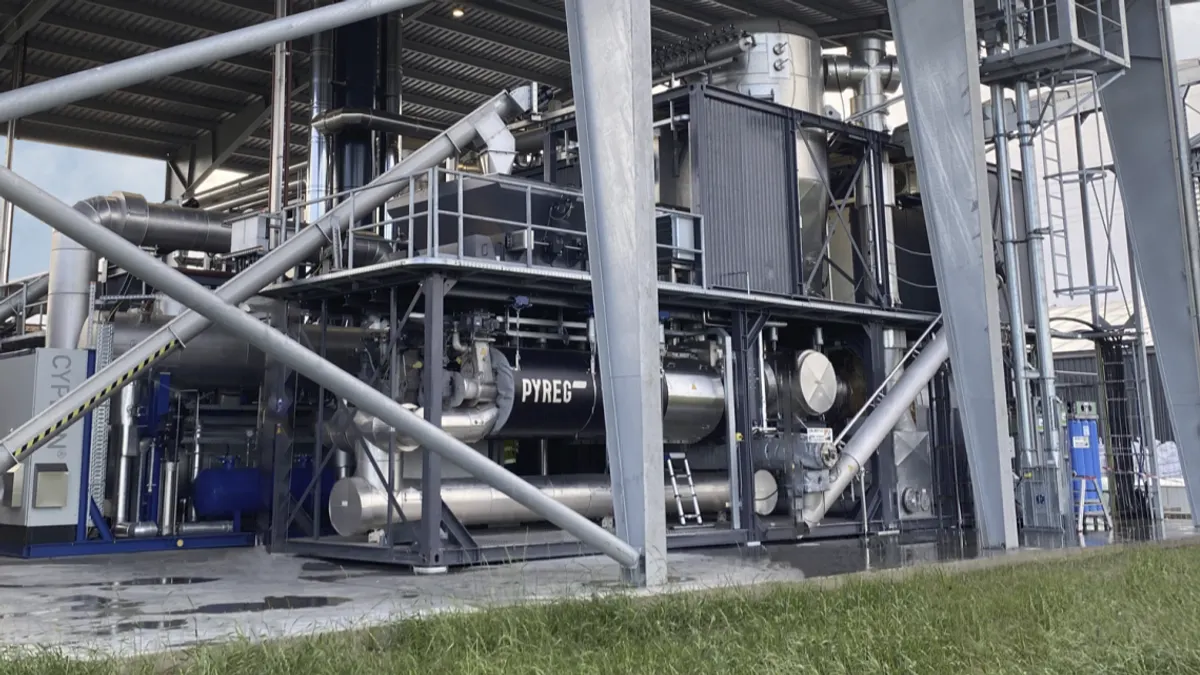
Orbital uses technology created by German company Pyreg. The system was analyzed by the U.S. EPA in a 2020 experiment and found to substantially eliminate PFAS chemicals from its resulting biochar, the carbon-based solid left behind at the end of the process. Day said the system's gas is also combusted, using a thermal oxidizer, at levels sufficient to destroy PFAS and other organic compounds.
The facility Orbital is currently developing in Pennsylvania is expected to process up to 14,400 wet tons of sludge and produce 1,700 tons of biochar annually. Day said that Orbital could build facilities several times that size due the modular nature of the technology, allowing the company to serve large regional sewage authorities in future projects.
Currently, Orbital hopes to sign short- to medium-term offtake agreements for its biochar, potentially selling it to companies looking for viable land remediation material. The company expects to generate nearly three-quarters of its revenue from sludge tipping fees, another quarter from biochar sales and a small percentage from carbon credits created through the generation of the biochar.
Day expects demand for Orbital's technology to grow over time. He also plans for the company to be nimble. Day said he was happy to have Rice as an investor given his expertise in developing technology-driven operations with minimal staffing. Rice also helped take Archaea Energy public and merged it with competitor Aria Energy through a special purpose acquisition company.
While Orbital provides a financial solution to a growing challenge, Day also said he sees the company’s pyrolysis facilities as an environmentally sensitive process that can benefit communities.
“We think we have a good win-win for our business as well as for utilities,” he said. “And by destroying those contaminants too, producing biocarbon and renewable energy, we benefit the environment as well.”
Editor’s note: This story has been changed to better reflect the gas control system used in Orbital’s facilities.