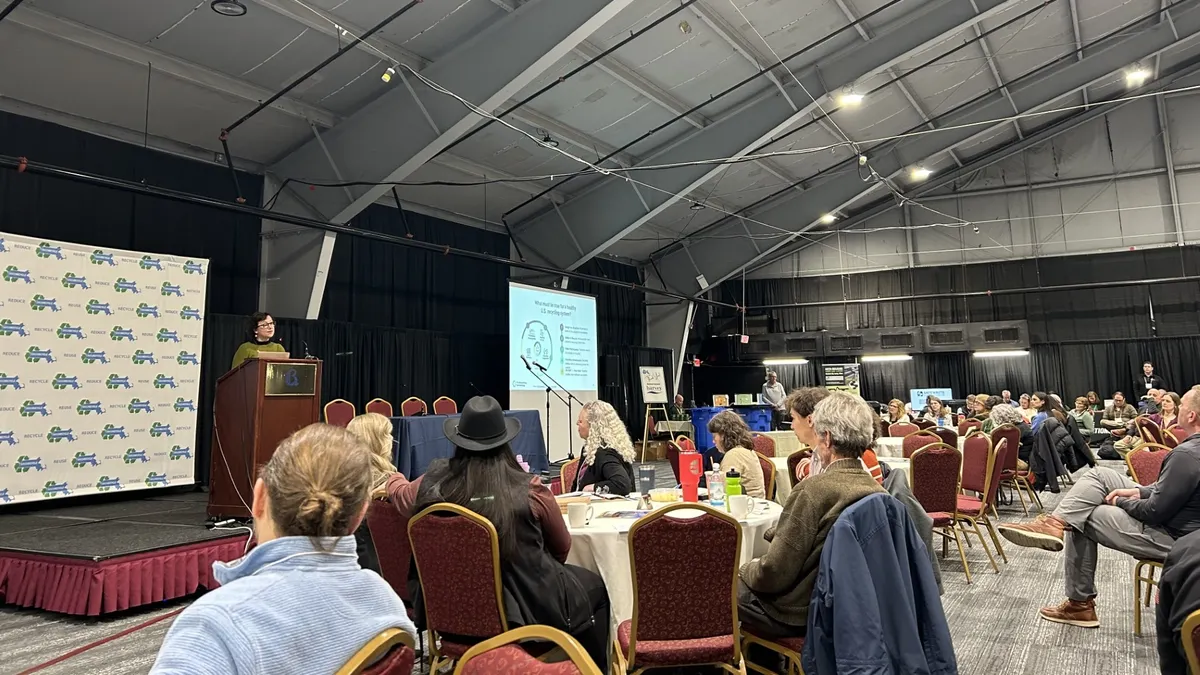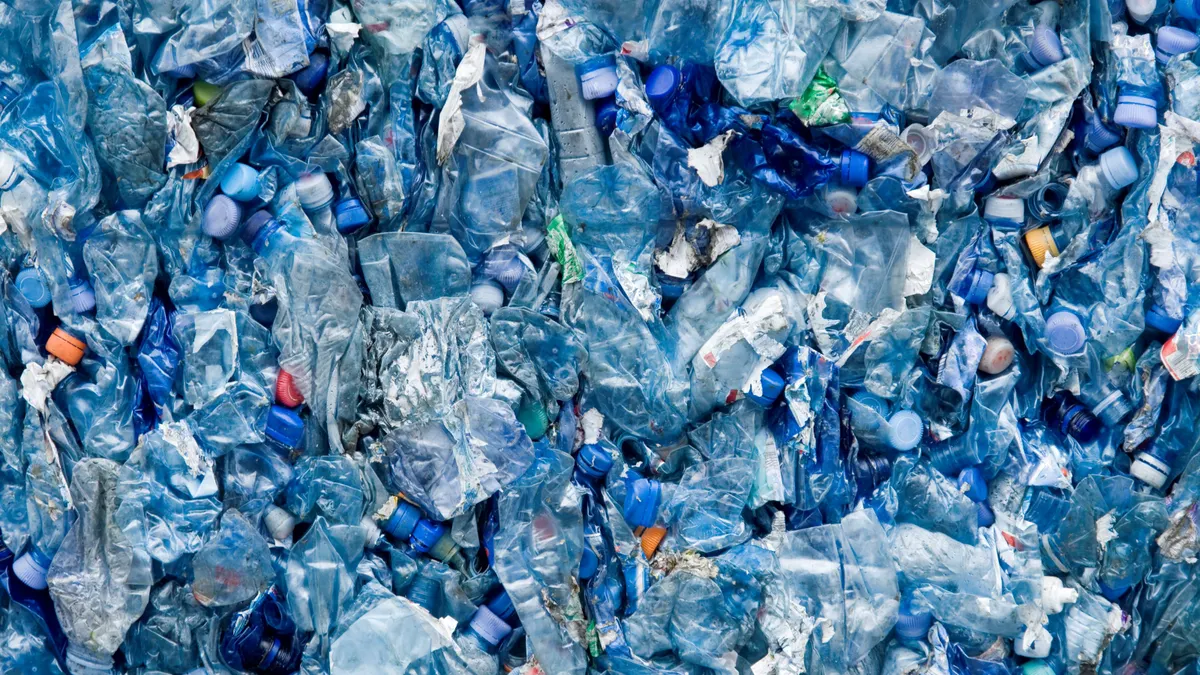

The recycled PET industry has been reeling from a period of prolonged instability that has resulted in a spate of reclaimer closures over the last year. While an influx of cheap imports has been cited as a factor, converters simply might have ramped production ahead of the demand curve, according to a speaker at The Packaging Conference in Austin, Texas, on Feb. 9.
"We know how 2026 is starting, and it's not been great," said Laura Stewart, executive director at the National Association for PET Container Resources, at the conference. "The rPET industry in North America is under real strain."
Five full or partial recycled PET plant closures in the U.S. have been announced since early 2025: Alpek’s in North Carolina and Pennsylvania; Evergreen Recycling’s in California; Phoenix Technologies’ in Ohio; and rPlanet Earth’s in California.
“We saw some very strong performers who decided that there wasn't a future for them, that they didn't want to be in recycling anymore. And that’s a real problem,” said Steve Lyons, vice president for strategic environmental analysis at PET packaging consulting firm SBA-CCI.
The big question for 2026 is, “Do we face continued contraction and consolidation, or are we going to see things stabilize and renewed investment?” Stewart said. “All of us together — brands, reclaimers, converters, policymakers, recyclers, all of us — need to act intentionally and thoughtfully to make sure that we still have an rPET industry on this continent.”
“We will not have circularity for PET without a domestic PET recycling industry,” she continued. “We feel we're at a tipping point and need to address [this] in order to start seeing some movement in a positive direction.”
She discussed data in NAPCOR's annual PET recycling report released in December that covers calendar year 2024; the 2025 report is in the works but not ready yet.
The 30.2% PET bottle collection rate in the U.S. was down from 32.5% the previous year. While using recycled PET in bottles was a trend that grew quickly over the last decade, it leveled off in 2024 at just under 16% PCR. “We were starting to see also softening or weaker end market demand overall,” Stewart said.
She brought up a brand new statistic showing imports now constitute 25% of recycled PET material in the United States, and in some regions “it's approaching numbers as high as 50%,” Stewart said. Those imports reportedly cost less than U.S.-produced material.
“We're not against global supply chains. We're in support of that. We need material, but we also need circularity domestically,” Stewart said. “So demand stability is really about mandatory postconsumer recycled content targets.”
Brands shifting their sustainability targets have in some cases altered postconsumer recycled content goals. That goes hand in hand with brands’ lagging demand for PCR, she said. Thus, NAPCOR supports government policies, such as extended producer responsibility, to incentivize and scale recycling.
Another conference speaker presented a different factor behind recent rPET struggles: “I think we built ahead of the curve,” said Tom Busard, Plastipak Packaging's chief polymers and recycling officer and president of clean tech. Plastipak deals with both virgin and recycled resins.
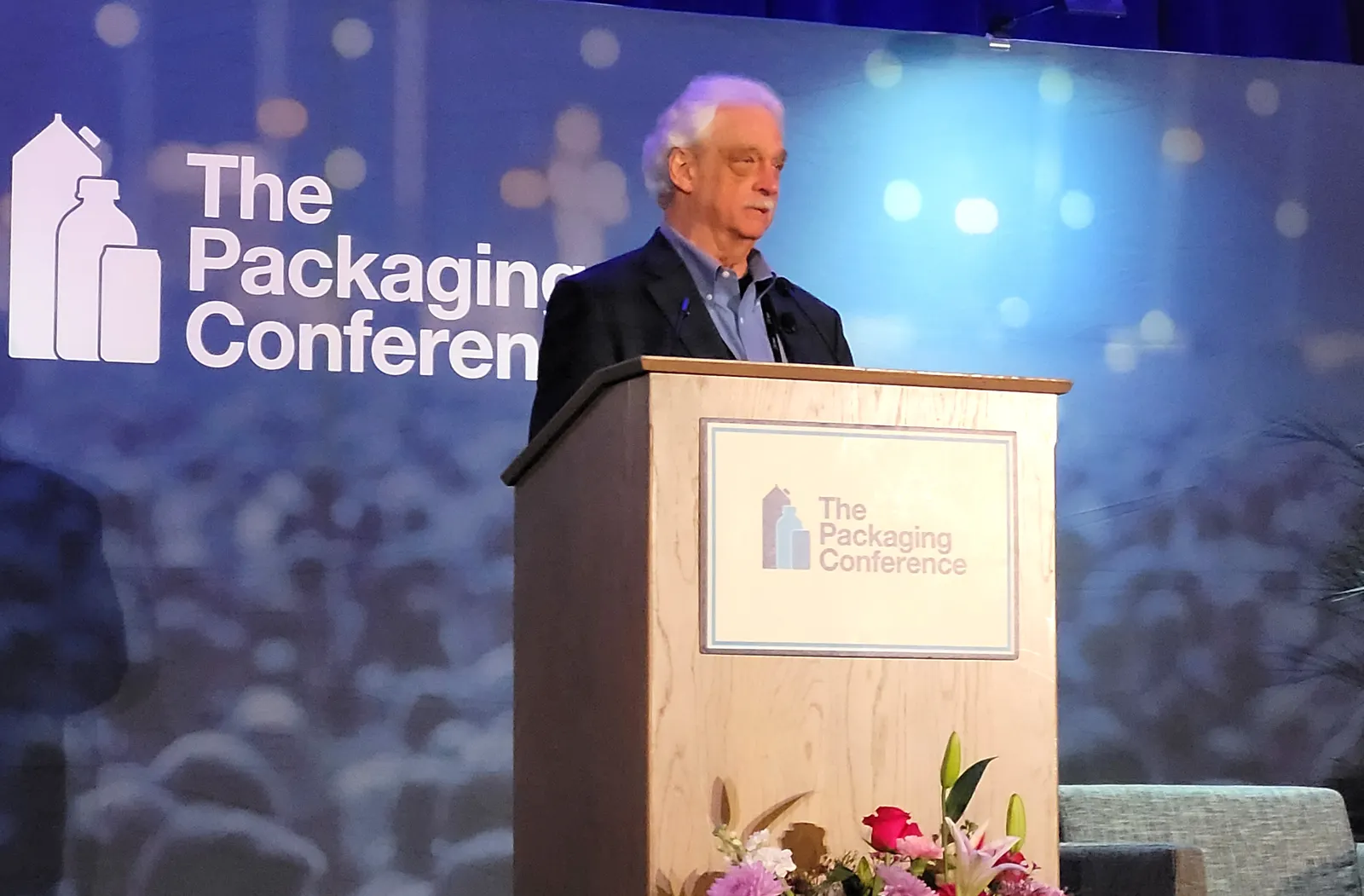
“We ramped up all the capacity really fast, and people made big investments and bought plants,” Busard said. “In hindsight, [the industry] probably jumped on the bandwagon and installed or purchased or expanded capacity too fast ahead of the actual demand.”
In part, the industry made these moves based on future demand “because it takes two years to get a recycling plant up,” he said.
Speakers declined to specify which companies could be affected, but generally they suggested the supply-demand situation likely will lead to some consolidation or rationalization both in PET converting and recycling operations.
Innovation with PET packaging is needed to continue driving demand for the material, Stewart explained. Developing PET bottle caps is one example, as is chemical recycling, also known as molecular recycling, for processing on the back end. “Molecular recycling is something that we're now starting to see more for PET captured that maybe could not be recycled through mechanical means,” she said.
Innovation efforts and some companies’ ongoing sustainability goals give reason for optimism, Lyons said.
“I think that demand is something that we should still be positive about,” he said. “My forecast [is] that we will continue to see rPET demand grow. Maybe it's not the growth that we saw incrementally in 2023, 2024, where it was a strong euphoria. But I don't think this industry is just going to go away.”