This article is part of a series about the 50th anniversary of the Resource Conservation and Recovery Act.
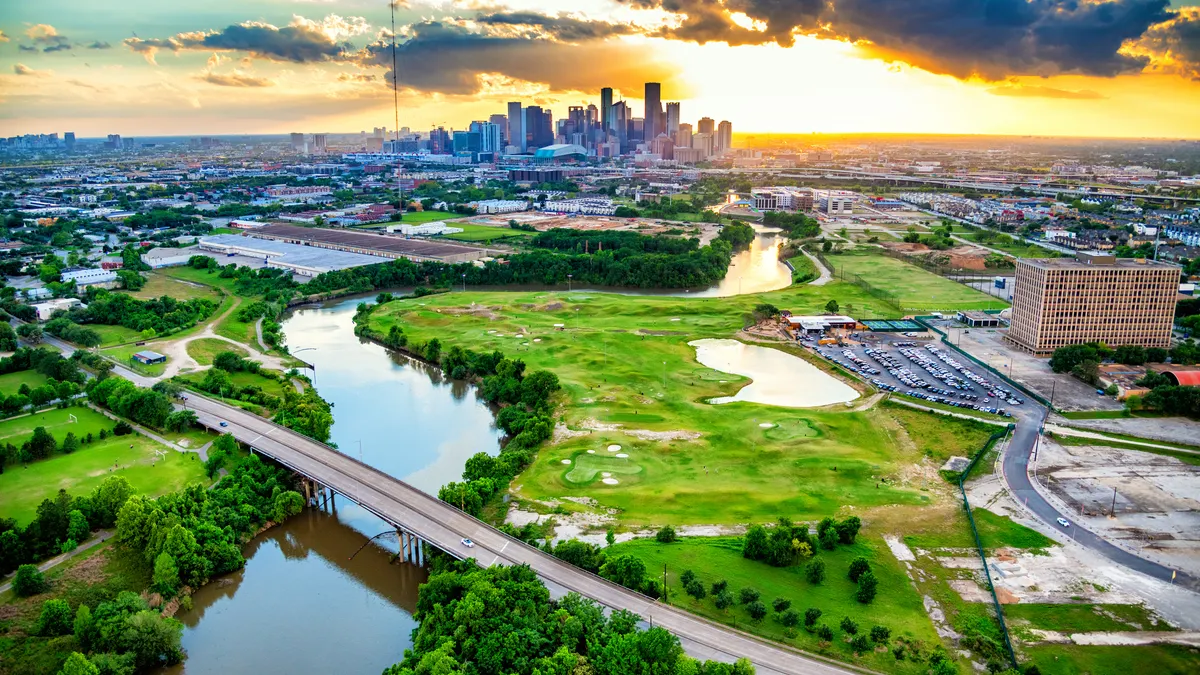
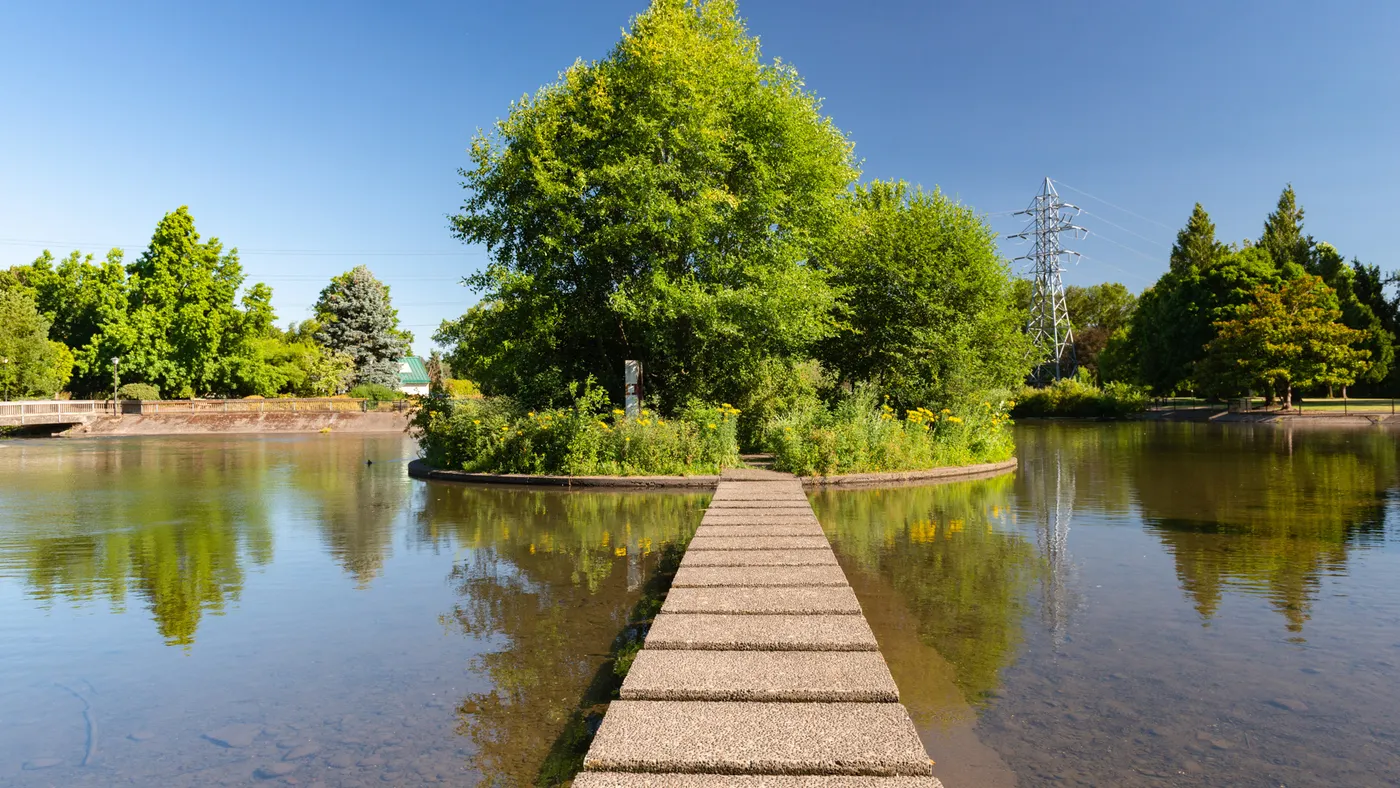
For decades, the state of Oregon has been aware of the closed landfill beneath Alton-Baker Park in Eugene. A former sand and gravel pit, the Day Island Landfill accepted waste between 1963 to 1974, closing two years before the federal Resource Conservation and Recovery Act ushered in a new era of landfill regulations.
The landfill was sited just feet from the Willamette River, a drinking water source for several towns downstream. During its operational years, the landfill accepted roughly 950,000 tons of material, including municipal waste from Lane County and chemical waste from wood treatment company J.H. Baxter & Co., according to records first unearthed by Lookout Eugene-Springfield.
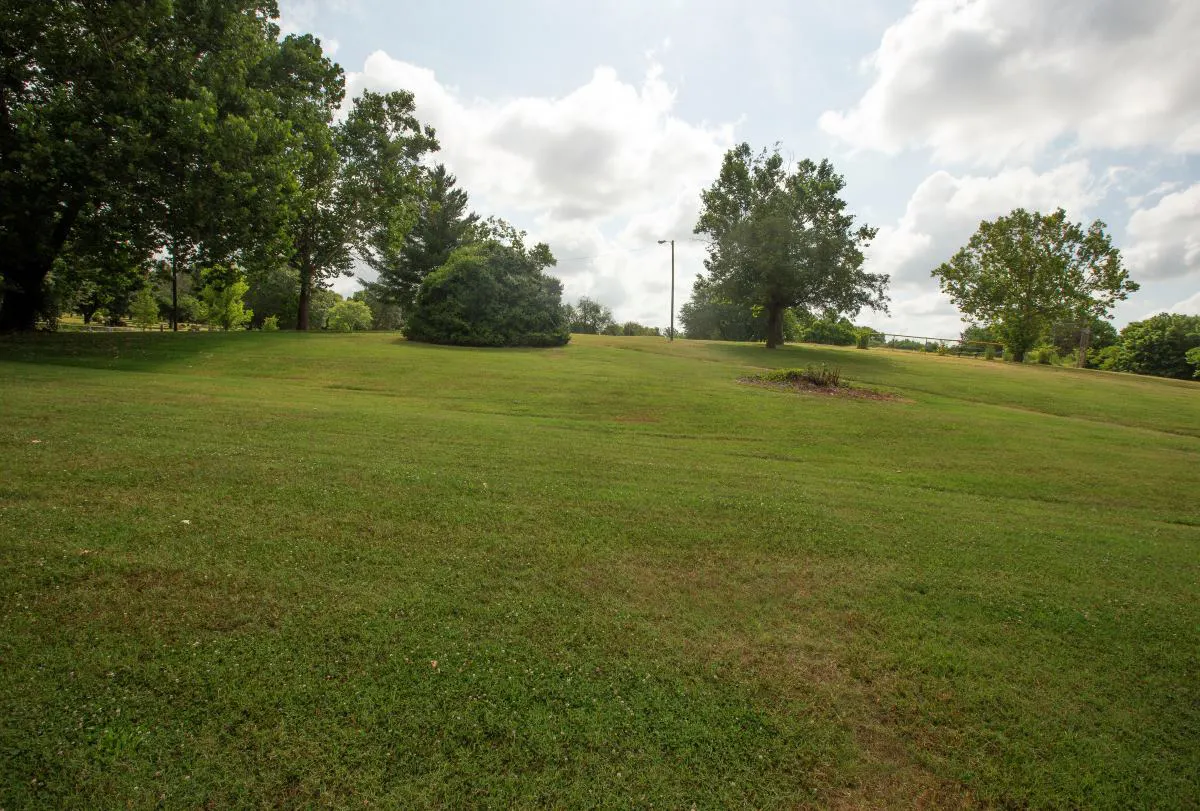
After it was closed, the site was capped with a layer of soil, but has no record of a liner on top, which is now common to prevent rainwater from seeping into the waste. The Day Island Landfill was investigated as a possible Superfund cleanup site in the 1990s, but ultimately did not make the list. Instead, recreational activities were developed on the site.
Now, residents are raising new questions about the site’s impacts on public health. Investigators have previously noted contamination in adjoining ponds likely caused by leachate that has seeped out of the facility. But responsibility for remediation has been passed along, with the EPA, then the Oregon Department of Environmental Quality, determining the county would need to apply for funds to manage its monitoring and potential cleanup.
So far, the county has not done so. Mason Leavitt, GIS analyst and program coordinator with Beyond Toxics and a Eugene resident, often advocates for landfill restrictions in the state. He said the landfill represents a quandary for regulators, since records exist for just two of its 12 years of operating life, providing only a limited window into what’s buried beneath the park.
But the popular park’s connection to a yearslong Superfund cleanup just up the road also associated with J. H. Baxter’s wood treatment operations presents a troubling picture to residents.
“Until voluntary cleanup is done and all of these things are fully scoped out, I think people are still gonna wonder and feel some level of unease, especially given the site's relationship to an ongoing environmental disaster,” Leavitt said.
Federal lawmakers in the 1970s wanted to end the practice of open dumping that was common throughout the United States, and developed regulatory language in RCRA that they thought would bring an end to the worst pollution caused by informal disposal practices. Tens of thousands of dumps closed around the country, as operators faced the prospect of binding landfill design requirements for the first time.
Yet the EPA allowed any site that closed before 1991 to skip basic closure standards, including a permanent cover or groundwater monitoring, and gave leniency to states that were meant to properly monitor such sites. Fifty years after RCRA’s passage, those carveouts have left unanswered questions for tens of thousands of communities living near long-dormant sites.
States take a range of approaches to closed dump sites
Waste Dive reached out to all 50 states to gauge their monitoring programs for landfills and dumps that closed prior to the Resource Conservation and Recovery Act. Thirty-seven responded, disclosing more than 22,000 dump sites in their jurisdictions, many of which have not gone through modern assessments or remediation.
North Carolina is one of eight states that currently sets aside funding annually to an active closed dump monitoring and remediation program, alongside Colorado, Maine, Minnesota, Mississippi, New York, Oregon and Wyoming. Officials in one other state, Kansas, told Waste Dive that they ran an old city dump remediation program from 1995 to 2023, and completed assessment and remediation work at all 779 sites on record.
How state agencies are tackling closed dumps
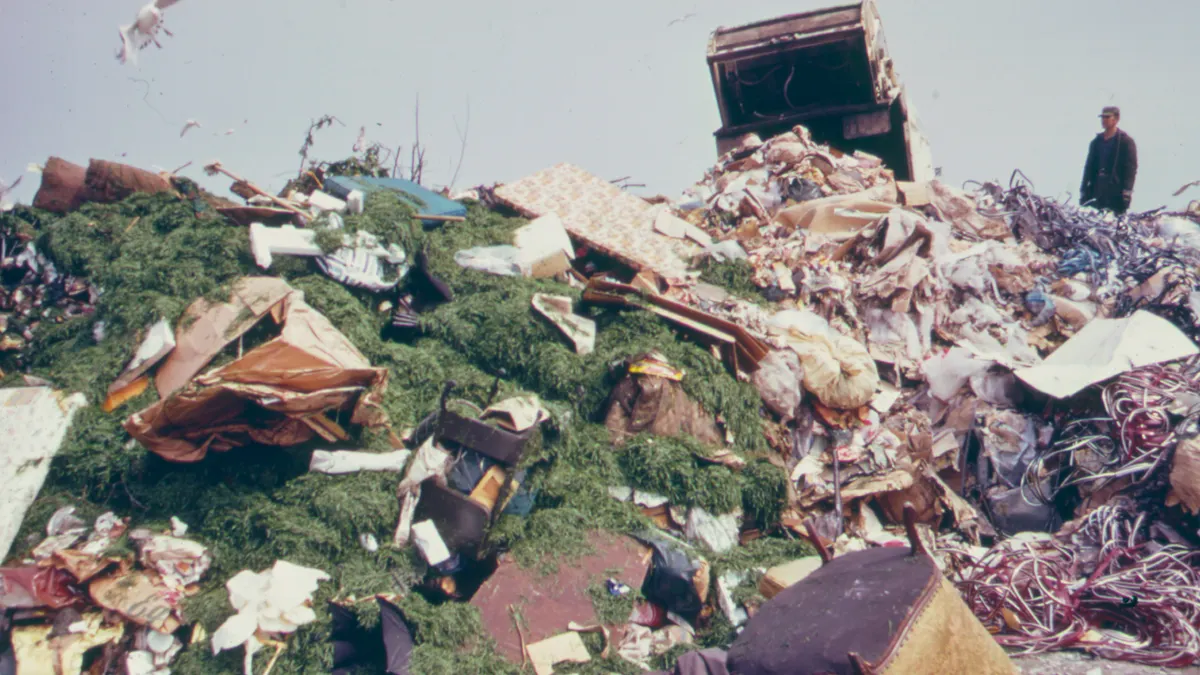
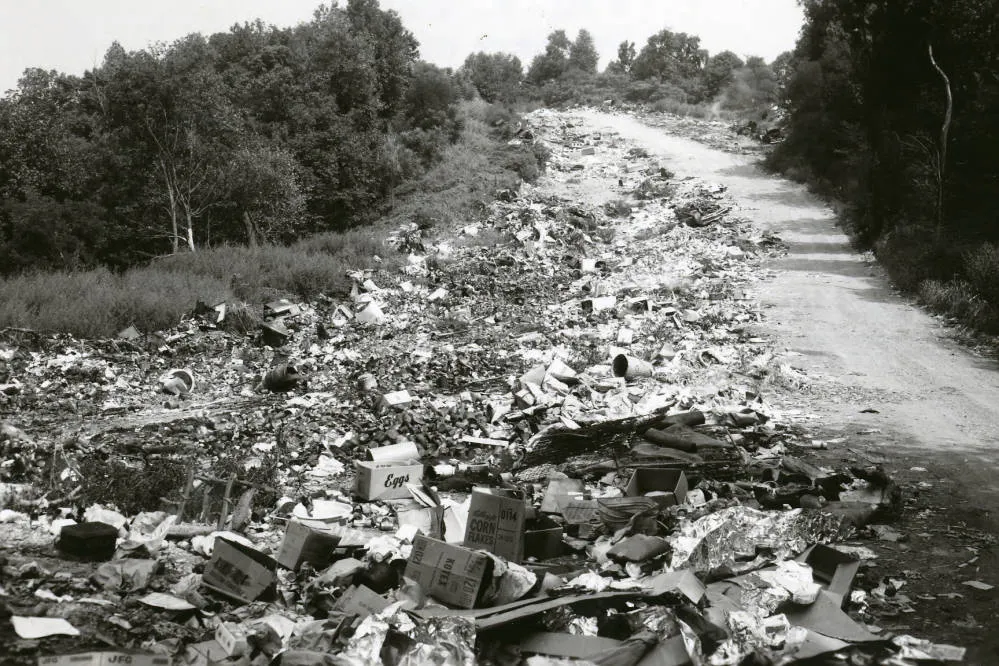
Prior to RCRA, municipalities or counties frequently ran their own dump sites. These sites were typically smaller than the regional landfills of today, and often located in former quarries, ravines or other out-of-the-way places at the time. As regulation loomed, landfill operators became concerned about the cost of meeting new standards, and these sites were abandoned or closed, in some cases with a thin layer of soil over top.
In the aftermath of regulations, some states stood up monitoring or remediation programs conducted on a voluntary basis. But others never developed such a program, and told Waste Dive they could not provide a list of pre-RCRA dump sites.
Many states said that assessment services are available for cities or counties today should those governments decide to take a closer look at their legacy dumps. In those cases, funding may be split between the local government and state, and is sometimes available through grant or loan programs such as water or hazardous waste cleanup funds.
Some states, including California and Texas, have delegated oversight authority of these sites to regional agencies. In those cases, the state leaves some of the recordkeeping to them.
The wide range of approaches to these sites is concerning, said Katherine Blauvelt, executive director of nonprofit Full Circle Future. Her group works with communities living near open landfills to advocate for stronger regulations. It has documented health impacts, including air and water pollution, from active landfills. But she said the problems Full Circle Future has seen could be exponentially more common due to the prevalence of closed dump sites around the country.
“We see firsthand how people can be just scared to have their kids play outside, or concerned about the water they're drinking from their tap,” Blauvelt said. “Think about those past dumps that are still around, but are out of sight and not on anyone's radar to clean up responsibly.”
RCRA’s closed landfill loophole
Efforts to identify and remediate open dumps around the country date back to the enactment of RCRA 50 years ago.
The law’s language specifically called for an open dump inventory. This inventory would allow states to identify and prioritize dumps that needed to be closed in order to transition to solid waste disposal in sanitary landfills, which had more modern pollution controls.
States were given funds to plan for the development of solid waste programs and complete an initial inventory, which they were to submit to EPA. In 1981, the federal agency released its first edition of the open dump inventory. The list contained 1,209 facilities, which officials knew was incomplete.
A 1981 U.S. Government Accountability Office review of EPA’s implementation said the first edition of the inventory “fell far short” of RCRA’s aims. It noted Louisiana alone had evaluated 1,751 dumps for potential inclusion in the inventory, but only reported 41 toward the EPA’s tally.
Several states told GAO researchers that they only reported facilities that they had determined were open dumps and that they were prepared to remediate. Many had not completed their initial inspections, let alone developed a remediation plan.
Due to the scale of the open dumping problem, EPA officials had reportedly told states they could stretch out their initial evaluations over years, despite RCRA intending to have a point-in-time snapshot of dump facilities.
Funding to support open dump surveying and remediation was also limited. The EPA had allocated millions of dollars to states through RCRA, but much of that funding went toward developing solid waste management plans. States could then elect to use a portion of the proceeds to support the inventory. But by 1985, when the EPA published its final edition of the inventory, funding had run dry.
Problems with the inventory were evident from the start, said Jim Walsh, who is currently chairman of the board of SCS Engineers. He said the engineering firm was called in to help some states complete their own inventories, but that guidance from the EPA was vague.
“They talked about how to evaluate a site as to whether it was an open dump or a sanitary landfill, but they didn't really say what the scope of the search should be,” Walsh said.
States’ inventories reveal that scope was interpreted in different ways. The state of Indiana disclosed that it conducted an aerial survey in which it logged any dump that was the size of the “area required to park five automobiles.” Other states took more informal approaches. At least one, New Mexico, did not participate in the inventory at all as of 1981, though it has since taken steps to evaluate solid waste sites.
These closed dump sites trace a long-standing pattern of discrimination identified decades ago by sociologist Robert Bullard in “Dumping in Dixie,” his 1990 study of landfill siting in Southern states. While advocacy from environmental justice groups has led to changes in the siting rules for new landfills, the toxic legacy of closed sites remains unresolved in many communities.
“If you map the closures and the landfills that still have not been addressed … you're mapping basically the history of our movement and the history of waste siting,” Bullard, now a distinguished professor at Texas Southern University, said.
When the EPA developed RCRA’s regulations, it gave states broad latitude to enforce rules for municipal solid waste landfills. Some states went above and beyond federal guidelines. But the EPA set minimum standards for post-closure care, including design requirements for permanent closure and requiring 30 years of financial assurance for post-closure care.
Yet those standards were only required for facilities that did not receive waste after Oct. 9, 1991, when the EPA published its final Subtitle D regulations for MSW landfills. Open dumps that closed before then, including thousands which continued operating for several years after RCRA’s initial passage, were able to escape federal minimum closure standards.
That leaves a constellation of sites across the country where basic monitoring or remediation has been entirely voluntary if it’s done at all, subject to an accidental discovery of pollution or a thorough local government.
“There's been very little work done uniformly across the board in attacking these facilities,” said Bullard.
North Carolina’s approach to remediation
The state of North Carolina has been working to uncover the extent of its network of municipal waste dumps that closed before 1983, when the landfill regulations in the state first kicked in.
A state law passed in 2007 created the Pre-Regulatory Landfill Program in North Carolina’s Department of Environmental Quality and set a $2 per ton waste disposal fee to fund its activities. The state sets aside roughly $10 million a year for the program through the fee.
Since monitoring and remediation activities began, the state has investigated 97 sites and fully addressed concerns at 37 sites. At that pace, it would take another 99 years and $1 billion to evaluate, process and remediate the remaining sites on the list, which numbers 688 closed dumps and counting, according to an audit released by DEQ’s inspector general in June.
At the same time, pressure is building to more quickly address North Carolina’s closed dumps as the state’s population grows, said Michael E. Scott, director of the state’s division of waste management within DEQ.
“We're getting more and more phone calls about these 600-plus sites and interest in developing them,” Scott said.
The state faces a variety of challenges in addressing these closed dumps, which are still occasionally rediscovered and added to the list. Some are on public property and can be accessed by inspectors. Others are on private property, or on several lots with different owners. In those cases, inspectors need permission from the property owners in order to gain access.
North Carolina’s program has the authority to override that barrier if it identifies an “imminent hazard.” But the inspector general determined that state regulators have largely declined to invoke that authority. Scott said the agency has felt that it is rarely applicable, mostly in instances where methane gas is escaping from the landfill at dangerous quantities.
“Where there's a very near-term, immediate risk to life or property, that authority can be used. But I will say it's been used in a very limited capacity over the years,” Scott said.
Some advocates would like to see regulators more aggressively exercise their authority to address former dumps that could pose a risk to their neighbors. And North Carolina’s audit unveiled plenty of risk: 84% of the sites within the program’s inventory are within 1,000 feet of a home, school, daycare, church or potable well.
The importance of remediation has been demonstrated repeatedly in North Carolina. In Fayetteville, a closed landfill was revealed to be leaking elevated levels of methane that reportedly posed an explosion risk, as well as other gases that posed an elevated cancer risk to nearby residents. In Greensboro, a public park has been closed for years after the discovery of a closed landfill with lead and other toxic metals beneath fields and basketball courts.
The audit found that nearly a quarter of all sites that have been investigated to date had methane concentrations in the dump that exceeded 5% — past which a spark could trigger an explosion. The audit also found concerning levels of lead, trichloroethylene and 1,4-dioxane at some investigated sites, all of which can cause serious health impacts at significant concentrations.
But remediation, too, can be a time-consuming and costly process. On average, North Carolina’s Pre-Regulatory Landfill Program has spent $1.9 million per site remediation. It takes an average of 13 years for a site to move completely through the program’s phased process.
Slow adoption of closed landfill solutions
Those states that have closed landfill programs have developed common procedures to address closed dumps.
Craig McOmie, who leads the Wyoming Department of Environmental Quality’s landfill remediation program, said the state took lessons from Minnesota’s program, and shared its own lessons with Colorado when that state developed a remediation program.
“We didn't want to spend a lot of time recreating the wheel, and we knew there were states ahead of us that had started to address these issues, and so we just queried them to try to develop a consistent path,” McOmie said.
Once inspectors gain access to a site, they move through a phased process of investigation and remediation. Groundwater sampling is frequently a priority, as unlined landfills could potentially seep chemicals into water supplies.
North Carolina, for instance, began a project in 2024 to offer complementary sampling for volatile organic compounds and PFAS for potable well owners located within 1,000 feet of identified landfill sites. That project is underway today.
Remediation can sometimes take a convoluted path. McOmie lives in Casper, Wyoming, which is itself home to a landfill remediation project. The site is on its fourth major remedial action project after officials and contractors repeatedly discovered issues at the Old Landfill Remediation Project, according to McOmie. Last year, the city had to approve new funding after site work uncovered a need to extend a new methane vent system for the former landfill.
McOmie said that experience gives him some perspective on the work that his agency does, and the effect a dump cleanup can have on a community.
“It brings it home that in the community you live in, it's good to have good, clean natural resources,” McOmie said.
Blauvelt, with Full Circle Future, said policymakers at every level of government have a role to play in addressing the nation’s closed dump sites. She noted there’s precedent for such action: abandoned oil and gas wells are covered under federal programs designed to protect human health even when a financially responsible party cannot be identified.
Over the years, the EPA has also added dozens of closed dumps and landfills to its Superfund cleanup program in cases where substantial risk had already been demonstrated. The Day Island Landfill in Oregon was evaluated in 1984 and 1985 for the program’s National Priorities List, but both times fell just short of a score high enough to merit inclusion.
The EPA also has the ability to access disposal sites that present an “imminent and substantial endangerment to health or the environment” under RCRA’s Section 7003. In a 1984 case involving a Waste Industries-run site in North Carolina, the fourth circuit court of appeals ruled the agency can use the authority even in instances where the threat stems from past conduct, i.e. before RCRA’s protections went into effect. That case was reportedly settled in 1995.
But the federal government has been reluctant to use that authority, recently doing so in two cases involving landfills in Puerto Rico in 2007 and 2014. The agency did not respond to a request for comment on its approach to Section 7003, and declined to make an official available for this story.
RCRA also gave broad power to the states to address and enforce disposal practices through their own solid waste plans. If they control where waste can go, they “sure as heck have a responsibility for making sure people are drinking clean water near those dump sites, and not dealing with everyday pollution,” Blauvelt said.
While our understanding of disposal practices have evolved since RCRA’s implementation, Blauvelt contends regulators have the tools they need to right historical wrongs.
“This is fixable,” she said. “And the cost of doing nothing is contaminated wells, contaminated water supplies, and a cleanup bill that grows every year that we wait.”
This is the fourth in a series of stories about the 50th anniversary of RCRA. We’re offering the Waste Dive community a behind-the-scenes look at how our RCRA coverage has come together and an opportunity for a live Q&A with the team. Register here for the exclusive event on Nov. 19.