Dive Brief:
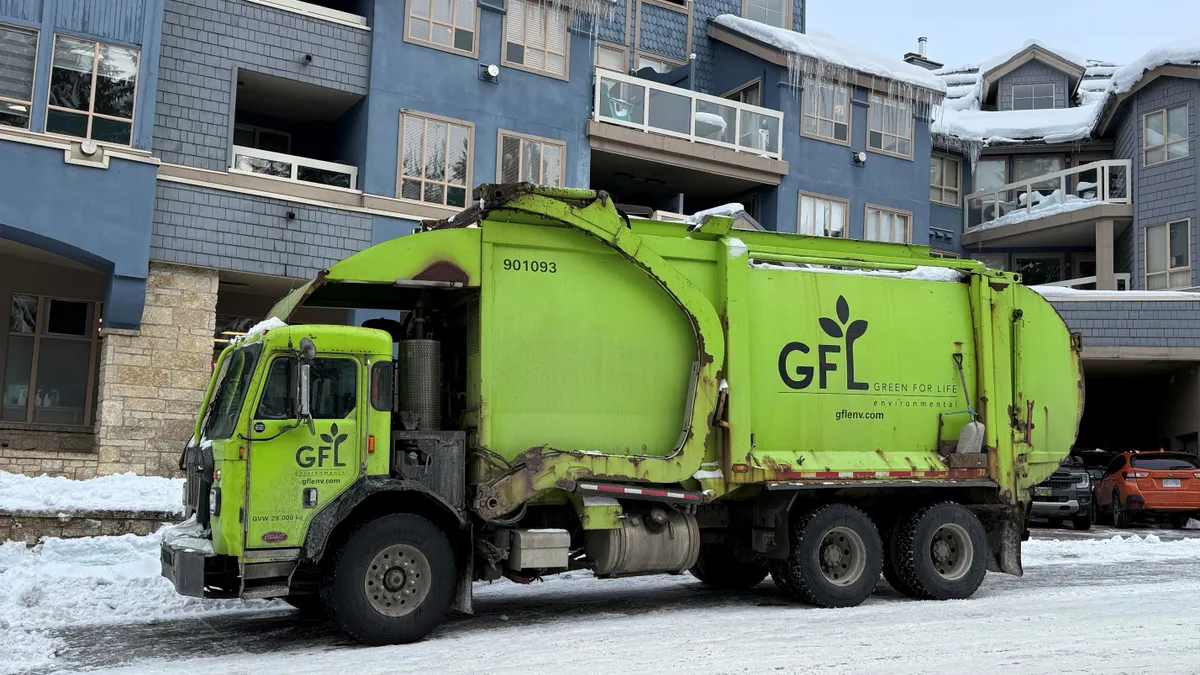
- A final rule from the Federal Motor Carrier Safety Administration affecting CDL eligibility for nearly 200,000 drivers across different industries is expected to take effect Monday, despite pushback from haulers like Waste Pro, along with Teamsters and the American Federation of State, County and Municipal Employees.
- The final rule would restrict certain “non-domiciled” drivers from being able to hold or renew a commercial drivers license, including certain asylum seekers and refugees who were previously eligible. Waste Pro says the rule change would immediately affect up to 20% of its drivers, thus delaying service and making it hard to replace qualified drivers because of the time-intensive training process.
- An emergency motion to block the rule from going into effect has not yet been heard in the U.S. Court of Appeals for the District of Columbia Circuit as of Monday morning, according to Sarah Wilson, partner at ColomboHurd. AFSCME, AFL-CIO, the American Federation of Teachers and other groups filed that emergency motion in February, saying the rule is discriminatory and would put public safety at risk.
Dive Insight:
FMCSA says the new rule is necessary to “close gaps” in how states issue CDLs to drivers from outside the United States. The agency points to a “nationwide review” it conducted last year, which it said revealed “widespread non-compliance among state driver licensing agencies and a troubling series of fatal crashes caused by nondomiciled CDL holders.” But the groups that filed the emergency motion say that justification doesn’t match up with their day-to-day operations or how it trains its CDL holders.
Finding qualified, licensed commercial drivers is already a long-term process for many waste haulers, and Waste Pro and others say the new rule will arbitrarily strip skilled drivers of their credentials and drastically reduce the pool of drivers it can hire, all while negatively affecting the livelihoods of drivers who would be no longer eligible to have a CDL under the new rule.
This comes amid the waste and recycling industry’s ongoing efforts to hire and retain more drivers, which has become a challenge in recent years.
Waste Pro filed an amicus brief in the case, noting that it operates fixed daily collection routes that can’t easily be updated to adjust for a sudden loss of its workforce. These drivers already had valid employment authorization documents and had already gone through extensive training and testing before being brought on to drive collection routes, the company said. WastePro operates in the Southeast, particularly in Florida.
According to the FMCSA final rule, the only “non-domiciled” CDL holders who can retain their credentials are those with H-2A, H-2B or E-2 visas. All other non-domiciled CDL holders would no longer be eligible, including certain asylum seekers, refugees and those who are part of the Deferred Action for Childhood Arrivals (DACA) program.
In the amicus brief, Waste Pro says some of its drivers have already lost their credentials “with little or no advance notice despite possessing active [Employment Authorization Documents].” This causes service delays and forces Waste Pro to reassign these employees to non-CDL roles.
Waste Pro expects more denials and revocations to accelerate as the rule goes into effect. The “instability” in the renewal process stems partly from FMCSA publishing the interim final rule back in September, with the final rule set to go into effect March 16.
Haulers cannot rely on other licensed drivers to pick up the slack, the company argued. That’s because other federal regulations limit the number of hours a driver can be on the road, meaning “schedules cannot be adjusted to absorb the shortfall.”
FMCSA says the rule change “strengthens the security of the CDL issuance process and enhances the safety of commercial motor vehicle operations.” The agency denied a Feb. 17 request from petitioners to delay implementation of the rule, leading to the groups filing the emergency motion.
Waste Pro argues that drivers already go through a multi-step process to safely and responsibly do their jobs. The process for Waste Pro to hire new drivers can take between 60 to 75 days because its vetting process includes a full week of training, a live route monitoring process and other safety steps. Drivers are also paired with a mentor, the company said. Some drivers are required to have additional training and screening when assigned to “sensitive sites” like airports, refineries and residential areas with homeowners associations.
Waste Pro also argues that it’s not the only hauler that will face significant business impacts, noting that the “diminished supply of CDL workers is likely to affect the sanitation industry in a disproportionate way.”
The National Waste and Recycling Association has also noted a growing labor shortage for CDL drivers in recent years. The association did not respond to a request for comment on the court case.
The new rule unfairly discriminates against drivers who have followed the rules, Teamsters California argued in its amicus brief. That union represents 250,000 workers across numerous industries in the state, including waste and recycling.
Teamsters California noted that union members with CDLs, “including both citizens and noncitizens,” have “invested substantial resources into becoming skilled drivers in reliance on using their CDL to support their families, and they have fought to maintain the highest possible safety standards in their workplaces and on our public roads.”
The FMCSA rule would deprive workers of their livelihoods, place an unfair burden on fellow drivers, interrupt key supply chains and “jeopardize the well-being of the general public,” the union said.
The drivers deliver essential goods and services, drive children to school and keep streets clean, they said. “These drivers serve not only as the main and often sole providers for their families, but as the backbone of our national economy.”
AFSCME represents numerous industries, including public sector waste workers across multiple cities. President Lee Saunders has said the FMCSA final rule is needlessly punitive.
“By blocking lawfully present immigrants from obtaining these licenses, the administration isn’t just undermining their ability to support their families — it’s jeopardizing the essential services our communities rely on every day,” he said in a statement.