Dive Brief:
- A coalition of 34 environment and agriculture groups are urging the U.S. Department of Agriculture to declare on-farm manure digesters ineligible for funding through the Rural Energy for America Program. The groups include environmental organizations such as Friends of the Earth, the Waterkeeper Aliance and Food & Water Watch, as well as agriculture-centered advocacy groups like Farm Aid and Animal Legal Defense Fund.
- In their petition, the groups estimated about $257 million of the $3.2 billion disbursed by the program from 2021 to 2025 went to digester projects. They further noted that the average grant or loan guarantee for digesters was much higher than for solar or wind projects, which are also funded by REAP.
- Earthjustice also filed a lawsuit Wednesday attempting to compel the USDA to release records explaining the methodology it used to justify support for digesters. Meanwhile, REAP funding is delayed as the agency says it’s dealing with a backlog of applicants for the popular program.
Dive Insight:
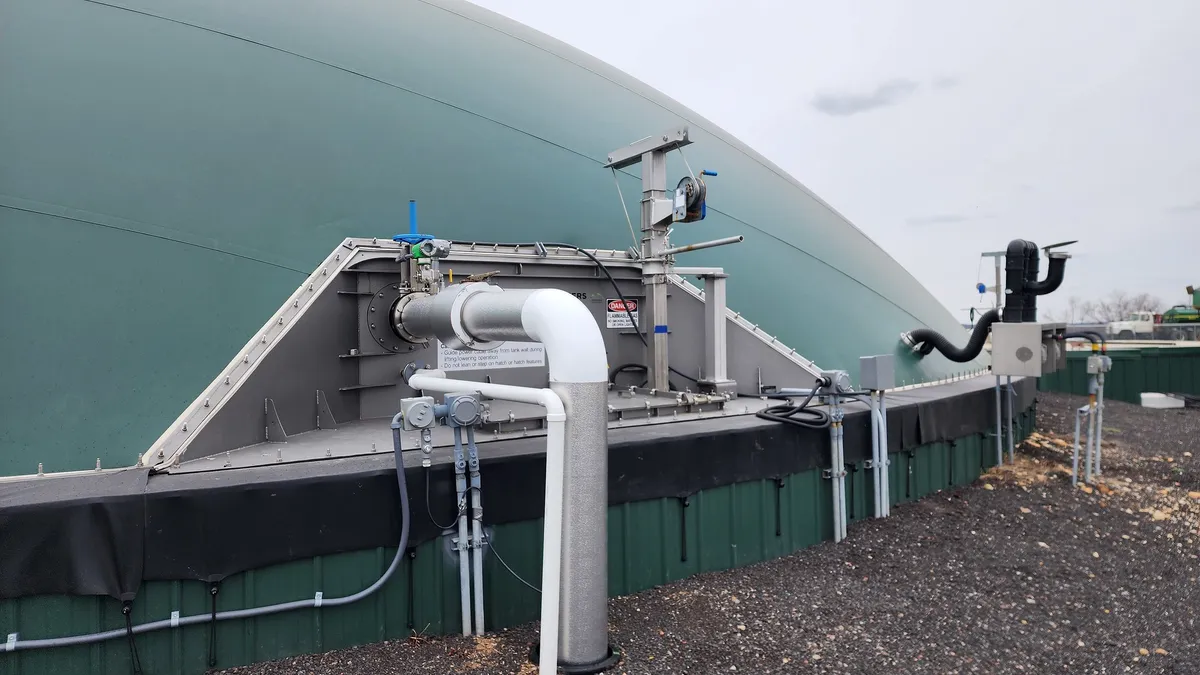
The petition comes amid continued advocacy against government programs that subsidize anaerobic digesters. Opponents say the digesters do more environmental harm than good and lead to farm consolidation, while biogas groups say digesters tackle emissions and provide an important revenue source for farmers.
The petitioners argue that the federal government should declare digesters ineligible because they do not meet the criteria that projects should meet to receive REAP funding. The program is meant to fund projects that provide environmental benefits, favor small farms in lower-income communities and do so in a cost-efficient manner, the petitioners say.
“REAP exists to help farmers and rural small businesses lower energy costs and foster stronger communities, not prop up factory farms,” Molly Armus, animal agriculture policy program manager at Friends of the Earth, said in a statement. “If USDA wants to save taxpayer dollars, it should stop wasting its funds on inefficient, costly digesters and instead invest in projects that truly benefit rural communities.”
Biogas groups pushed back on the petition; Geoff Dietz, senior director of federal affairs for the RNG Coalition, called it “without merit and unlikely to succeed.” Biogas groups have long argued that digesters do a better job at capturing emissions from manure than other methods because they consolidate the material and cover it with a system that extracts the gas. Dietz said the systems provide “durable economic and environmental returns for rural America.”
Proponents further argue that digesters are a cost-effective means of generating energy, and say that the systems benefit farmers by generating additional revenue and reducing fertilizer costs.
“The reality is that biogas systems and digesters align directly with REAP’s statutory goal of providing environmental and public health benefits in rural America. There’s no question they should be included,” Patrick Serfass, executive director of the American Biogas Council, said in a statement.
The debate over digester subsidies has become central to other incentive programs around the country. Removing provisions beneficial to digesters was a key ask of environmental justice advisors during recent debate over California’s Low Carbon Fuel Standard, which received a major update in 2024. Digester opponents there were ultimately unsuccessful. A similar conflict is playing out in New Mexico, where regulators are in the process of finalizing the state’s own clean fuels program.
One of the central claims of opponents is that digester incentive programs enable the concentration of dairy herds. The petition cited studies finding that dairy operations with digesters grew their herd size much more quickly than those that did not. Larger herd sizes increase the threat of air and water pollution, the petitioners say.
They further note that the creation and storage of digestate results in the production of compounds like ammonia at much higher levels than would be produced from untreated manure. And other nutrients, such as nitrogen and phosphorus, are made more water soluble in the anaerobic digestion process, potentially causing ground and surface water quality problems when the digestate is spread on land.
Those issues become more pronounced if facilities discharge their waste into the environment accidentally or in violation of their permits. The petitioners allege at least a dozen digester projects funded by REAP in recent years had documented water pollution issues. As an example, they name one Michigan facility that received a $1 million REAP grant in 2024 despite state regulators citing the associated dairy for multiple unpermitted discharges of waste and “evidence of chronic discharge of runoff and leachate.”
Finally, the petitioners dig into the finances of digesters and argue the projects cannot always recoup their costs. They performed an analysis of EPA data of on-farm digesters around the country and found that 17% have shut down, some due to financial challenges. Those challenges become more pronounced if fuel subsidies are weakened or removed, as environmental groups would like to see.
The USDA was not immediately available for comment. The agency has previously made other projects ineligible for REAP funding, namely those that co-burn fossil fuels. It’s unclear what the timeline would be for consideration of the petition.