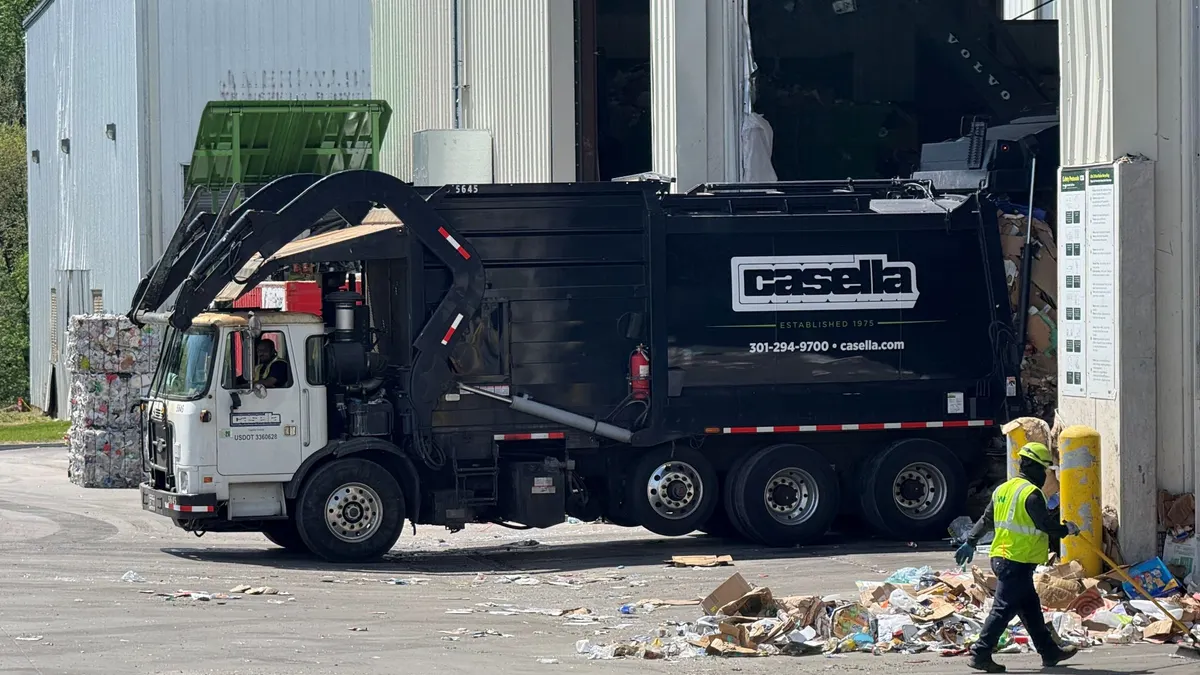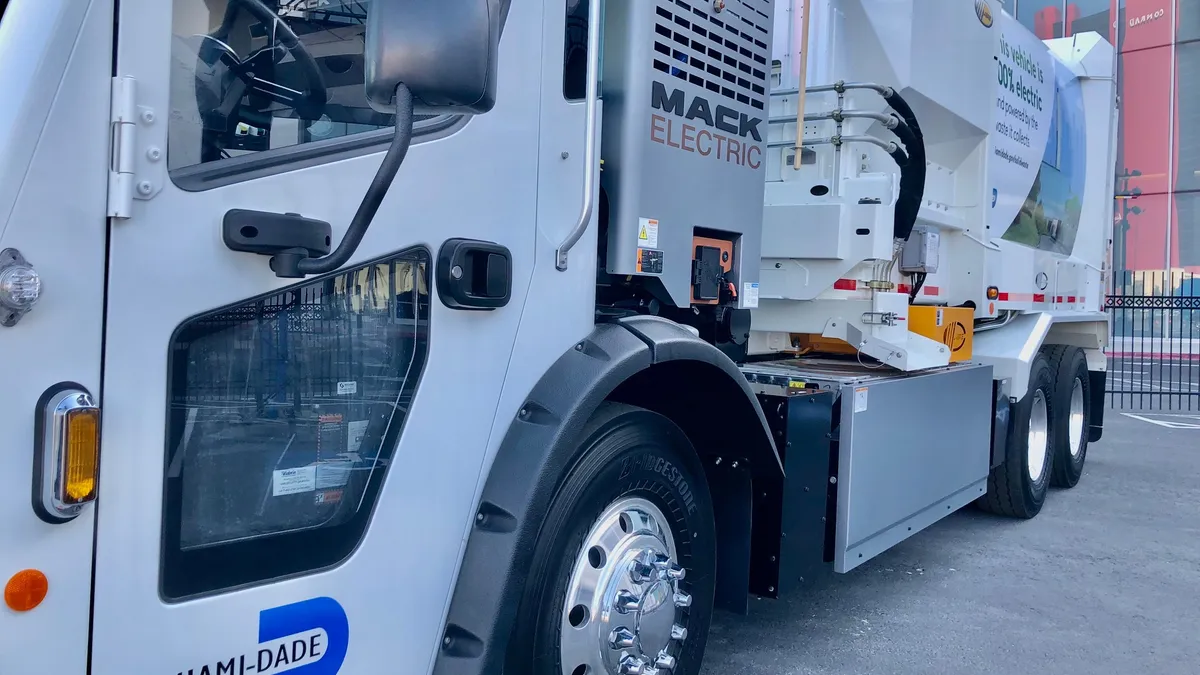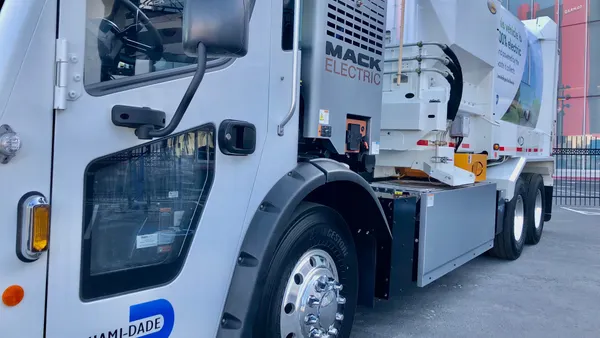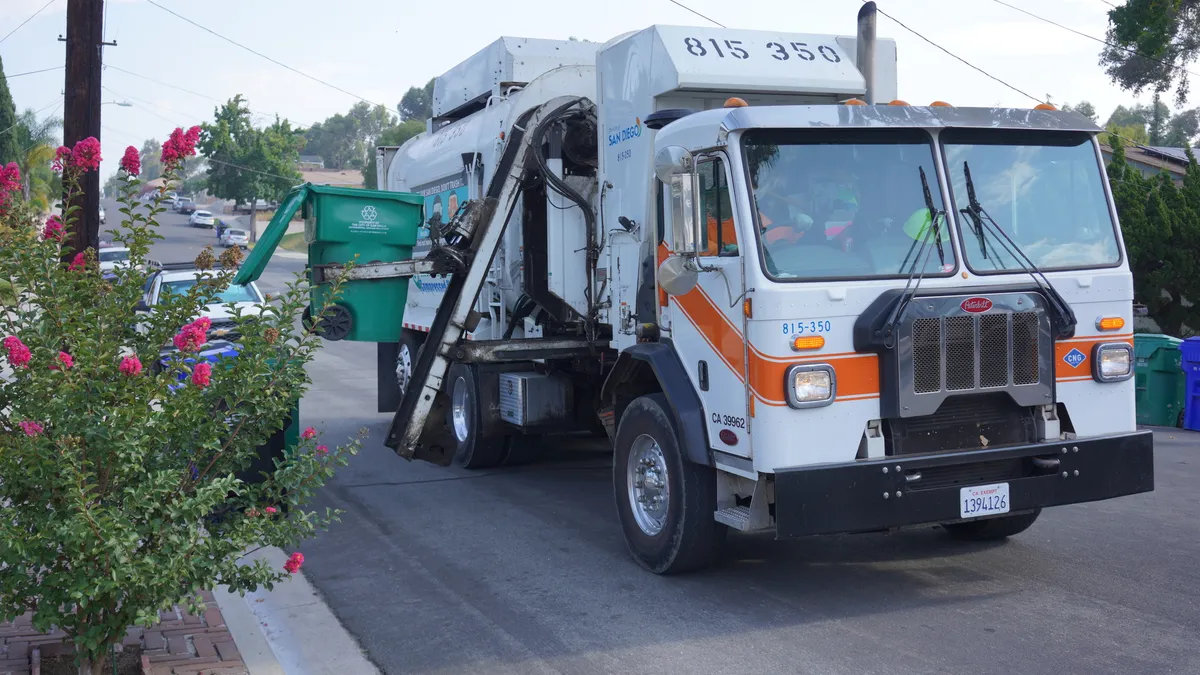
California regulators are attempting to recommit most private waste fleets to a zero-emission timeline, a move that has surprised the industry in recent weeks. Fleet owners say they’d struggle to meet the requirements, and truck manufacturers shared continuing limitations to battery-electric truck deployment at the Waste Leadership Summit last week.
Public comments closed Tuesday on amendments proposed by the California Air Resources Board for its pared back Advanced Clean Fleets rule. The state regulator is attempting to compel a transition to zero-emission heavy-duty truck fleets through a series of milestones starting in 2030, but has had to adjust its approach due to opposition from the Trump administration.
The ACF rules have faced a long and difficult road. The policy was initially meant to be paired with CARB's Advanced Clean Truck regulations, which similarly compelled truck manufacturers selling vehicles in the state to increase the proportion of zero-emission vehicles on offer to buyers. But Advanced Clean Trucks was nixed a year ago by Congress, which was able to use the Congressional Review Act to deny a federal waiver California needed to adopt the rules.
CARB voluntarily withdrew ACF from the federal waiver process prior to President Donald Trump's inauguration, hoping to avoid a clash. But without a waiver, CARB’s ability to regulate privately owned fleets was limited. Regulators maintain that CARB does not need a waiver to enforce the policy’s requirements on fleets owned by state and local governments, but the agency has issued multiple amendments to ACF to further tweak its language over the last year.
The agency now contends the rules apply to fleets operated by and for state and local governments in California. That includes waste and recycling collection fleets owned by municipalities or sanitation districts, but it also includes any waste "fleet owner that is contracted with a municipality via franchise agreement or long-term contract." That applies to most waste fleets in the state, including major cities like Los Angeles which operates via franchise agreements with multiple haulers.
The language has caught private waste haulers off guard, many of which assumed California's fleet transition plans no longer explicitly applied to them, according to Veronica Pardo, executive director of the Resource Recovery Coalition of California, an industry group backed by companies like Waste Connections and Recology.
She said haulers are generally taking a look at adopting zero-emission vehicles, namely battery-electric powered trucks, but that there are serious concerns about the expected pace of adoption, the cooperation of utilities and the availability of the vehicles themselves.
“This is just being squeezed in at the last minute,” Pardo said. “We believe that these are very substantive changes, and that CARB should not impose this compliance obligation.”
CARB contended that the latest amendments “did not change the applicability of ACF” in a statement provided by information officer Lynda Lambert. She said the new language is meant to “clarify an ambiguity raised by commentors that the regulations apply to all vehicles owned or operated by a State and Local government entity, including those which it operates through a contract.”
Unsteady adoption
The waste industry has been a willing adopter of diesel alternatives for several years, though that’s mainly true of compressed natural gas-powered trucks. Orders of “straight trucks” powered by natural gas like those used by waste haulers increased by 27% in 2025, according to the annual State of Sustainable Fleets report published by TRC Cos.
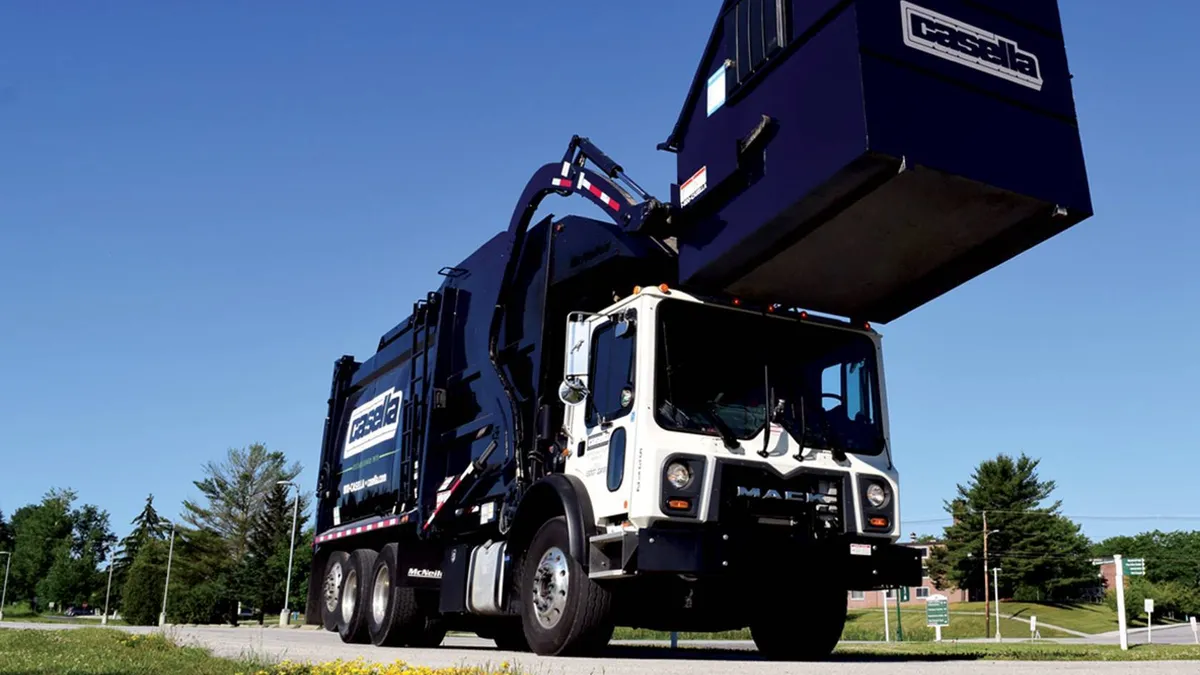
Republic Services, meanwhile, has led early adoption of battery electric-powered trucks, placing a 100-truck order with McNeilus in October 2024. In April, the company made the city of San Pablo, California, the first in the state to roll out a fully electric residential recycling and waste collection fleet. Republic now has more than 200 electric collection trucks in operation nationwide, and the company has worked closely with the manufacturer to ensure a successful deployment.
Other haulers and manufacturers are also examining what it would take to roll out zero-emission vehicles. Recology recently completed a fleet transition plan for its San Francisco operations, which called for an initial focus on smaller support vehicles while the hauler waited for battery-electric and hydrogen fuel cell technology to catch up to the waste industry’s needs.
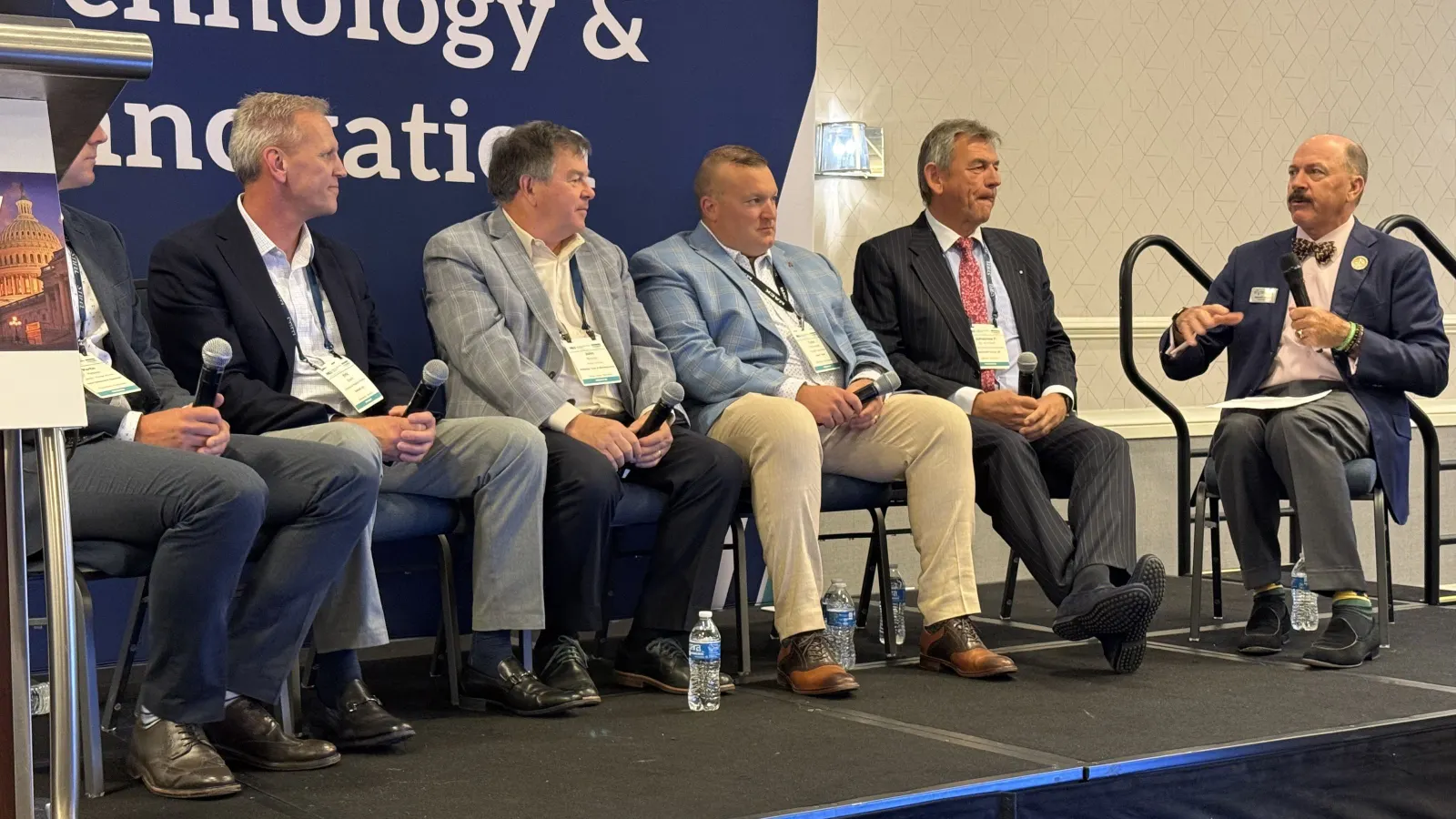
But building out a charging network for waste fleets remains a challenge, John Bonczyk, vice president of engineering at McNeilus, said at the Waste Leadership Summit in Washington, D.C., last week.
That’s become particularly problematic with the exponential growth in utility demand from data centers, which the waste industry now must compete with for interconnection, he said. He also noted that the industry has yet to come to a standard on charging technology, which further complicates deployment and interoperability.
“The infrastructure is a different animal than CNG,” Bonczyk said. “There's a lot of variables we're swimming through.”
Tyler Ohlmansiek, director of e-mobility sales at Mack Trucks, said at the summit that he thinks close to half of routes currently run by diesel-powered collection trucks could be run by electric alternatives. The primary issue is the higher weight of battery technology, which limits their ability to complete more difficult routes, he said.
“It's more positive when it comes to [replacing] routes one to one, but we're not there,” Ohlmansiek said.
Meanwhile, vehicle deployment and order fulfillment continues to be a challenge. McNeilus’s Volterra ZSL side loading garbage trucks faced a recall in November for model year 2024-2025 over the software controlling its grabber fingers. Battle Motors also faced a recall and a “Do Not Drive Warning” a year ago due to a loose steering wheel in its model year 2024-2025 Let2 vehicles, which serve the refuse and other vocational industries.
Pardo said she’s heard from haulers who have waited more than a year for their zero-emission trucks. She also noted that small haulers with less than 50 trucks would be included under the ACF rules for the first time with the current language in place. They face an even more difficult time getting zero-emission vehicles on time due to their smaller order sizes, she said.
Implementation questions
Previously, private fleet owners would have been responsible for their own reporting on progress toward a zero-emission fleet. But the proposed language in the ACF rules would place that burden on the government entities with which private haulers have contracted without any additional funding, drawing criticism from local governments.
The League of California Cities and California State Association of Counties has come out strongly against including contracted fleets in ACF. The lobbying group said the change would “likely increase procurement costs, reduce competition, create contractual uncertainty, and ultimately increase costs borne by taxpayers and ratepayers.”
They also took issue with CARB’s assertion in recent weeks that the latest amendments are minor changes to ACF language designed to provide clarity.
“If a broad array of stakeholders, including local governments, utilities, and regulated entities, interpreted the regulation differently, the issue is not ambiguity,” the group wrote in its comment letter. “Rather, it demonstrates that CARB's current interpretation was neither clearly expressed nor reasonably understood to be part of the original regulatory framework.”
For the agency’s part, CARB’s Lambert said that an economic analysis it published in July 2025 examining the cost of ACF implementation “did not explicitly exclude vehicles operated under a contractual arrangement.”
They myriad challenges associated with a zero-emission transition have led the industry to strongly rebuke CARB’s requirements. Pardo said she’s pessimistic about regulators’ willingness to reverse course at this stage. But she anticipates waste haulers will explore both legislative and legal strategies to ease the burden of regulation.
“There’s still a lot of conversation,” Pardo said. “I do anticipate there will be legal challenges.”
Disclosure: Informa, which owns a controlling stake in Informa TechTarget, the publisher behind Waste Dive, is also the owner of the Waste Leadership Summit. Informa has no influence over Waste Dive’s coverage.