From Maine to Hawai’i, 25 organizations are starting to see tangible results from $33 million in U.S. EPA Recycling Education and Outreach grants.
Teams received their funding throughout 2024 and into 2025, meaning that several recipients have started their final stretch of a three-year program. If the programs aren’t still trying to execute on their main goals, then they’re considering how their efforts will continue to serve communities when the grant funding is fully spent.
“We know this is a brief campaign, and we are looking to make sure we don’t lose momentum,” said Edith Makra, director of environmental initiatives with the Chicago-area Metropolitan Mayors Caucus, one of the REO recipient organizations.
This funding was awarded by the EPA via allocations from the 2021 Infrastructure Investment and Jobs Act, legislation that also backed the Solid Waste Infrastructure for Recycling program. The first round of REO grantees received anywhere between about $370,000 and $2 million. This work comes with reporting requirements, including information like how many campaigns grantees ran, what jobs were created and how volumes of recyclables or organics changed.
Some grantees have stuck closely to the “education and outreach” label of the program and offered guides on how to interact with existing recycling systems. Others took a more expansive approach, in some cases funding equipment and coaching needed for community members to start their first compost piles.
The differing ambitions of the programs have made it harder for some to create copy-paste programs that could be scalable, which creates extra challenges when it comes to anticipating how the work of the REO grants can continue when the funding is gone.
Where to begin with recycling education funds
For the Metropolitan Mayors Caucus, finding data on existing recycling behavior was a challenge.
The group, which has 275 local governments and seven counties, received $2 million to boost recyclable collection rates in the region.
The caucus members didn’t collect information on recycling behaviors, and only a couple of the six other grant participants that applied for the grant knew what their residential recycling rates looked like.
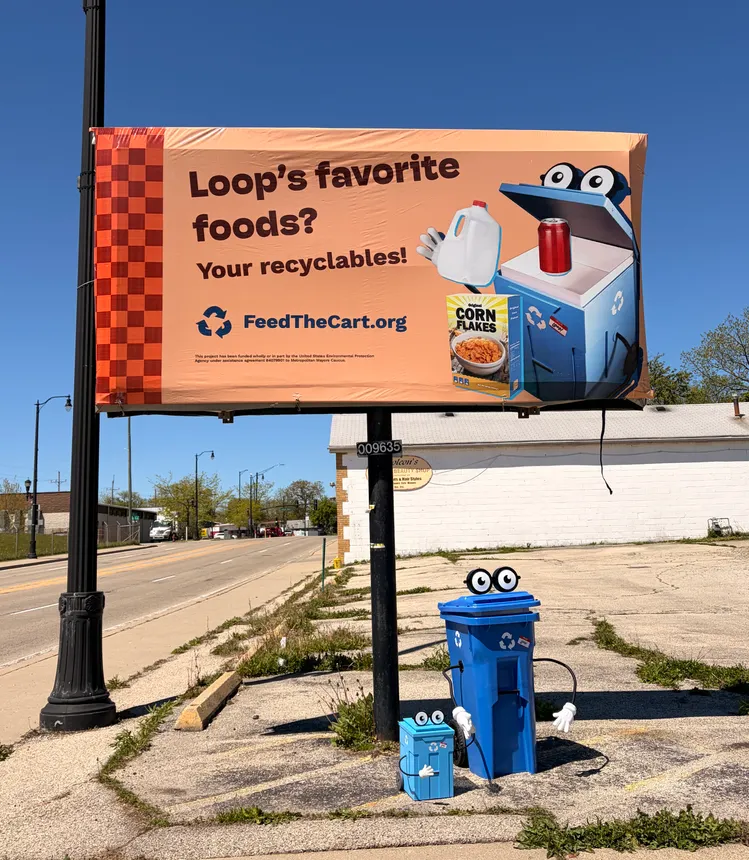
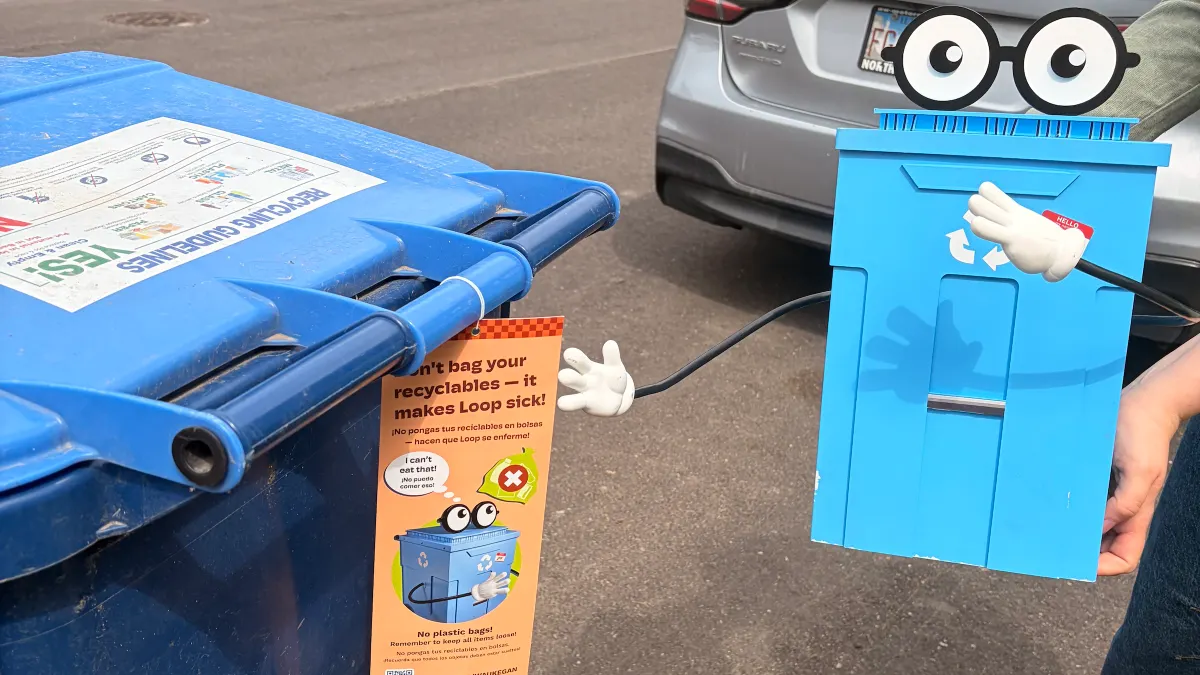
To get those numbers up, the caucus used the REO funding to develop a “Feed The Cart” campaign with agency Güd Marketing that features a googly-eyed recycling cart named Loop. The visuals encourage residents to give Loop the treats it craves — plastic jugs and bottles, paper envelopes, cartons, cardboard boxes and metal cans. These items are all accepted by the six counties and solid waste agencies named in the grant.
Weekly meetings helped the team create a collection list based on whose MRFs took what. “I swear we spent 45 minutes on aerosol cans,” Makra said.
Narrowing down the stated materials means that any community that accepts those items can run Loop on posters, billboards, and TV spots — all places the cartoon has been seen. If residents want to know what else can go in their bins, the Feed The Cart website lets people look up address-specific information.
The grant participants also divided some of the money evenly so they can run smaller, more targeted programs, Makra said. The Solid Waste Agency of Lake County, for example, used the money to audit curbside carts and provide residents with feedback.
Starting from food scraps
Elsewhere, information about existing material collection rates was more straightforward; though implementing a one-size-fits-all program has proven tricky.
Albuquerque, New Mexico, did not offer a composting program when the Ciudad Soil & Water Conservation District applied for funds to set up organics recycling at local schools. The district, which is charged with water conservation and managing soil erosion, received about $590,000 via the REO grants for its plans to provide composting equipment and guidance.
“There are four schools, so there are four different forms of communication happening,” said Sierra Penn, an agriculture coordinator at the conservation district.
Elementary and middle schools are part of the program. This required Penn to work with teachers to make different kinds of age-appropriate curriculum and also adapt equipment for each location. For example, the school working with kindergarteners needed bins closer to the ground.
Some schools have dedicated nature teachers who have more time to work with the conservation district than places where staff is trying to fit the composting into a school day full of other responsibilities. Because launching the different composting programs has taken more time than expected, the district applied for and received a one-year extension on the grant.
Future planning beyond REO
REO grant recipients’ challenges in their plans for a post-funding future are shaped by the level of customization in their respective programs.
Like the Chicagoland caucus, the Minnesota Composting Council used its nearly $935,000 grant to craft the Love to Compost website with a marketing agency. Materials for pamphlets and other fliers can be downloaded and edited on Canva to match what a specific compost operation needs, said Mary Cich, executive director at the council.
The council geared its offering toward Minnesota municipalities, in part because since certain local governments in the Twin Cities area will be required to offer curbside organics collection by 2030. Other soon-to-come uploads, what Cich calls the “beefier” program offerings, will offer guidance on hauler contract language and reducing contamination. Its plan is to maintain an educational campaign website once the grant funding is expended.
The grant helped increase Cich’s position from part time to full time, but this may change when the funding ends. The Clean Air Council in Pennsylvania could also lose staff when the three years are over.
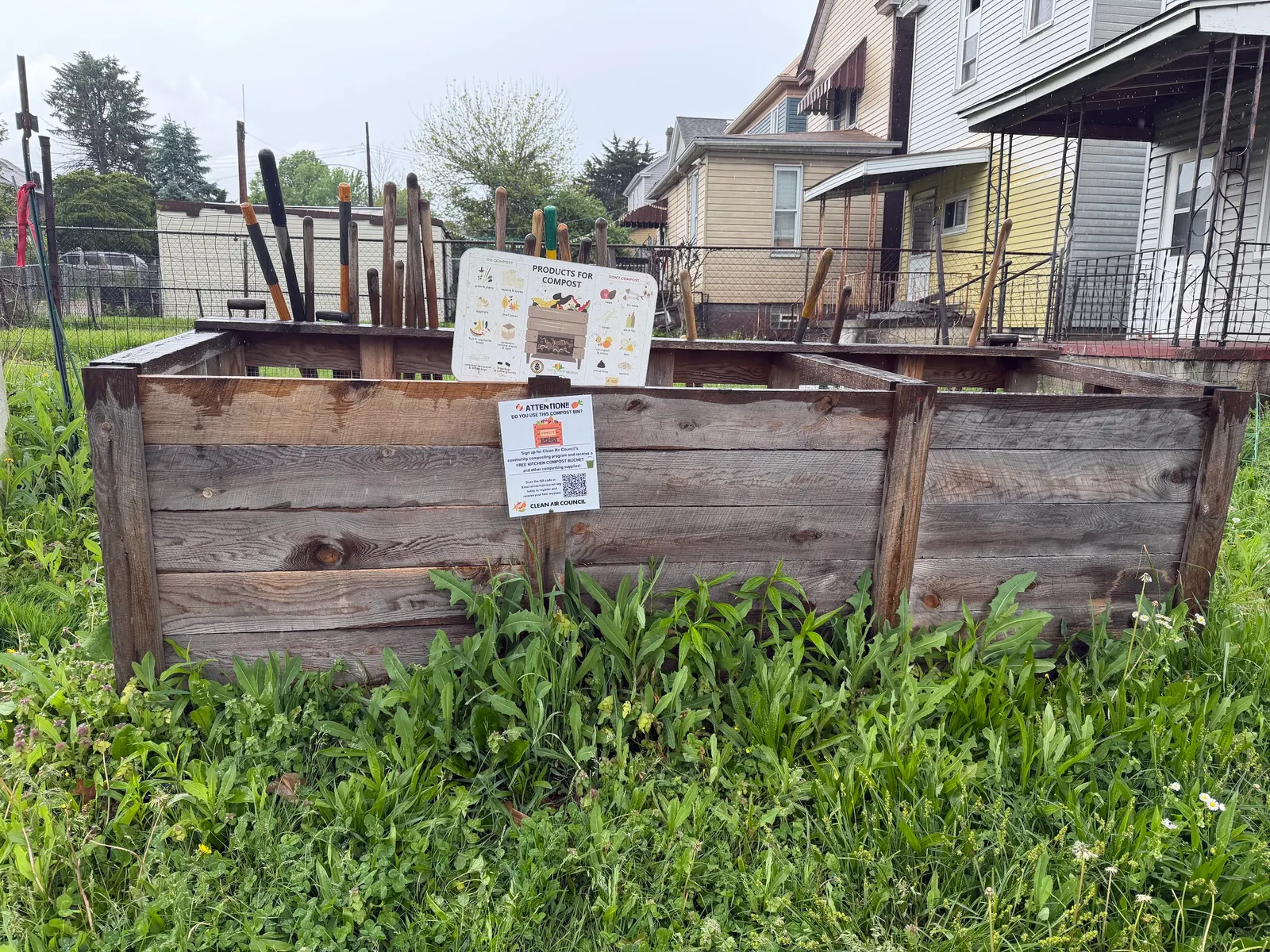
Ashley Knoch, the compost project lead, came on to the team to fulfill the intention of their grant: to set up new compost operations on both private properties and in community centers in the Pittsburgh area. The nearly $372,000 grant has gone toward buying bins, thermometers, pitchforks and more. Knoch has also installed collection systems and made site visits to check on progress or offer training.
There are now 85 new compost systems in the area, including seven at community spaces like gardens and municipal parks, Knoch said. She would like to have 150 total organics recycling systems when the grant is complete.
Knoch is also planning to have troubleshooting documents ready to answer questions in case her job doesn’t get further funding. This could include guidance on how to compost through changing seasons, what further grants might be available and whether or not additional compost bins could be installed by volunteers as the sites get larger.
“Each site is a little bit different, and they have different needs and resources that are available to them,” she said.
While all of these grantees get ready to wrap up their projects, some initial data shows promising results. The Chicago-area Solid Waste Agency of Lake County found that cart inspections led to an over 50% reduction in contamination.
A couple existing compost programs in Minnesota are implementing the composting council’s educational materials and have seen drops in contamination levels, too. The results, Cich said, are despite a squeeze she didn’t anticipate: The people working to carry out the program can find they have even more responsibilities than they anticipated three years previously, when the grant was first applied for.
“Everybody's still doing their part,” Cich said, “but a lot changes in those timelines in this world.”