Dive Brief:
- The Washington Department of Ecology on Wednesday proposed charging a fee to MSW landfill operators to cover the cost of the state's landfill methane emissions regulation. The proposal comes as the state faces a backlog in auditing labs used to implement its environmental programs.
- Two years ago, Ecology finalized its landfill methane emissions rules. Spurred by HB 1663, the rules require the owner or operator of any landfill that accepted MSW after Jan. 1, 1992, to install a gas collection and control system.
- The state has since worked to bring landfills into compliance, including through a grant program that distributed nearly $10 million to 13 landfills to assist with enhanced gas collection systems.
Dive Insight:
The Washington legislature passed HB 1663 in 2022, setting a goal to reduce the amount of organic waste sent to landfills by 75% by 2030. The bill built on the state's previous commitment to reduce greenhouse gas emissions by 95% below 1990 levels by 2050.
HB 1663 also directed the state's Department of Ecology to implement a landfill methane regulation to reduce greenhouse gas emissions. The department began work on such a regulation in December 2022, and finalized it in May 2024. Since then, it's begun working with landfill operators to implement the regulation.
Last month, Gov. Bob Ferguson signed a bill allowing the Department of Ecology to create dedicated accounts for fee revenue collected to help implement environmental programs.
The state contracts with hundreds of drinking water and nondrinking water testing labs to implement various environmental programs. It is required to audit those labs every three years, but a recent U.S. EPA investigation found the Department of Ecology was behind on 30 audits.
The new law would direct revenue collected to support the program into a dedicated Laboratory Accreditation Fee account rather than the general fund. It would also set up an Air Pollution Control Account for fees to implement the landfill methane regulation. A bill report noted that the Department of Ecology plans to increase fees to fill both accounts and enhance implementation.
At the same time, HB 1663 created an additional need to monitor landfill gas collection and control systems. The bill also notes the Department of Ecology has the ability to begin collecting fee revenue to implement the regulation as needed.
Since 2024, the Department of Ecology has been implementing its landfill methane regulation via a one-time cash infusion, according to an explanation of the fee proposal. The department said it’s facing continuing costs related to the regulation, including “Ecology staff time to review submitted annual reports, alternative compliance requests, and conduct onsite inspections to assess compliance with the law and rule.”
Landfill operators are also facing increased costs to comply with the updated regulation. To assist with implementation, in 2024 the Department of Ecology set up a $9.6 million grant program for landfills seeking assistance.
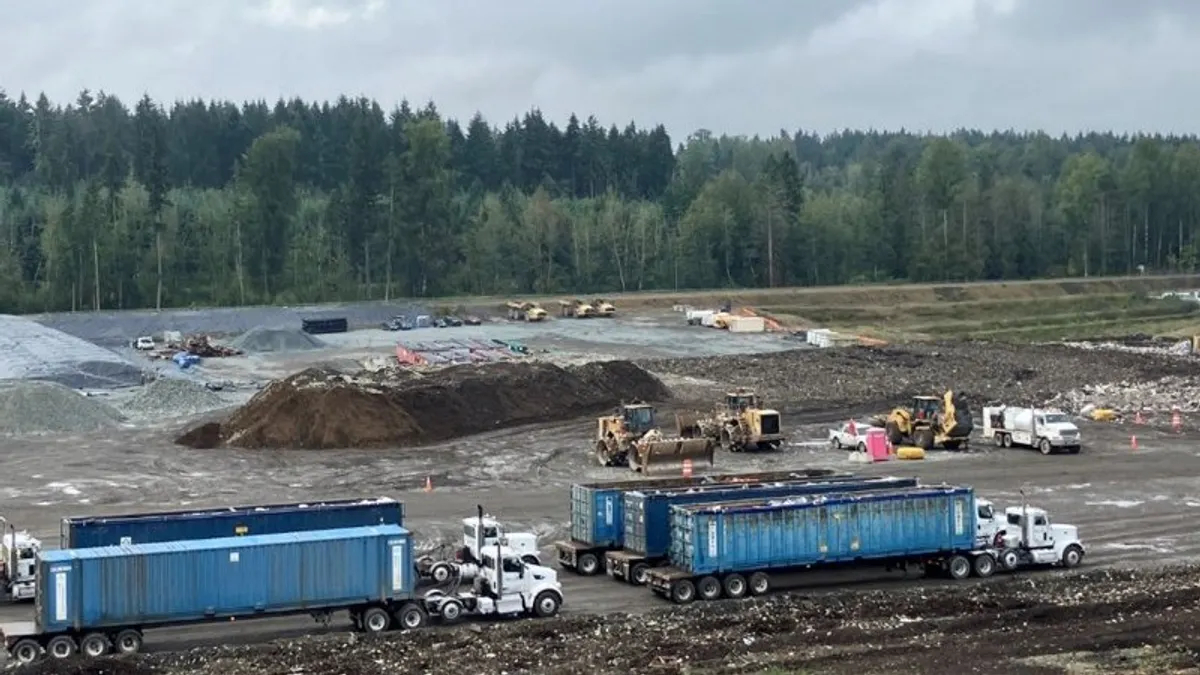
In a March blog post, the department detailed how the LRI Landfill in Graham was able to install 75 auto-tuning wellheads to improve the facility's gas collection system, thanks to a Department of Ecology grant. The landfill is able to collect more gas, and now uses a third of it to generate power and flares the rest.
The department has not detailed the structure nor the expected price for its newly announced landfill methane fee. It plans to hold stakeholder meetings through spring of next year, issue a proposed rule next summer, and finalize the rule in fall 2027, per a department webpage.