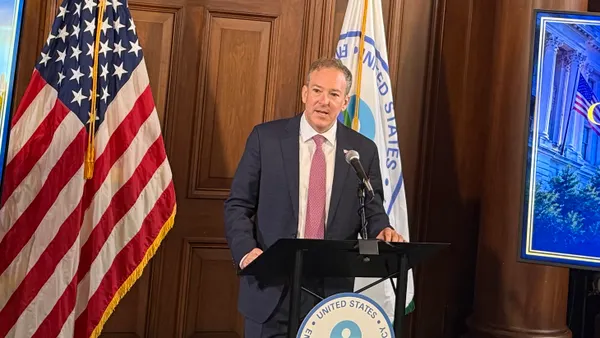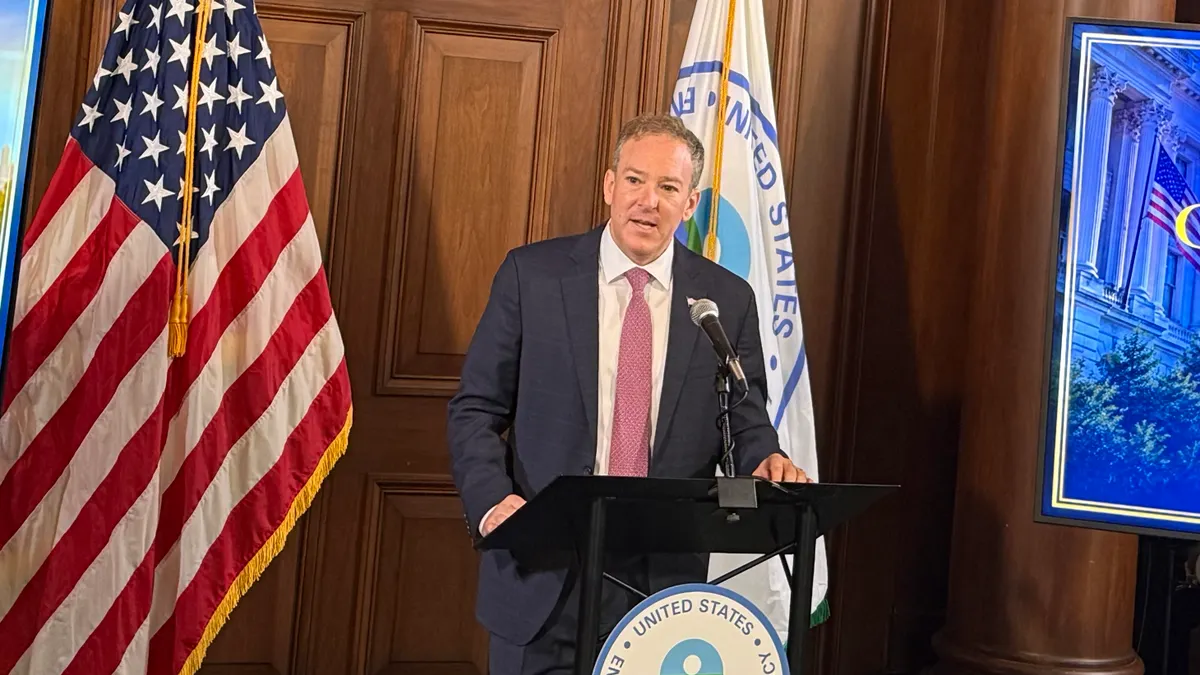
WASHINGTON, D.C. — PFAS remediation technology has made “extraordinary” advancements over the last 20 months, with these innovations becoming more accessible and less costly, said U.S. EPA Administrator Lee Zeldin during a press event on Wednesday.
Zeldin said recent advancements in managing per- and polyfluoroalkyl substances — both improvements to existing technologies and “prototype” techniques still in the research phase — were fueled by collaborations between the private sector, university research and research from EPA’s “career scientists.” The groups are motivated to move the tech forward to help water treatment and other industries meet EPA regulations for drinking water and hazardous substances, he told reporters.
PFAS remediation costs have been a concern for some in the water treatment sector as they prepare to comply with new drinking water standards set by EPA for PFOA and PFOS, with enforcement expected sometime in 2029.
The regulation previously included four other types of PFAS, but earlier this year, the agency proposed formally rescinding Safe Drinking Water Act regulations for those, which were set under the Biden administration. On Wednesday, Zeldin said the agency was still reviewing public comments on the proposed rule that could shape the language of the final rule.
Drinking water regulations are relevant to waste facility operators because of how they might affect landfill leachate management and groundwater monitoring efforts, as well as how these waste facilities interact with wastewater treatment facilities. The regulations also represent business opportunities for waste companies and PFAS remediation technology providers.
The EPA plans to allow certain eligible water utilities to apply for a two-year compliance delay on meeting drinking water standards for PFOS and PFOA, giving them until 2031 if they meet certain requirements. Zeldin said the agency is still working on details of how many delay waivers it could grant and under what specific conditions.
The EPA has said the extension could help address water utilities’ concerns that it will be expensive to upgrade infrastructure to comply with maximum contaminant levels.
Addressing PFAS has become more of a focal point for the EPA in recent years. The first Trump administration published an action plan for assessing and limiting exposure to the chemicals. Under the Biden administration, the agency released is PFAS Strategic Roadmap meant to offer a long-term strategy for managing PFAS pollution. The Department of Defense has also begun offering funding for PFAS remediation technology advancements.
Since taking the helm at EPA in 2025, Zeldin has said PFAS research must leverage both agency resources and the private sector. Zeldin framed the approach as a balance of business interests and available science.
“The private sector views this as an economic goal for them, so this isn't philanthropy on their part,” he said, noting that companies are fiercely competing for the best business model. “My confidence level today is a lot higher than it was a year ago that water systems are going to be able to treat PFAS at far less cost.”
These advancements could bring down compliance costs to the level where some water treatment authorities may not need a compliance extension, he said.
Zeldin says PFAS research has been a focal point for the EPA since he took on the role of administrator, saying that a wider range of scientific data would help the agency make better decisions. In 2025, he announced that the agency would begin publishing its PFAS destruction and disposal guidance annually instead of every three years.
But the agency has also faced criticism from environmental groups and organizations like Environmental Working Group, which said the agency has unnecessarily rolled back drinking water rules meant to keep the public safe, and argued that delaying compliance would harm both human health and the environment.
The EPA previously got backlash when the Trump administration in 2025 laid off a significant number of staff and overhauled its dedicated research office, opting to move some of its scientific staff into specific program offices.