Dive Brief:
- New Jersey’s state legislature has advanced a bill that would create an extended producer responsibility program for vape pens. The bill passed favorably out of the state Senate Environment and Energy Committee last week and is now headed for the budget committee.
- The bill, SB 681, calls for creating a producer-led program to “promote the refurbishment, reuse, and recycling of e-cigarettes, including vaporizers and batteries,” and tasks the group with establishing responsible management for the devices, including collection and processing offerings.
- If the bill passes, New Jersey could become the second state after Maine to enact an EPR program for vapes. The New Jersey legislature is scheduled to adjourn on Dec. 17, but the bill could carry over into 2027 as part of the state's two-year legislative session.
Dive Insight:
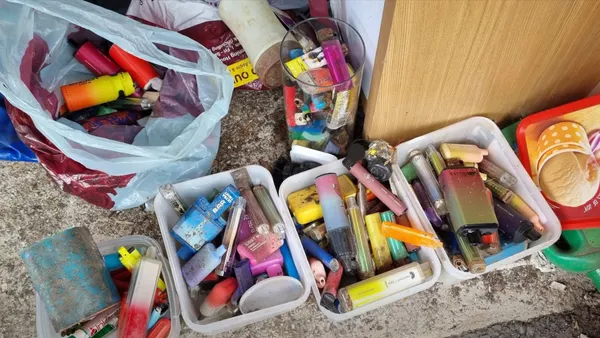
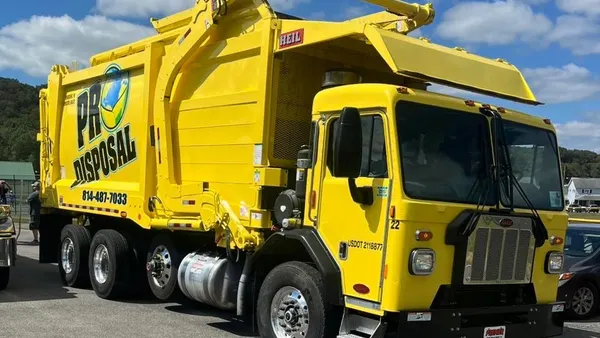
New Jersey’s EPR bill advances during a time when more state legislatures are taking action to prevent vape-related fires and reduce litter. The state’s bill specifically notes that the devices cause fires “in waste and recycling trucks, transfer stations, and sorting and processing facilities.”
The waste industry has long expressed concerns about the devices contributing to facility fires. Their small lithium-ion batteries are difficult to identify on tipping floors and in processing equipment, and the vapes can also leak harmful chemicals such as nicotine.
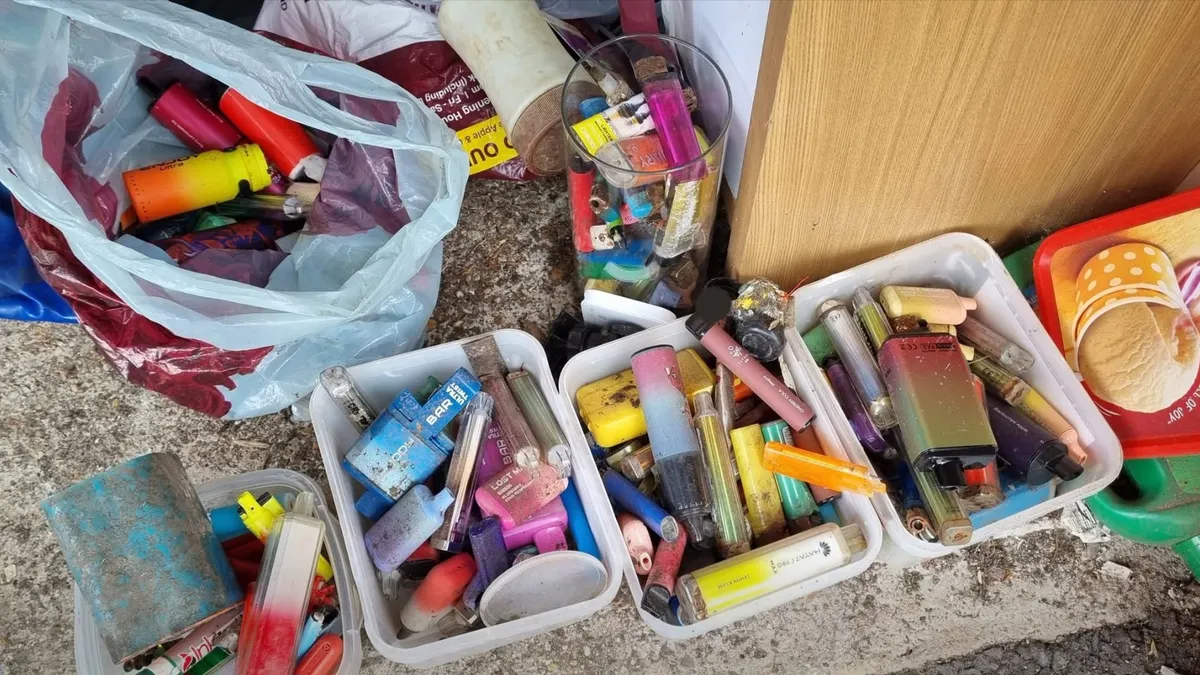
The devices also do not have a standard collection or disposal path, making it a complex process.
California enacted two vape-related laws last month: One bans the sale of battery-embedded disposable nicotine vapes starting in 2027, and another aims to tackle proper disposal methods. But Maine so far is the only state with an EPR law for vapes.
Illinois, which introduced a vape EPR bill this year, is expected to reintroduce the bill next year with some updates, said Hanz Atia, senior associate for policy and programs at the Product Stewardship Institute.
PSI supports EPR programs and offers technical expertise to stakeholders on a range of EPR bills. PSI did not directly work with New Jersey on its bill.
New Jersey’s bill is a version of an previous e-cigarette bill from 2025 that did not make progress before the end of the prior legislative session. That’s in part because it was introduced later in the year.
SB 681 calls for the creation of a producer responsibility organization that would submit a stewardship plan to the state Department of Environmental Protection. That plan would outline collection site locations, making sure at least 90% of residents have one within 15 miles of their home, with at least one collection site in each county. An amendment to the bill also calls for e-cigarette retailers to become collection sites within three years after the DEP approves the stewardship plan.
The program would be funded through fees the device manufacturers pay based in part on the amount of vapes they sell into the state. Fees would also be based on the “environmental impact of the e-cigarette, with, for example, lower fees being charged for reusable e-cigarettes and e-cigarettes that contain recycled content,” according to a Senate bill analysis.
Atia said New Jersey’s ecomodulation provision is unique for vape EPR bills in the U.S. “That makes a lot of sense for this particular product, since so many of these are single use. It makes sense to incentivize reusable ones,” she said.
Supporters of vape EPR in the state say the growing popularity of the devices has burdened municipalities and businesses, which aren’t equipped to handle hazardous and combustible devices and “do not have ready access to an efficient, environmentally sound, and cost-effective disposal method for e-cigarettes,” according to the bill.