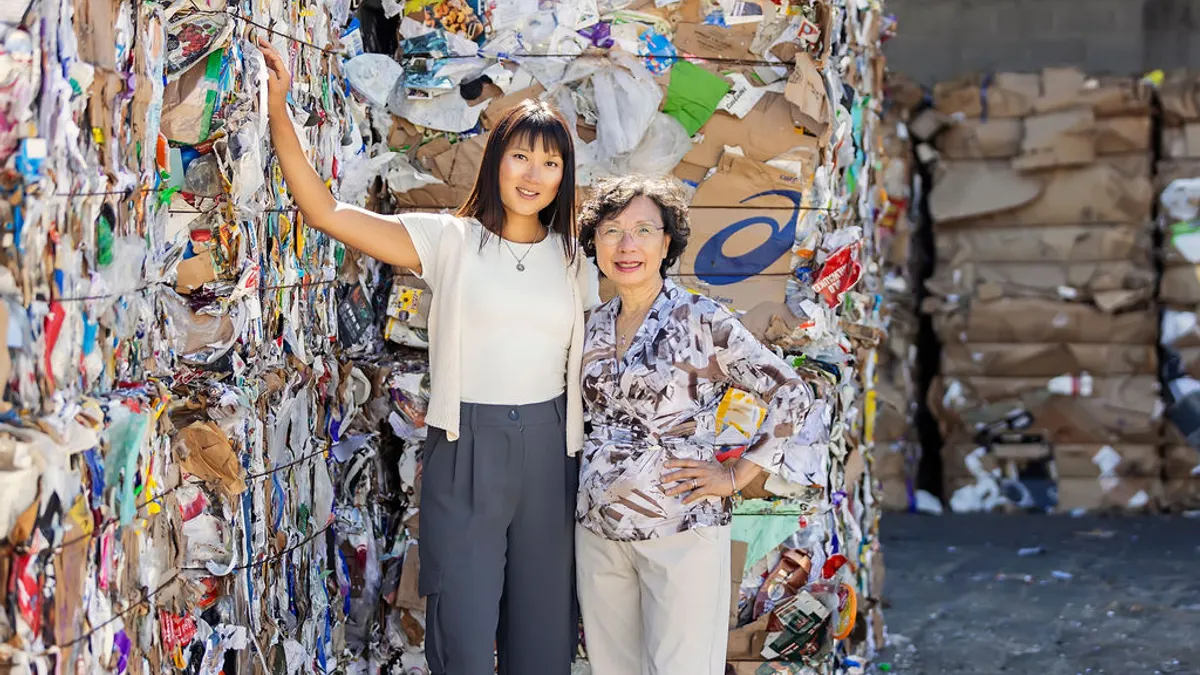
The way Paulina Leung recalls her mother’s origin story, Emmie Leung’s first foray into the recycling industry in 1976 involved some hand-printed advertisements and one truck operated by some friendly hippies.
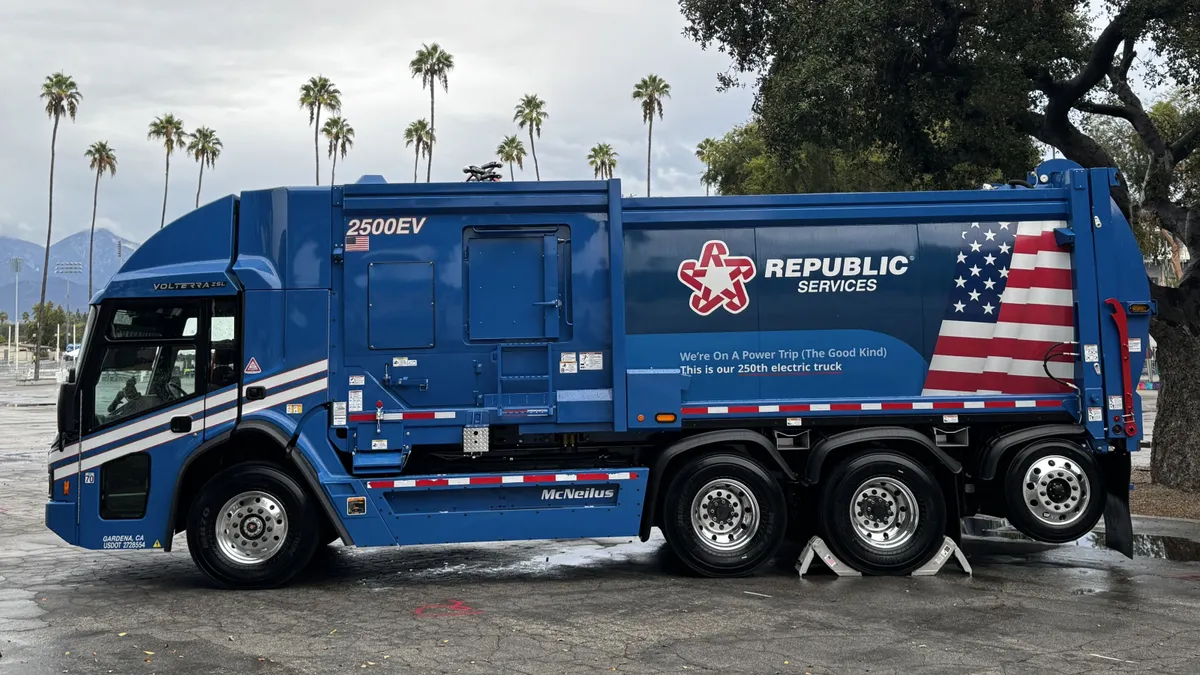
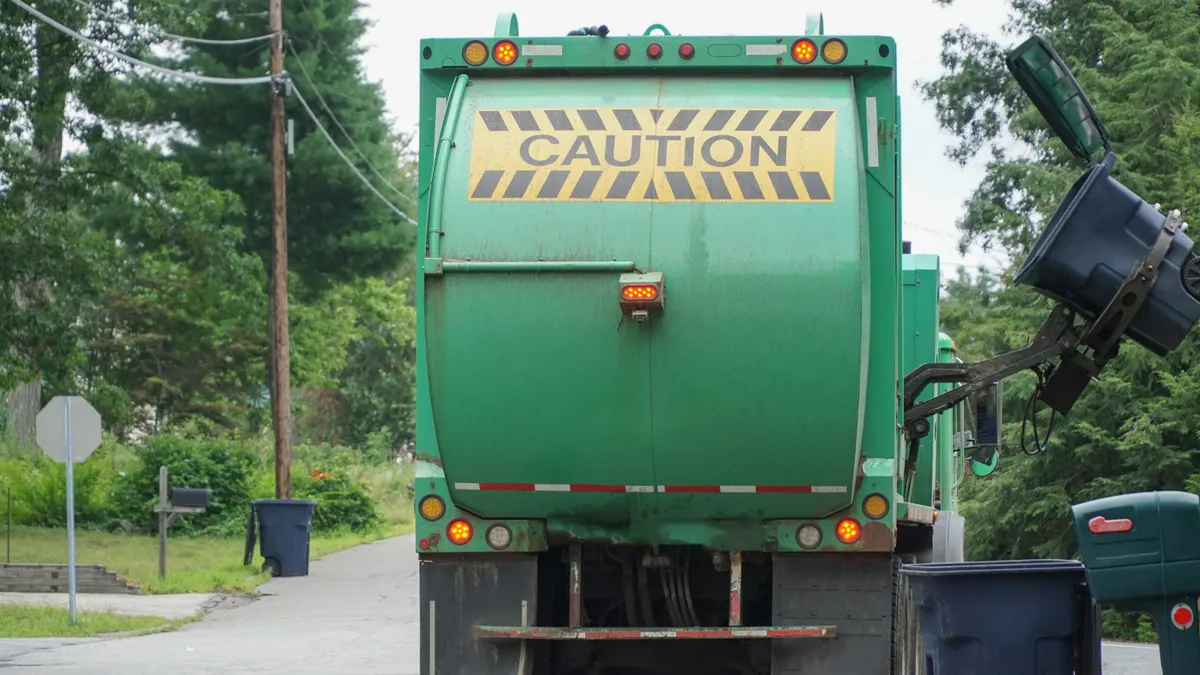
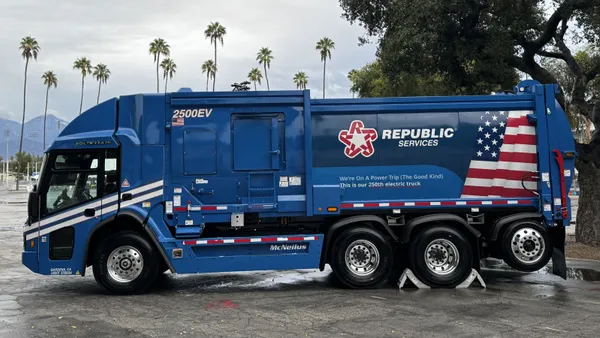
Now, 50 years later, Emterra Group is a 1,700-employee company that spans four Canadian provinces and Michigan. Its five divisions include Emterra Environmental, its recycling and waste management arm. That division manages 19 MRFs and several transfer stations along with numerous collection routes. About 30% of its 650-truck collection fleet is either compressed natural gas or battery electric, and its Vancouver Island fleet is now fully electric.
Ten years ago, when Emterra deployed its first CNG fleets, it was in the cold climate of Winnipeg — “and that was not fun, but we gained a lot of experience in using a technology that's essentially been developed in California,” said Paulina Leung, Emterra’s chief sustainability officer.
Emterra also operates Ryse Solutions, a producer responsibility organization in Ontario, as well as a tire recycling division, a liquids processing business and a U.S. division of Emterra Environmental.
“Fundamentally, we are always in the business of delivering services within the circular economy,” Paulina Leung said. “We’re not just trying to use ‘circular economy’ as a buzzword. Everything we do is about prolonging the life and the utility of resources that have already been extracted.”
Waste Dive spoke with Leung about Emterra’s history, its decision to stay out of the private equity game, and what’s on deck for the next 50 years.
This conversation has been edited for length and clarity.
WASTE DIVE: Your mother, Emmie Leung, started this business 50 years ago. What was her path from mainly recycling and exporting paper to expanding to Emterra Group’s interrelated but much more complex recycling streams today?
PAULINA LEUNG: My mom just finished graduating from the University of Manitoba with a commerce degree. This is the mid-70s in Winnipeg, which is like the prairie heartland. She couldn't find a job and was getting down to her last bag of rice and last jar of Cheez Whiz. That’s when she noticed businesses were throwing out paper. From her family's background in Hong Kong and China, she knew about the Asian mills buying waste paper for new packaging.
So she used her business degree, did her calculations and decided she could use the empty shipping containers at the ports to back haul the waste paper. That’s why she moved to Vancouver and got started. It's a kind of one-person entrepreneur story. She printed and handed out her own fliers, she made friends with two hippies who had a pickup truck for collection. She’d stack piles of paper in the backyard, then drive them to the port and filled those shipping containers by hand.
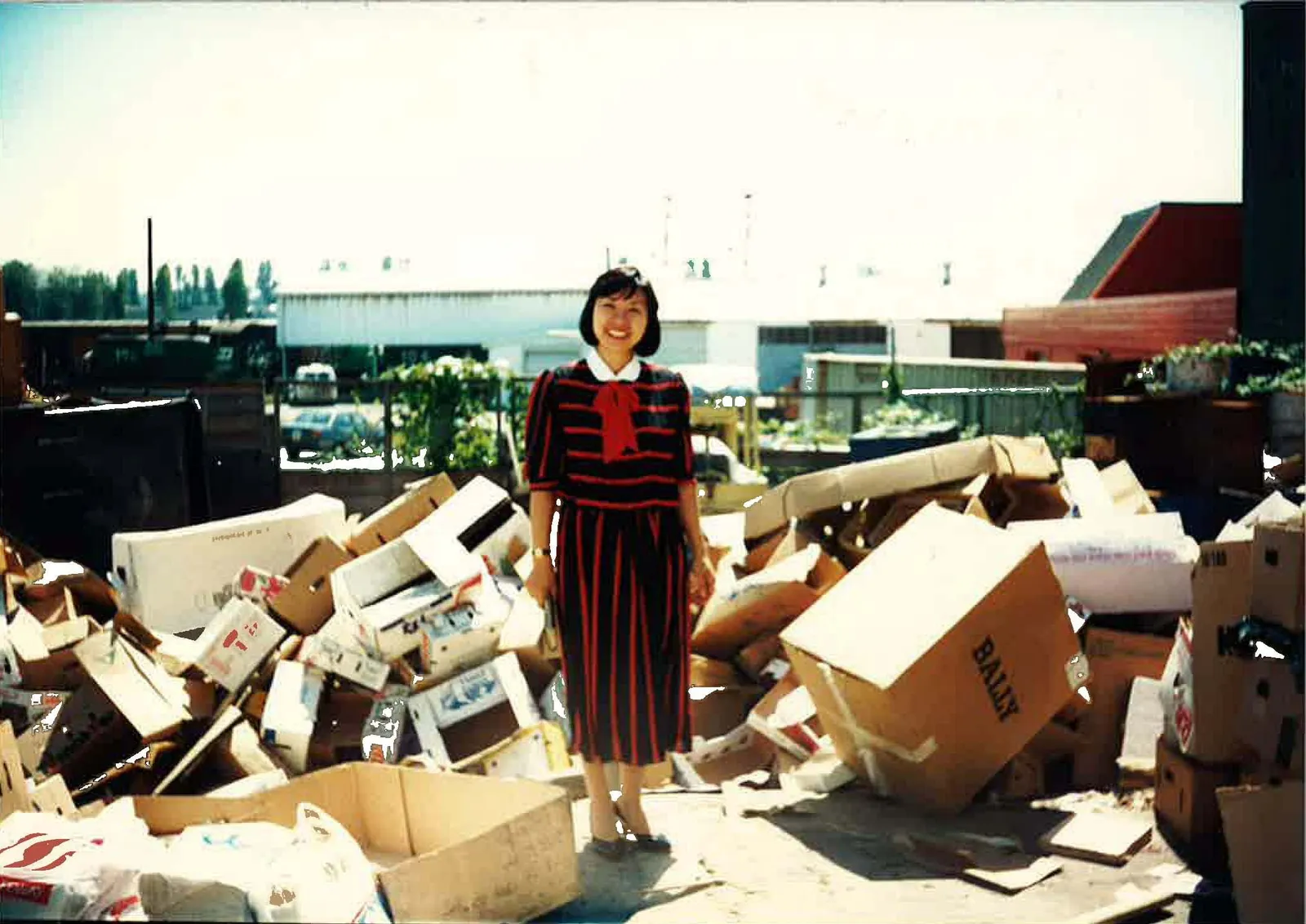
She had to do this not because of environmental goals, but to survive. She was also in a very male-dominated industry, which I would say is much better today. But she didn’t let those perceptions change how she saw herself, and that is the standard she sets for everyone who works here — you are who you are, and what you bring to the table is not prejudiced by your background.
The business also at one point had what we call the ‘North Shore moment’ that started the expansion. North Shore is an area in Vancouver that wanted to launch a curbside recycling program and issue an RFP. Emmie was like, ‘Well, we don't have trucks, but if this is a means for the recycling plants to get paper, I'm gonna do it.’
That’s how Emterra got into curbside collection. But we had a budgetary issue, because buying the bins is actually quite a lot of money to start up a program. So she came up with the idea to use really heavy-duty bags instead of bins. They were thick, and you could use them for years, and that helped with the capital outlay of buying boxes.
I joined the company a couple years after university, and this is my 20th year. I did runs on the trucks, picked on the lines before they were optical sorters. I didn't do every single frontline job, but I have done enough to appreciate the unsung hero element of the job. People still think you put something out at the end of your curb and it just gets taken away and magically cleaned. There's going to be more automation in this industry, but there are always people who we need to do the most critical jobs.
EPR is a major factor in your business strategy throughout Canada, and you even have your own producer responsibility organization in Ontario. How does it work, and how does it fit into Emterra’s larger vertical integration strategy?
The value chain in recycling is getting more complex, packaging is more complex and EPR regulations are more complex. We see more opportunities to continue to grow our circular economy business. Our PRO business is a good example of that because it can help a producer come full circle with their compliance.
Our PRO has several hundred clients. Some of them are small or medium-sized businesses, and some of them are Fortune 500 companies. EPR is still new, and businesses sometimes feel like it's an indirect tax. Besides spending an incredible amount of time explaining how EPR works, we are also showing them our value chain and inviting them into our facilities. We're kind of connecting the dots for them.
The way we compete with the other PROs is that we provide the compliance services for every single material type covered under all the different EPR regulations in Ontario. We're a one-stop shop, whereas a lot of producers are not just obligated under one program.
Because of Emmie's personality as the serial entrepreneur that she is, and this being a female-led, BIPOC company, we attract a certain type of person that will do things differently than other companies in this industry. There's not too many companies doing this kind of full-value chain.
As good as EPR has been for our business, it's also a very challenging part of our business. It's reshaping who the customers are. It's changing who does the collection, who gets awarded these big EPR contracts.
Producers don't always see EPR as a revenue-generating opportunity, and they're also facing pressures in their supply chain costs and fuel. In that way, EPR has created a lot of opportunities, but also been a major disruptor. The companies that survive are the ones that build the infrastructure that will deliver EPR services that are incredibly automated, highly efficient and very transparent and accountable.
How have geopolitical factors like tariffs, as well as low commodity prices, been affecting business lately? How are you adapting?
The trade wars affect us at the supply chain level, where you know certain products are more expensive, or we find products through a more circuitous route. Instead of buying from our usual supplier from the US, we have to buy it from Brazil. Then you layer on rising fuel costs, which is a significant line item, and in many cases we have no ability to pass on that cost. And as a recycler, we really depend on the commodities because we do not have landfill revenues to make up for things. That commodity revenue is really being compressed, like every grade except for aluminum is low.
At the same time, we need to be seriously thinking about cost savings from technology, automation and AI. How do we rapidly adopt something that we're still learning about and the tools are still being built? I think the industry was also changing rapidly 50 years ago for my mom, and I think it's just as applicable for this moment in time right now.
Another thing to think about is the non-EPR streams like food waste, yard waste or green waste. Those are business opportunities. In fact, a lot of municipalities are discovering now that they don't have to manage the recycling programs for printed paper and packaging. They're using that money to implement other kinds of municipal recycling diversion programs. We're seeing that especially in British Columbia.
What’s next for the company in terms of growth strategy?
My mom is still actively involved in the business. She loves solving problems. I foresee her being around for as long as she wants to be, because she’s the visionary. She built the company based on the belief that everything has value, even things that people throw away. My job is to continue to show that she is right.
When you think back to my mom's origin story, she came to Canada for freedom. She started this business to maintain her freedom and not have her strings pulled by other people.
We got to where we are without outside investment, without private equity. I'm not criticizing that as a path for growth, but we have chosen not to do that. We've grown by one customer at a time, one truck route at a time, one facility at a time, and it's been 50 years of organic incremental growth.
I hope that we continue on that pathway, because it is so rewarding to be able to invest in yourself and to have the freedom to make choices that you know are singularly focused on our mission, our vision, and values, and our origin story. That is both a differentiator and something we work really hard to preserve.