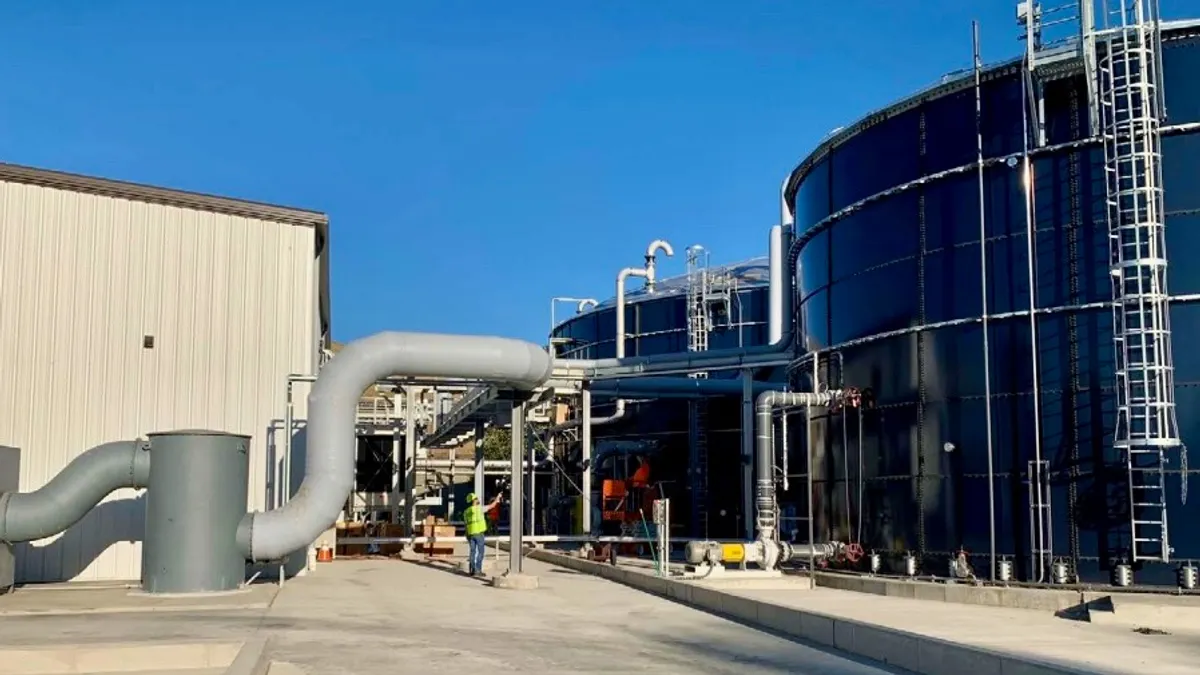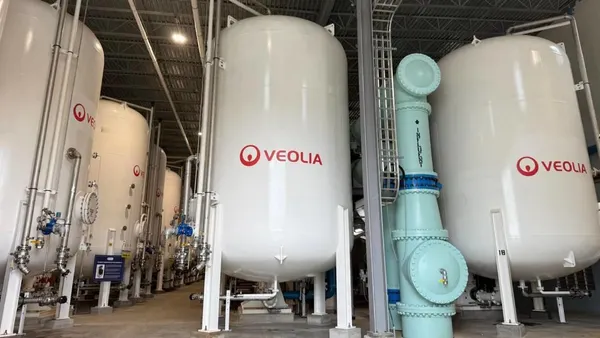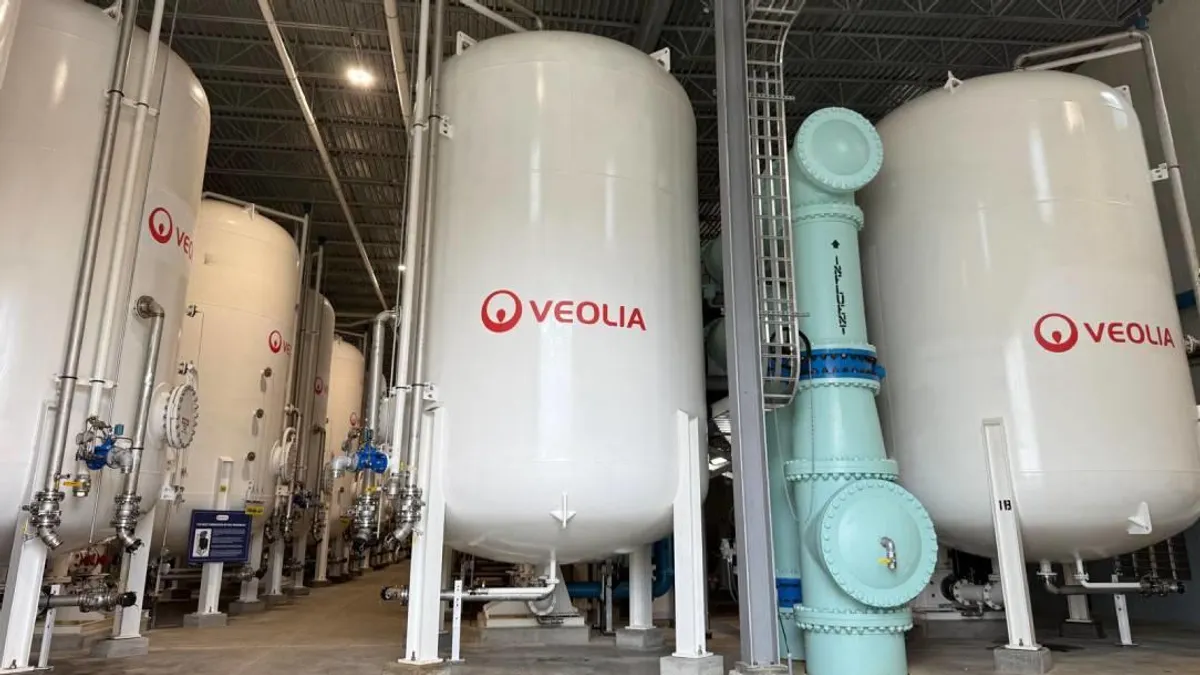
Veolia filed a lawsuit Tuesday against current or former manufacturers at six sites upstream of its drinking water plant in Wilmington, Delaware, alleging they contaminated water with per- and polyfluoroalkyl substances. The company is seeking to recover the cost to build its $35 million granular activated carbon facility last year that filters out PFAS at the Stanton Water Treatment Plant, plus ongoing maintenance costs.
The manufacturers produced a range of materials at the sites, including certain PFAS chemicals themselves. Veolia alleges current operations at all the defendants' sites continue to contribute to the PFAS load in the water that enters its Stanton plant.
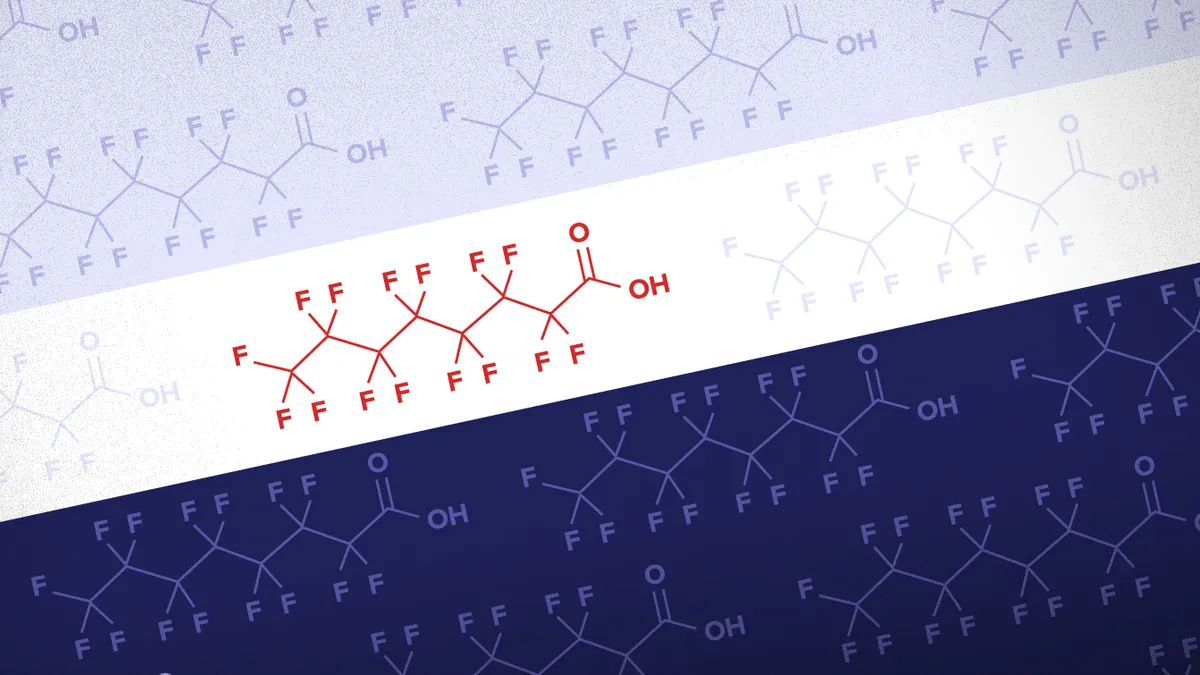
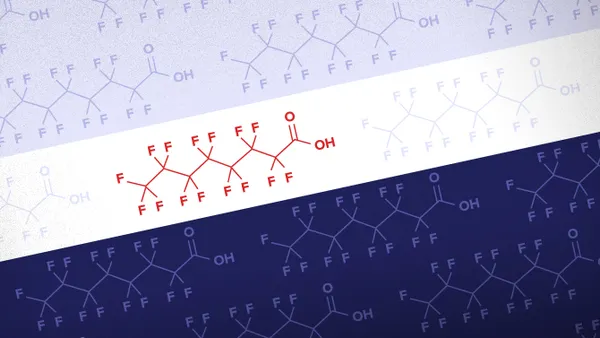
The lawsuit is the latest example of a business seeking to shift liability for PFAS contamination upstream of facilities that did not actively manufacture or use the substances. PFAS, which are associated with negative health effects at small concentrations and do not fully break down in the envrionment, have been the subject of increasing regulation.
Among those regulations is the U.S. EPA's drinking water standard, which set maximum contaminant levels for six PFAS chemicals in 2024. Those limits were 4 parts per trillion for PFOS and PFOA, 10 parts per trillion for PFNA, PFHxS and HFPO-DA, the last of which are also known as “GenX Chemicals,” plus additional limits for mixtures of certain other PFAS chemicals. Delaware adopted all of those limits on Jan. 5, making Veolia subject to the limits. In May, the agency proposed rescinding the limit for chemicals covered under the 10 ppt category, though that process is ongoing.
While that regulatory process plays out, Veolia has taken steps to significantly expand its PFAS treatment capabilities.
The company said it began studying treatment technologies at the Delaware plant in 2022. In 2024, Veolia announced a plan to double the size of the company by 2030, in part by adding dozens of new assets to manage PFAS at water treatment facilities. The company views treatment for the family of chemicals as big business, and experts have put the total market for PFAS remediation in the billions.
Ultimately, someone has to pay for all that remediation, and the question of who that will be continues to play out in courts on a site-to-site basis.
Some of the largest and earliest PFAS manufacturers, including 3M, DuPont and Chemours, have agreed to settle for hundreds of millions of dollars over their role in manufacturing the chemicals. States like South Carolina, which host a number of manufacturers that use PFAS, are among those that have settled with the manufacturers and begun the process of remediation.
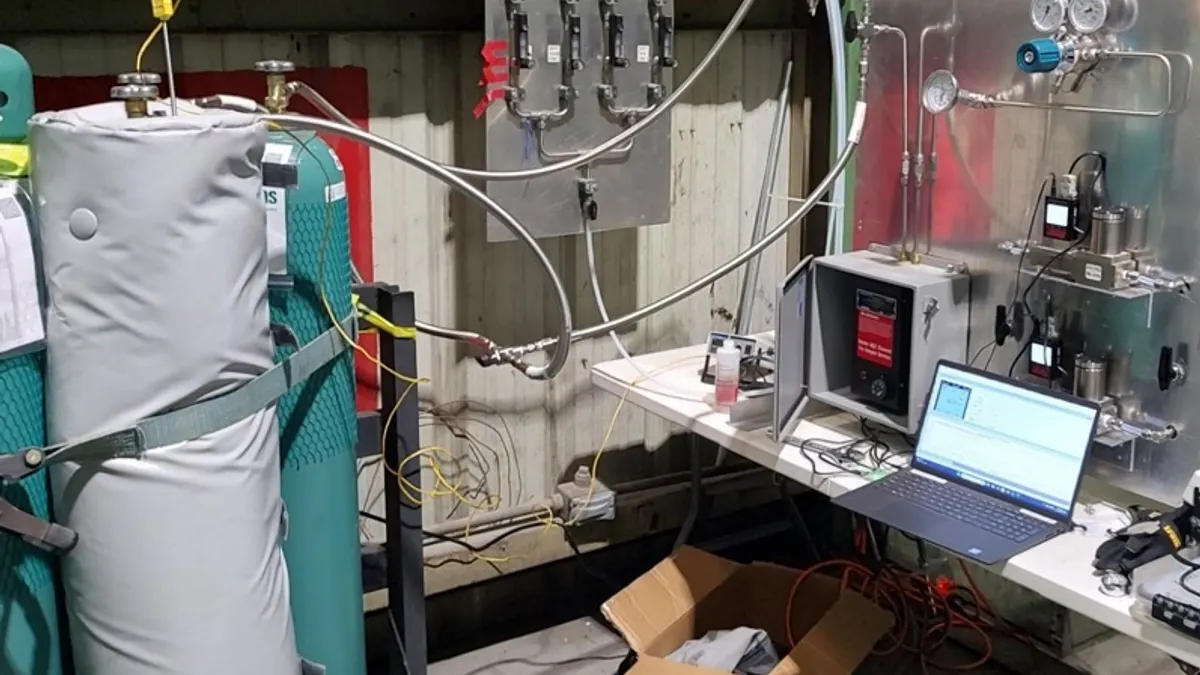
In Delaware, Veolia's Stanton Water Treatment Plant can treat up to 30 million gallons of water per day for PFAS, producing enough drinking water to supply more than 100,000 residents. The new 17,600-square-foot facility took three years to design and build. It was the company’s 34th such facility when it opened last year.
The defendants are alleged to have used or manufactured PFAS chemicals and have had overlapping ownership of a few sites upstream of the plant. Some of the manufacturing operations there that produced PFAS have gone back decades. Ametek, one of the defendants in Veolia's suit, operated one such site from 1980 until its closure in 2004, producing phenolic resin and Teflon tubing, which contained PFAS chemicals, per the lawsuit.
The Ametek site has been in an ongoing remediation process since its closure that has involved the U.S. EPA. Inspections have shown a range of groundwater contaminants, including heavy metals, volatile organic compounds and several PFAS chemicals, including PFOA and PFOS, stemming from the site. Ametek recently sued MRH, Niche Polymers and Westchester Plastics — three more named defendants in the Veolia suit — over alleged corporate practices that left the entities liable for cleanup underfunded.
The Delaware Department of Natural Resources and Environmental Control has also gotten involved to clean up PFAS contamination spread at sites controlled by the defendants. Solvay and its related companies settled with the DNREC in February 2021 to investigate and remediate one such site for PFAS contamination. Solvay operated the site at issue from 1998 to 2020, during which time it processed the heat-resistant PFAS chemical PTFE and sold it as a fine powder.
Among the other defendants, Edlon manufactures PFAS chemicals, Coherent manufactures ceramics and related materials and FMC manufactures fungicides and pharmaceutical ingredients.
"[E]ach of the Defendants reasonably should have known that PFAS could harm the environment, but failed to take meaningful steps to prevent or mitigate the foreseeable contamination to Delaware’s natural resources and Veolia’s source watershed," the complaint alleges.
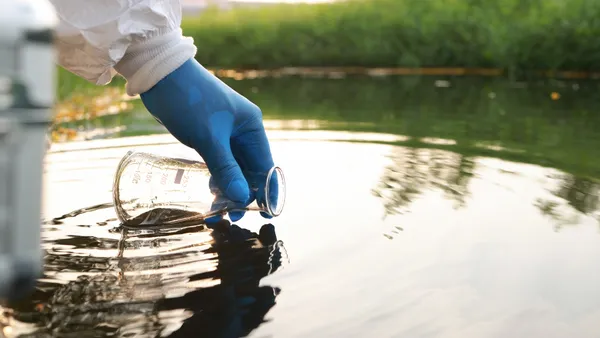
Veolia says it has conducted sampling and revealed several sites where PFOA and/or PFOS levels exceeded federal and state requirements. It also said that the granular activated carbon system cost at least $34.6 million and that annual operation and maintenance expenses for the system are projected to be over $3.5 million.