Dive Brief:
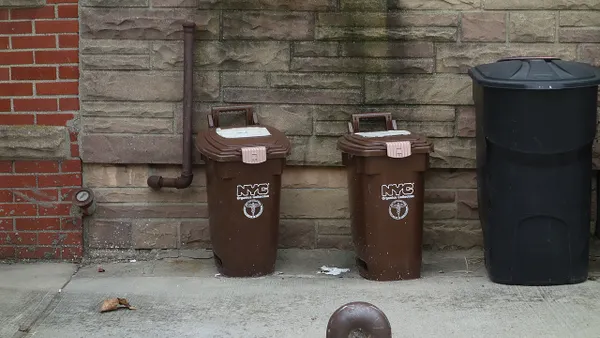
- New York City captured 72.5% more material through its curbside organics collection program in its fiscal year 2026, which ended June 30, compared to the previous year, according to a report analyzing city data released by Samantha MacBride, an associate professor at Baruch College and a former DSNY official.
- Despite the improvement, the city still has plenty of room to grow: The 103,403 tons collected curbside represent a capture rate of just 8%. New York City's Sanitation Department has projected a 14% capture rate by 2030.
- The report noted that DSNY saw a bump in participation for the curbside program when it temporarily began enforcement in April 2025, but did not see a similar bump following an enforcement pause and subsequent reinstatement of ticketing this year.
Dive Insight:
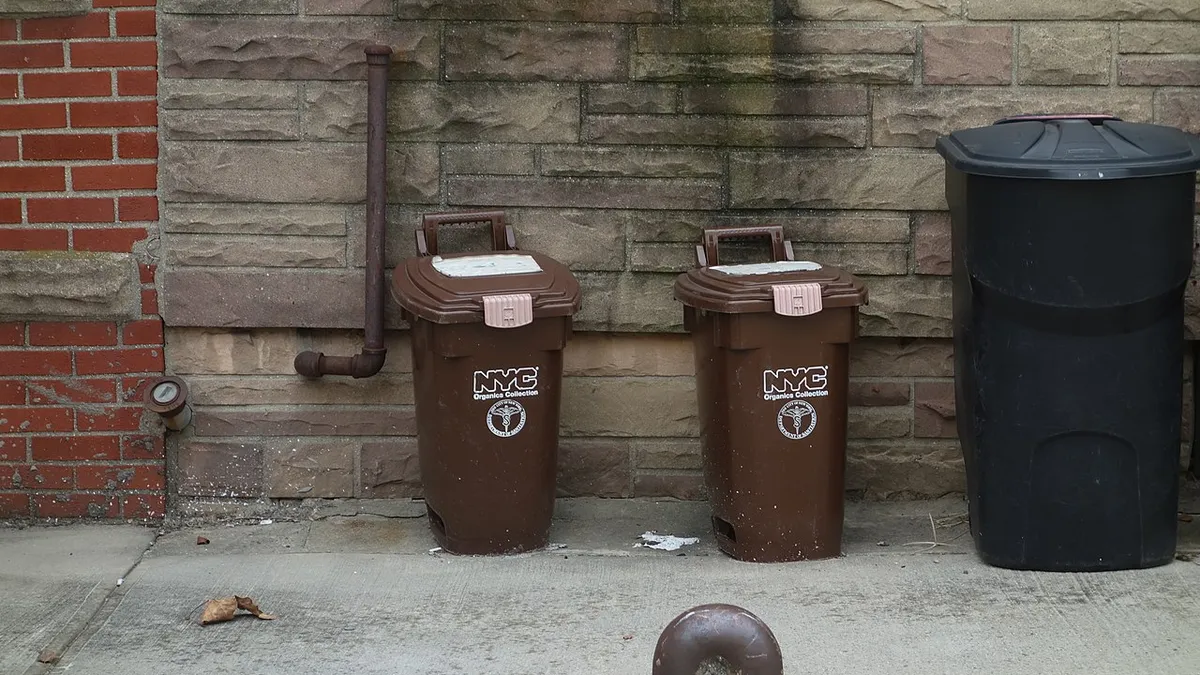
DSNY's curbside organics collection program is the largest such municipal program in the country. But its rollout came in fits and starts amid political wrangling and questions over residents' readiness.
Mandated by local law, the program officially rolled out to all five boroughs on Oct. 7, 2024. To facilitate it, DSNY hired 320 workers and planned to spend $20.3 million that fiscal year. While all residents are required to participate, DSNY initially waited until April 2025 to begin enforcement.
Following about two weeks of enforcement, however, then-Mayor Eric Adams’ administration walked back the policy. The mayor faced pressure from residents, echoed by some local officials, who said they were still confused about the program.
But the decision to walk back enforcement was also criticized by others, including the then-head of the city council's sanitation committee, who blamed confusion on insufficient education and outreach.
MacBride's report found that the April 2025 enforcement period and media attention around it led to a marked increase in performance for the curbside organics program, as overall participation increased by 5.6% over the previous month. DSNY issued nearly 5,000 tickets during its brief initial enforcement period, but MacBride found that participation increased even in areas where the agency didn't issue any tickets.
"The pattern is more consistent with a broad awareness that ticketing was going on, rather than a building-by-building direct response to receiving a ticket," she wrote.
DSNY returned to ticketing in April of this year. But it did not see a similar boost in performance — participation rates grew 1% between March and April of this year.
MacBride wrote that data show DSNY cannot rely on enforcement alone to boost participation rates to the levels it expects to see in the coming years. Rather, it should combine those efforts with an education and outreach effort guided by a theory of change that can explain how the agency wants to influence behavior.
"The evidence to date does not support relying on the passage of time or Enforcement alone," MacBride wrote.
In response, the agency noted that it had two years of education and outreach prior to the April 2025 enforcement period that saw a jump in participation. In 2026 to date, it has issued nearly 50,000 summonses to property owners for failure to separate food and yard waste, according to DSNY Press Secretary Vincent Gragnani.
"The data shows that our ongoing efforts are producing meaningful increases in participation. Our experience with mandatory curbside recycling programs has taught us that it takes time to change behavior," Gragnani wrote in an emailed statement to Waste Dive.
Gragnani noted that the agency’s draft solid waste management plan includes additional strategies to increase diversion and recovery of organics. The agency may also see growing tonnages from its commercial waste zone system, which it's currently in the process of rolling out. Business owners can receive discounted rates if they separate their organics as part of the program.
The next waste zones, Brooklyn North and Upper Manhattan, are scheduled to come online Oct. 1. DSNY’s draft solid waste management plan is awaiting final approval from the state Department of Environmetnal Conservation.