New York’s commercial waste zone program is just about a year away from being fully realized and proponents say its intended effects are coming into focus.
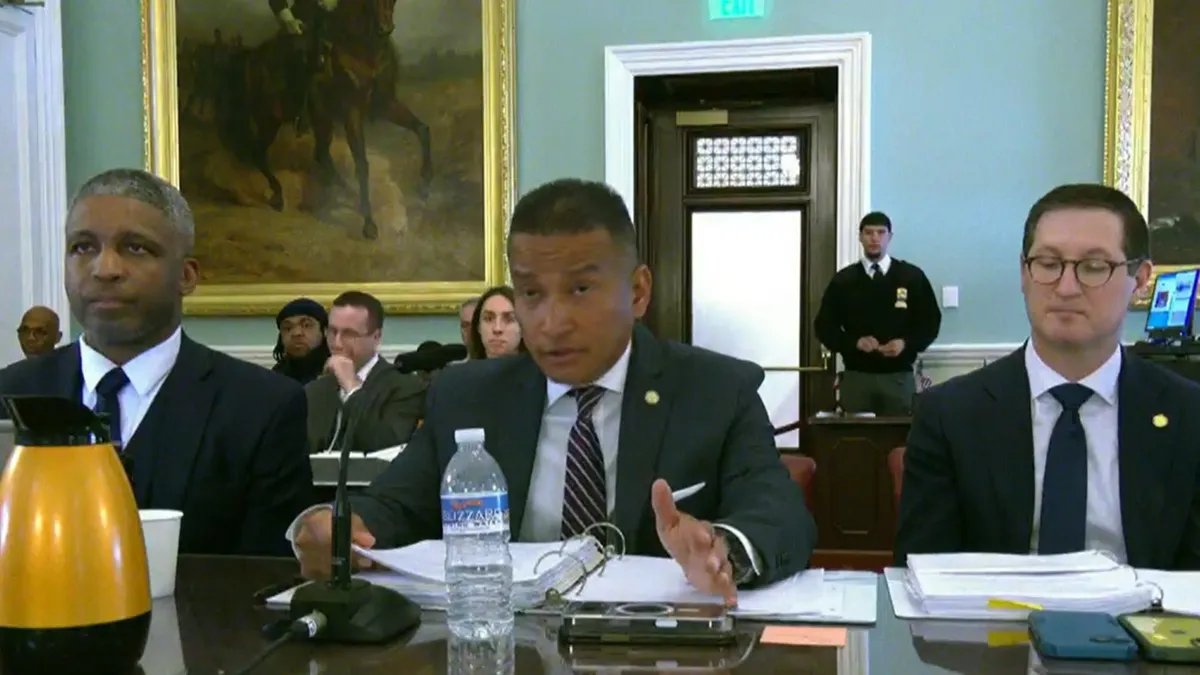
“There were a lot of folks that said this was going to be doom and gloom for New York City businesses, and in fact, we found exactly the opposite,” said Greg Anderson, commissioner of the city’s Department of Sanitation. “Pricing in many cases is lower for businesses than what they were paying under the the previous regulatory scheme, and customer service levels are dramatically improved.”
Following a 2019 law, the city is shifting from an open market system to a set of 20 nonexclusive zones serviced by three contracted haulers each. The program’s second annual report covers six zones that were implemented as of June 30, the end of the city’s fiscal year.
Two more zone transitions were finalized in August, and another two are currently underway. DSNY plans to finalize implementation by the end of 2027.
Implementation involves getting all customers in a zone to sign contracts and also taking on assigned customers from DSNY as needed. The larger contracted haulers, including Interstate Waste Services and Waste Connections, are faring well onboarding customers in the system.
“Our team has become really experienced, almost anticipating what the asks are going to be especially through the assignment process,” said Josh Haraf, vice president of the New York City market for IWS, which operates as Action Environmental locally. “The first time working through it was a bit daunting.”
The National Waste & Recycling Association, which represents large haulers in the market, did challenge one of DSNY’s program rules requiring waste surveys last year over cost concerns. A state judge recently ruled against NWRA and the group has since appealed.
DSNY was also sued by Century Waste Services over the agency’s contract awards in Staten Island. Century discontinued that suit in June as it picked up a desired contract via an acquisition. Local legislation aiming to expand the number of awardees in Staten Island and delay implementation hasn’t advanced.
Some haulers who didn’t receive contracts also explored legal options, but opted against it.
“They determined that the likelihood of success in a legal challenge was exceedingly small, and the recent [waste survey case] decision confirms that New York courts will defer to the city’s reasoning concerning the promulgation of CWZ regulations,” said David Biderman, an attorney and safety consultant for awardees.
Anderson said DSNY expects to further refine and evolve the program as needed, but the Mamdani administration’s main focus is finishing implementation after years of timing shifts by its predecessors.
“One of the things that that I have brought and that this administration has brought to this program is just a sense of urgency,” said Anderson. “We have been talking about commercial waste zones in New York City in some way, shape, or form for two decades ... We want to get it done.”
Shifting market share and M&A
A multiyear wave of M&A has subsided for now, aside from smaller route-based deals involving IWS and others.
Haraf said it’s been “much, much quieter” in 2026. He noted examples of some companies that weren’t awarded zones deciding not to sell and just keep operating in the open market system until the end.
The system’s 15-zone cap for haulers has now been triggered twice, due to purchases by IWS and Waste Connections, prompting DSNY to shuffle awardees and implementation timing. Two zones currently have open slots as a result — Midtown North and Manhattan Southwest. DSNY released an RFP earlier this year but said no details are available about bid awards.
Anderson said DSNY received “several” submissions for each zone and feel there’s still “adequate competition.”
*Totals include Royal, which Waste Connections acquired in 2024
**Totals include Filco, which IWS acquired in 2025
While the system is increasingly serviced by a handful of larger companies, including the top two that have vertically integrated rail transfer and landfill assets, there are still a range of other haulers. The annual report shows potential margin pressure for some as disposal costs eat into a significant share of their revenues, plus annual franchise fees.
“It's possible that we may see some awardees down the road that just aren't suited to provide the sort of level and quality of service that we expect,” said Anderson. “I wouldn't be surprised if in a couple years we see some of the smaller carters choose to exit the market.”
One such unnamed company was recently listed for sale online. Ads tout a commercial waste zone contract award, $8 million in revenue and $1.4 million in earnings before interest, taxes, depreciation and amortization.
Sources expect larger M&A activity may not ramp up again until implementation is complete. Biderman anticipates “a new wave of consolidation in 2028 and 2029 amongst the awardees.”
Navigating organics and diesel
DSNY said it’s too early to judge the program, but it’s seeing positive trends in reducing vehicle miles traveled, improving transparency and boosting worker safety.
Another goal of the program, to divert more material from disposal, remains a work in progress. Of the 309,922 tons managed during FY26, 17.5% was collected for recycling and 3.4% was collected for organics processing.
The Transform Don’t Trash coalition, a group of environmental and labor groups that pushed for the program, said it was “disappointed” by the low rates.
Anderson agreed diversion tonnage was “too low,” but noted such volumes went up notably in Queens Central, the first zone to be implemented, over time.
He also said a law passed by the New York City Council in July should bring changes.
That new law updates rules set by a 2013 law requiring certain commercial establishments to divert organics, based on complex criteria. Estimates from prior years indicate those existing rules may cover about half of the commercial food waste generated.
The new law, set to take effect in December, will simplify and expand requirements to a broader range of establishments.
The commercial waste zone program requires haulers to offer organics service, but hasn’t yet required customers to utilize it. DSNY intends to go back and enforce the new law for previously onboarded customers, as well as new ones.
Reclaimed Organics, a division of Common Ground Compost, currently sees this gap when it provides organics collection to office tenants in larger buildings. The company will be able to continue operating as a licensed microhauler even when zone implementation is complete.
“It's really going to get rid of the confusion surrounding who and who isn't required to do that,” said COO Candice Cotler.
Haraf of IWS said some customers are less likely to participate until there’s enforcement, even with pricing discounts versus disposal. IWS has seen a roughly 30% increase in recycling volumes over the past year, which Haraf noted comes with better margins.
“The transition process is extraordinarily labor intensive for everyone,” he said. “Once we get through all the implementation as we head into 2028, I think both the haulers and the DSNY will have folks that can really help drive that and really work towards hitting some more of the diversion goals.”
IWS currently runs four local organics routes and is investing in preprocessing equipment at a facility in Jersey City. Material will then go to an upcoming anaerobic digester in Linden, New Jersey.
The newly passed law also encourages businesses to focus on edible food recovery as part of broader organics management efforts.
“A lot of our work will be touched by this. This covers temporary public events, catering, mobile food commissaries ... which is amazing. Because I have done so many events where they don't want to do composting,” said Cotler.
Haulers won’t be required to directly support edible food recovery, as is the case in Los Angeles, but Anderson still anticipates activity will grow. IWS currently directs some material to animal feed under a provision allowed by the city last year.
Beyond diversion, another issue is the high price of diesel. While industry majors are passing much of that cost on to customers via surcharges, the system’s contract pricing structure is more regimented.
“Changes in diesel prices are one factor in the formula used to calculate annual adjustments to CWZ maximum rates. Awardees may separately petition DSNY to adjust their maximum rates or fees,” said Press Secretary Vincent Gragnani via email. “DSNY has received petitions from CWZ awardees, though none of those petitions has been approved to date.”