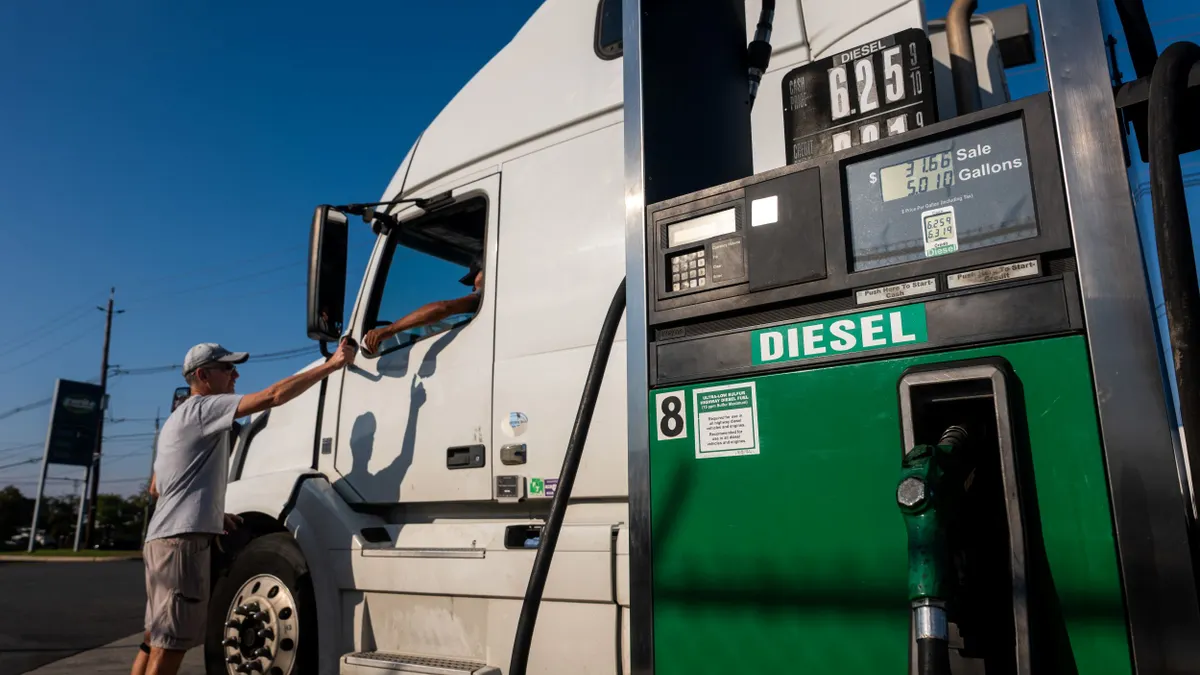
Major publicly traded waste companies continue to weather impacts from high fuel costs that have affected margins amid an otherwise successful Q3.
During recent earnings calls, companies reported leaning on levers such as fuel cost recovery programs and adjusting pricing strategies in order to cover internal cost inflation without alienating customers. Some companies are using newer artificial intelligence tools to configure pricing strategies to strike that balance.
Several waste companies have updated their full-year guidance with the expectation that fuel costs won’t fall anytime soon.
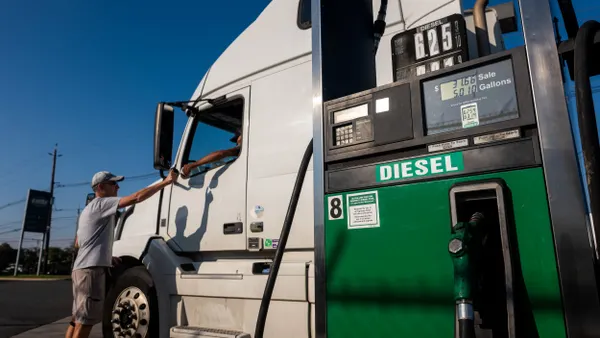
Some executives described the impacts from a rapid fuel spike in mid-September that sent diesel prices from around $5.50 a gallon to more than $6.30 in some places. This rapid spike meant cost recovery programs are slow to catch up, and the effects from that spike could be reflected in some companies’ Q4 earnings.
“We're all in the same boat,” GFL Environmental CEO Patrick Dovigi said during an earnings call. He noted that other large competitors and small independents are also feeling the pressure from ongoing fuel costs.
“The industry is doing exactly what it's supposed to do in the face of whatever challenges are being thrown at us. A couple of years ago, it was labor. And now this year, it's fuel. We can handle and we can adapt to as an industry.”
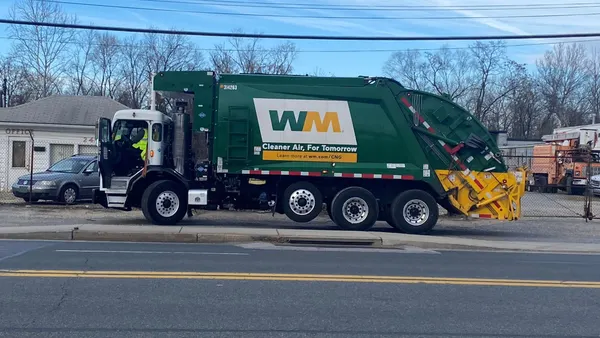
WM
High diesel prices were a clear headwind for WM in the quarter, but executives said they were balanced by effective use of the company’s energy surcharge program.
CFO David Reed noted the program helped recover both direct and indirect costs for WM’s solid waste and healthcare waste sectors, “even as diesel spiked to record highs in the quarter.” That includes third-party costs, he said.
However, there is about a one-month lag in WM’s fuel surcharge system, COO Tara Hemmer said, “So you will see some timing differences on recovery. And this is something, I think, that we're all learning to navigate.”
Reed estimates diesel prices could be “a little over” $5.50 a gallon for the rest of the year, which is a 40% increase over Q4 2025. An analysis by Stifel estimates that if prices stay at current levels, around $6.30 a gallon, it could cost WM another $25 million in Q4.
CEO Jim Fish estimated fuel impacts will create about a 40-basis-point impact to margins for 2026.
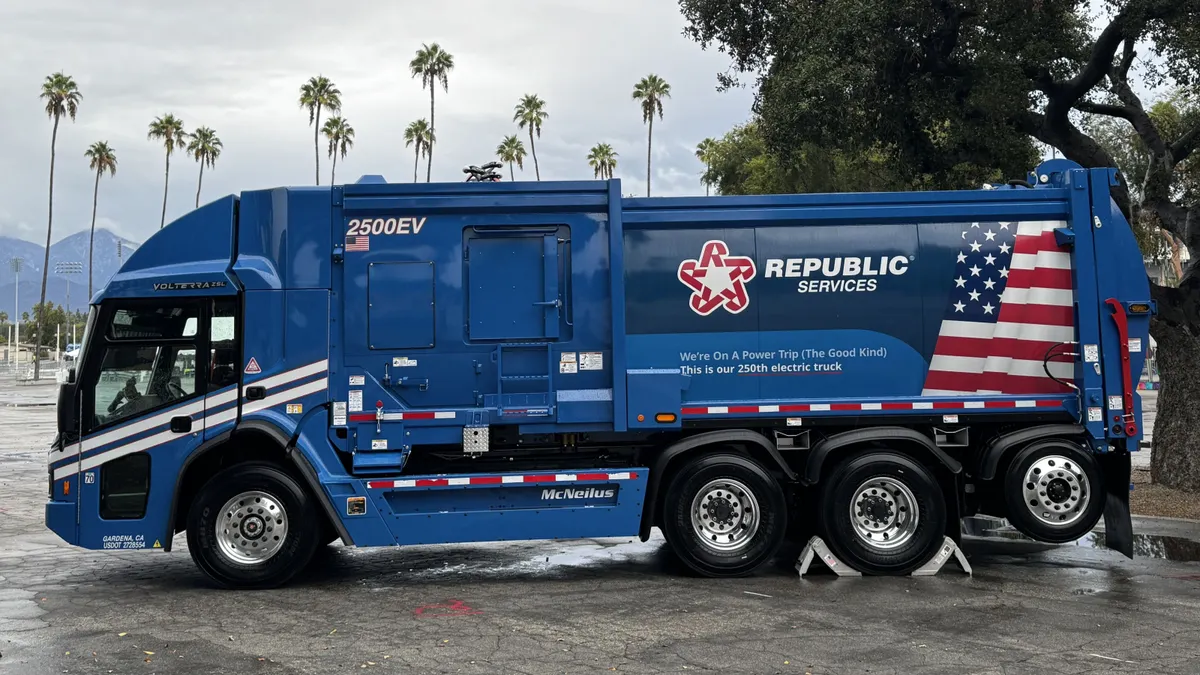
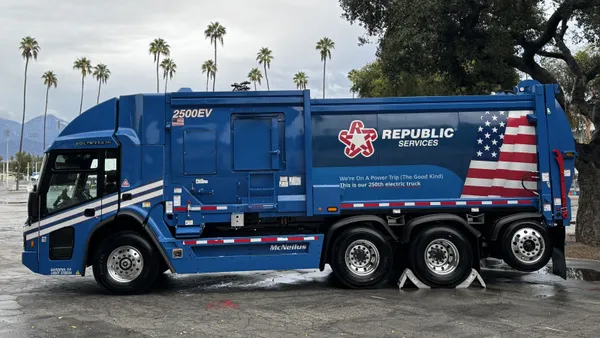
Republic Services
Republic Services credited its fuel recovery fee program for helping to even out impacts from high diesel costs in the quarter.
Core price was 6.3%, which is “relatively consistent” with Q2 performance, but with higher fuel recovery fees, “the price increase is over 8%,” said CEO Jon Vander Ark added that AI-enabled pricing technology is helping determine customer receptivity to price increases.
“We certainly look at the bill a customer is going to receive, and affordability is a very popular term right now. We're mindful of that,” he said. “This is where our tools really help us to understand kind of the lifetime value of that customer, and we want to run the business forever, not maximize any type of in-year pricing or in-year return on that.”
Adjusted earnings before interest, taxes, depreciation and amortization for the quarter was 31.8%, reflecting a 50-basis-point headwind from higher fuel costs, along with a 40-basis-point headwind from a decrease in landfill event volumes.
Republic also updated its guidance based partly on fuel cost influences. Revenue is now expected to be in the range of $17.425 billion to $17.475 billion. Most of the revenue increase is due to higher fuel recovery fees, Vander Ark said.
Republic’s fuel recovery fee program is expected to be responsible for about $150 million of the estimated $200 million in revenue increases expected in its newly updated 2026 full-year guidance, according to CFO Brian DelGhiaccio.
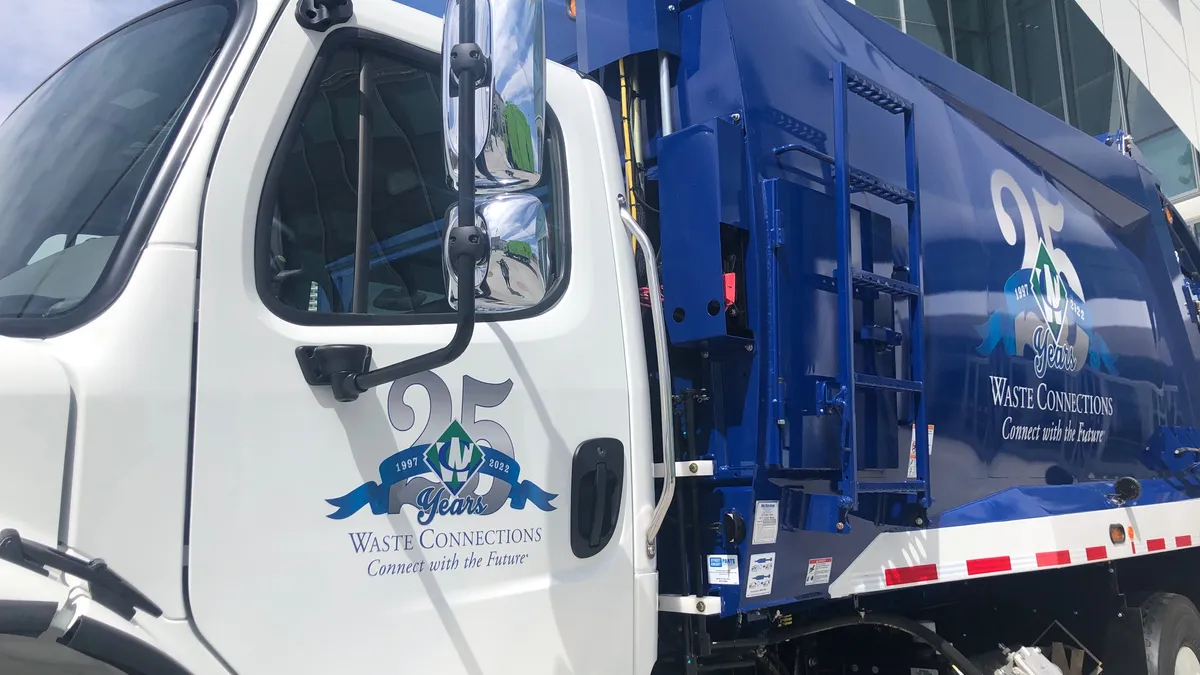
Waste Connections
Fuel costs continue to influence short-term strategies for Waste Connections, affecting pricing and other factors. CEO Ron Mittelstaedt characterized the pressures as being due to an “on again, off again hourly war in Iran in the [Strait of Hormuz.]”
Like most of its peers, Waste Connections has enacted fuel and material surcharges to mitigate higher prices, but executives on the Oct. 22 earnings call said the “pace and magnitude” of cost increases has affected everything: the cost of parts, repairs, buildings and more. But underlying margin expansion has kept the company well positioned to absorb some of those costs, CFO Mary Anne Whitney said.
Fuel and material surcharges were about $30 million, up about 20% from Q2, which Whitney attributed to higher diesel costs.
The company’s recent adoption of AI-driven pricing tools has helped retain more customers amid the cost increases, Whitney said. “It’s helpful to have smart, selective price increases that can make a difference as well. But we’re absolutely mindful of the incremental pressure that’s out there.”
GFL Environmental
Elevated diesel prices are expected to cost GFL Environmental about $125 million of incremental costs for the year.
“Volatility in fuel prices continue to impact revenues, costs and margins,” said Dovigi said during the Oct. 29 earnings call. Third quarter diesel prices rose about 10% over the second quarter and were over 60% higher than the prior year.
“Our fuel surcharge mechanisms have proven effective at recovering the direct impact of higher diesel costs, although we are seeing a greater degree of indirect cost increases coming through transportation, spare parts and other cost categories,” he added.
Fuel costs created a drag on operating costs and margins, said CFO Luke Pelosi, but GFL still logged a positive quarter.
Adjusted EBITDA margin for the quarter was 31.5%, 30 basis points higher than expectations and about flat with the previous year. It’s the highest margin in GFL’s history, executives said.
Executives estimated GFL could recover between $105 million and $110 million in fuel costs, but estimated another $20 million to $25 million in fuel costs could be slower to recover. That’s due in part to third-party transport providers and to “quick ramps” where fuel prices spike, making it hard for fuel surcharges to capture right away. The industry saw such a fuel spike in mid-September, Pelosi added.
That $25 million exposure, plus the recovery of the other $105 million, translates to about a 75-basis-point margin headwind for 2026, he said. A full cost recovery would have translated to between 40- and 45-basis-point margin headwind, which he said tracks compared to some of their industry peers.
“As we continue to refine and mature our own surcharge programs, we'll be even better protected as we go forward. But ultimately, diesel rolling over will be a margin tailwind for us,” Pelosi said.
Despite the headwinds, GFL raised its guidance for the second time this year, including an estimated adjusted EBITDA margin of 30.9%, which is 40 basis points higher than previous guidance and assumes elevated diesel prices will continue for the rest of the year. “Absent the run-up in diesel prices, full-year margin would have been over 31.5%, an increase of more than 150 basis points over the prior year,” he said.