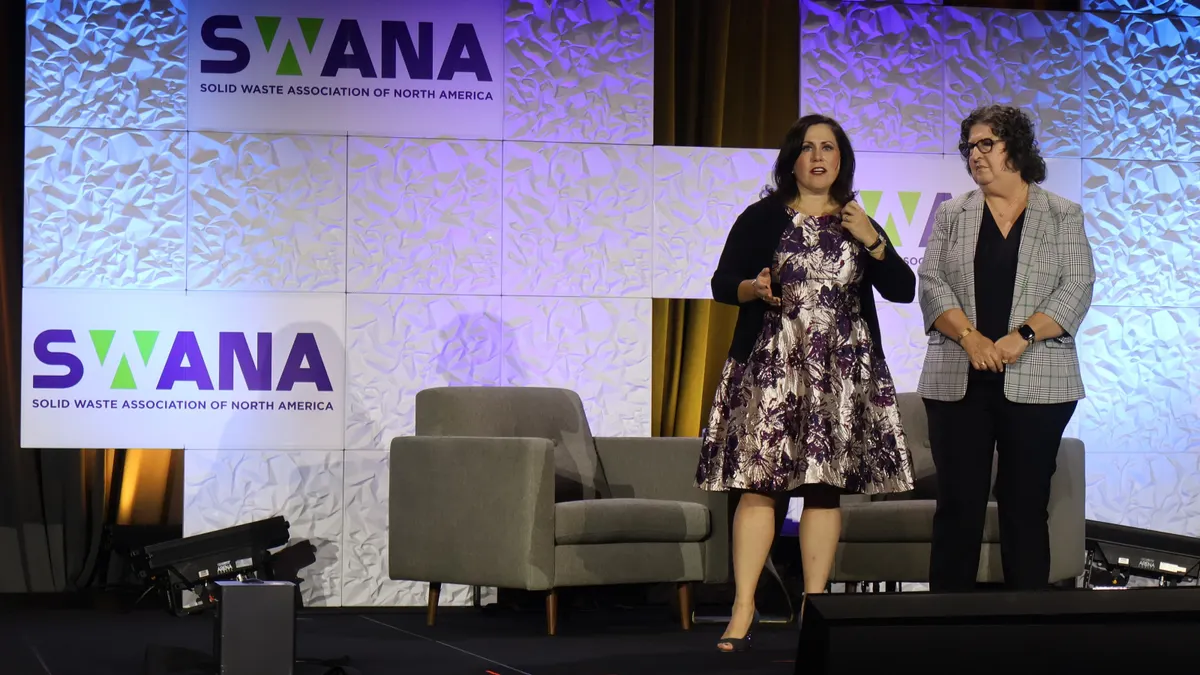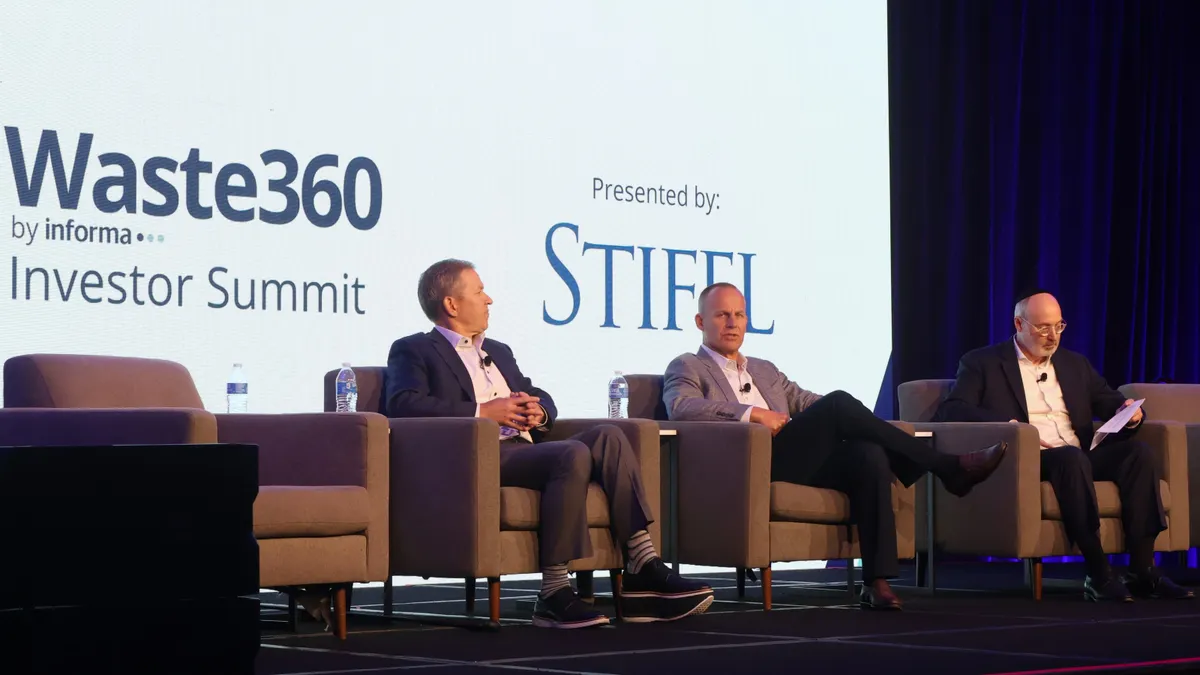
Artificial intelligence integrations are a logical next step in optimizing everything from fleets to pricing to customer service and billing, said waste industry professionals at the Waste Leadership Summit in Washington, D.C., last week.
In a series of panels, technology companies pitched AI-based solutions to fleet managers, and executives from the industry’s top companies said they plan to spend millions of dollars to incorporate AI into their businesses.
The industry has already adopted notable tech advancements meant to improve safety and reduce labor costs, such as automation at MRFs and in-cab safety cameras in trucks. Today, waste companies are adding AI capabilities to their routing, pricing and customer service strategies to refine and reassess these operations in new ways.
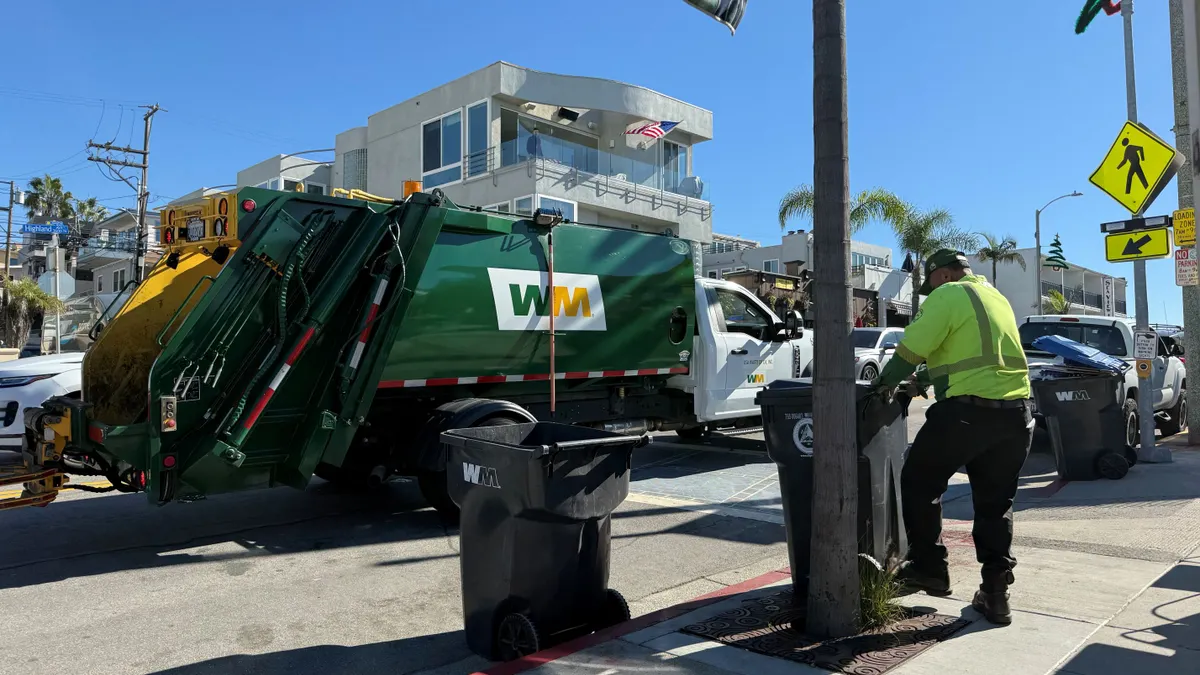
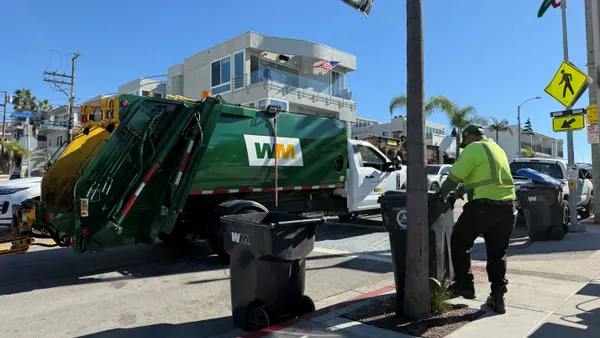
“There’s opportunity around every corner, and we are leaning into leveraging technology across every aspect of our operation,” said Tara Hemmer, COO at WM, during the summit.
GFL Environmental CEO Patrick Dovigi said he was focused on cost-effective solutions. The company also implemented a feature built through Claude code and other AI tools into its payday workflow. The new feature allowed employees to withdraw earned wages twice ahead of each pay cycle, after managers heard complaints about the biweekly pay schedule.
“AI is not going to change our people. Our people need to change their businesses based on AI, incremental tools that are available to them,” Dovigi told Waste Dive last week.
Waste Connections in particular has made notable investment plans. CEO Ron Mittelstaedt said the company is working with an outside advisor, BCG, to complete seven AI-driven projects through 2027. The company will spend about $100 million on the initiatives and expect the results to earn them an initial $100 million of margin improvement into 2028 and 2029. Those projects were pulled from a list of 47 potential AI initiatives the company identified, he said.
Routing
Route optimization strategies are a major focus for AI integration, executives said. Companies have recently adopted AI elements into routing decisions, which they say have reduced miles traveled and the time workers spend on their routes. These key software updates are reportedly also helping improve service reliability.
Republic Services has leaned heavily into technology-based solutions to boost margins, including AI. By 2028, the company projects it could generate $100 million in additional earnings before income, taxes, depreciation and amortization, through the adoption of AI-based efficiencies in its solid waste and recycling business. That’s primarily through expected routing efficiencies, CFO Brian DelGhiaccio said at the investor summit.
Republic has digitized and automated its routes across its fleet network. The company is now in the process of incorporating AI tools that could make real-time decisions about the best disposal options for trucks that need to unload, which is set to roll out at scale next year.
As part of Waste Connections’ ongoing AI plans, the company is working on a major AI-enabled routing overhaul for the company’s 14,000 trucks, Mittelstaedt said. The routing project will use AI, internal software and external information from Google, Waze and other apps to “take into account weather, traffic, street closures and construction.”
Mittelstaedt described the routing project as a “big lift,” but one he expects to result in 50 to 60 basis points of margin improvement.
Routing enhancements are also a significant application for AI as companies look for ways to help employees be more productive and more satisfied in their jobs, Hemmer said.
“If you show up to a district at two o'clock in the morning, the hardest job is the job of that [operations] manager who's trying to launch our routes, trying to make sure that all of our routes are covered, trying to make sure that everyone is safe and has the right equipment,” she said.
WM adopted an AI-enabled platform for operations managers to consult after launching the daily routes. “It says, ‘Here are the three people that you should be talking to today,’ and it's going to help with productivity, it's going to help with safety, it's going to help with employee engagement,’” she said.
At Casella Waste Systems, the company is looking into how AI tools can work alongside existing routing software and tools. After an acquisition, one of the first orders of business is upgrading the fleet and coordinating route automation strategies across the new footprint, and AI could help smooth the way, said CEO Ned Coletta. Newer AI features are also helping drivers with “real-time coaching” along routes, he said.
Other companies have taken a more bottom-up approach. GFL Environmental CEO Patrick Dovigi said during the investor summit the company had been successful in using route automation at its Toronto hauling yard, which includes more than 200 residential collection routes. Three months after implementing changes based on automation, the company recorded a three percentage point increase in hauling margins.
In-cab technology
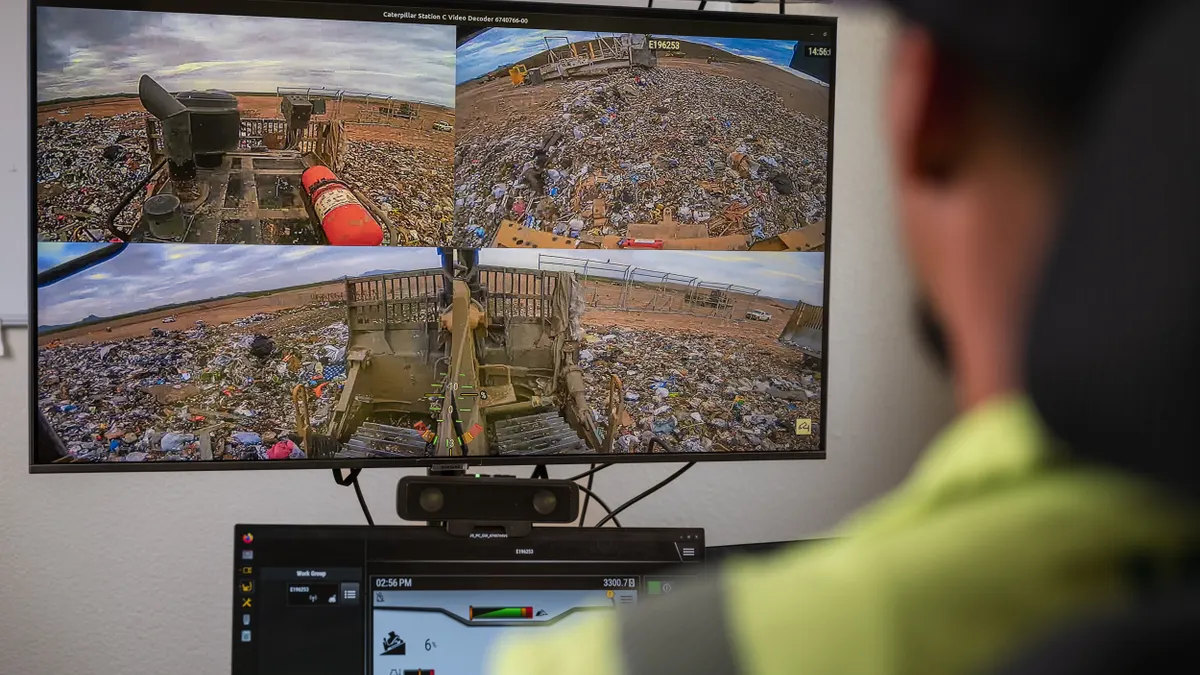
Technology companies also see advanced use cases for AI on the truck itself. Integration starts with camera systems, which large waste haulers have been increasingly deploying across their fleets. But with that data, alongside advanced telematics, comes the opportunity for AI integration, technology providers say.
One early use case has been real-time contaminant detection in individual loads. Cameras on trucks can recognize items that shouldn’t be in recycling bins, including dangerous lithium-ion batteries, and flag the issue for drivers.
But those cameras can also be deployed for additional uses, including watching to make sure dumpster corrals are closed and notifying drivers before they drive off. They can also help simplify the liability process in cases where incidents do happen, Ryan Brandos, a senior key account executive with Lytx, said during a panel discussing AI’s use in fleets.
“Even if [an incident] is your fault, it still saves you money, because now you know for a fact this is something we just need to settle,” Brandos said. “The cameras themselves are the most multifaceted AI enablement tools that you can put on your vehicles today.”
The combination of onboard sensors and maintenance reports also provide a wealth of data for AI models, said Ganes Kesari, founder and CEO of Tensor Planet. He compared such systems to a typical smartwatch, which can provide real-time health data for those who wear them.
Kesari said his firm, which provides an AI-assisted predictive maintenance platform, was able to reduce exhaust failures in one waste fleet based in Portland, Maine, by 41%, saving about $1,600 per truck annually by avoiding downtime.
He cautioned that haulers looking to adopt AI technology should first identify a problem, quantify its cost and then assess the data they’re collecting around that problem. That ensures that they can tailor the solution to their area of greatest need.
“People buy tools and then figure out that they need to start collecting data. That's not good,” Kesari said. “Always look at quantifying the benefits, otherwise it ends up looking like a science project.”
Pricing decisions
Another new frontier for AI applications: Customized algorithms to inform pricing decisions.
Waste Connections built an AI pricing engine for its commercial customers, which uses a range of data to make price adjustments tailored specifically to each customer. The goal is to reduce customer churn while maximizing net price and minimizing gross price, Mittelstaedt said.
“Say we had a market in Wichita, Kansas, and we had 6,000 commercial customers, they were probably getting somewhere between four and six different levels of price,” he said. With the new AI-enabled pricing tool in place, “they're getting 6,000 individual prices for the same services … because you're taking very specific data about that customer” and their willingness to pay a higher price.
Since the rollout, the company has seen between a 20% to 25% reduction in churn and higher price retention, he said.
WM is using AI in a similar way by analyzing customer lifetime value data to inform price changes, Hemmer said. It “applies algorithms on all of our customers and looks at things like whether they had a missed pickup, how long have they been a customer, and using that to be really prescriptive on how we price,” she said.
AI tools can also be used for added billing and charging mechanisms, Coletta said. Casella’s routing software allows the company to automatically charge overage fees if they overload a dumpster or residential cart.
Customer experience
AI can also help streamline a customer’s experience with a company, and these improvements may drive cost savings while also aiming to increase customer satisfaction, some haulers said.
“Better, more proactive communication around service, timing, or delay due to weather … all of those things work to strengthen those bonds, because what we're really focused on is keeping customers longer,” said Mary Anne Whitney, Waste Connections’ CFO. “Ultimately what you're avoiding is the cost of getting a new customer.”
Republic Services’ most recent use case has been the adoption of AI-based tools for customer service calls. The company takes roughly 11 million calls annually, about half of which could be addressed through AI, CEO Jon Vander Ark said. He said the company is “starting to take out some heads and automate the work,” though he expects there will continue to be humans involved in those functions.
Casella has been focusing on updating customer-facing elements such as building a new customer payment portal and app and standardizing its general ledger, procurement and order-to-cash systems. These improvements aren’t specifically using AI, but they are necessary updates that Coletta said will offer a starting point to eventually add AI capabilities.
“These really simple foundational elements are taking a lot of cost out, and then AI is another layer on top of that to improve the process even further,” he said.
Disclosure: Informa, which owns a controlling stake in Informa TechTarget, the publisher behind Waste Dive, is also the owner of the Waste Leadership Summit. Informa has no influence over Waste Dive’s coverage.