All financial information is in Canadian dollars.
WASHINGTON — On the public markets, GFL Environmental is on the outside looking in at its peer group.
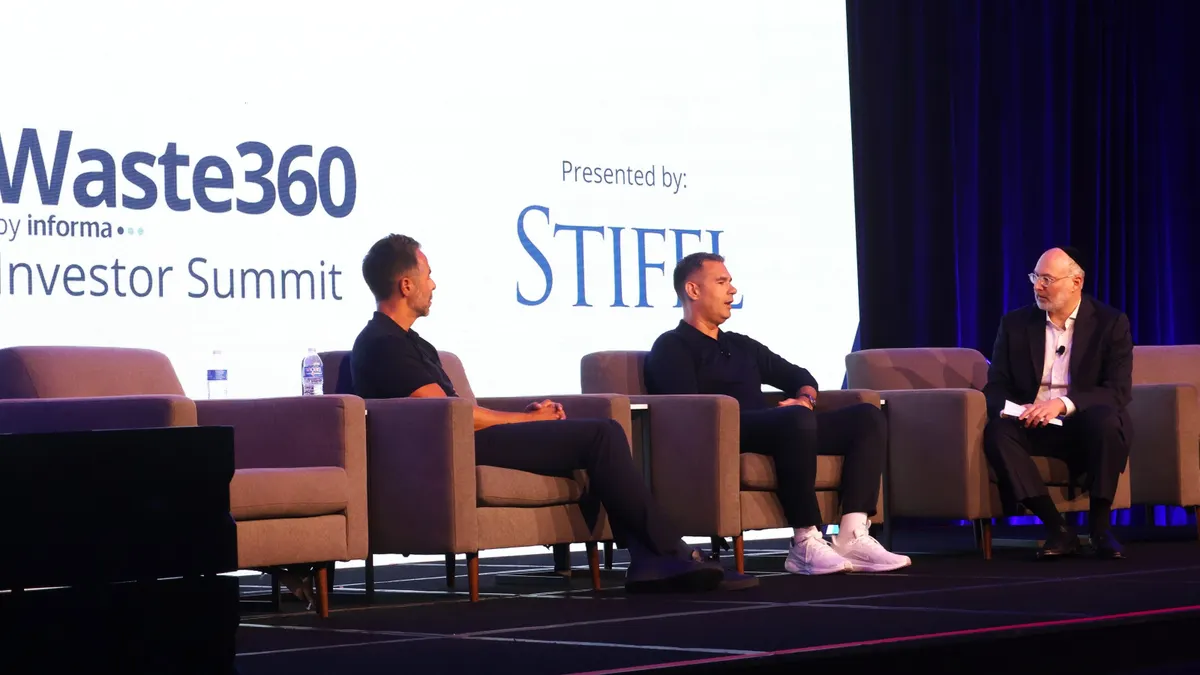
The stock price of the waste major, which recently moved its headquarters from Vaughan, Ontario, to Miami Beach, Florida, is trading at a multiple of its earnings below other waste companies. But in comments at the Waste Leadership Summit's investor day and in an interview with Waste Dive on June 10, CEO Patrick Dovigi said the business is undervalued and has plans to further unlock growth.
The company's biggest move this year has been its announced $4.6 billion acquisition of Secure Waste Services, an energy waste disposal company based in Alberta. Shareholders of both companies recently approved GFL's proposal to acquire Secure. But the deal initially drew skepticism from investors who worried GFL was complicating its thesis.
Analysts have since softened their stance, and the companies expect the deal to close by Oct. 1. Secure reported earning nearly $1.5 billion in revenue last year, which would layer on top of the $6.6 billion of revenue GFL reported. When combining organic growth and a pace of $1 billion to $2 billion in annual M&A spend, GFL’s executives project the company could double in size in the next six to seven years.
Meanwhile, the company’s investments in extended producer responsibility programs in Canada, as well as renewable natural gas, will continue to generate stable returns, according to Dovigi.
“We do think there's a large gap today between ourselves and what the peer group is trading at, and we think that'll recover,” Dovigi said. “There's real value that's sitting inside GFL today.”
AI
GFL has taken a bottom-up approach to AI, even as its peers move aggressively to incorporate it at all levels. Dovigi sees AI’s potential to improve how business expenses, routing, pricing and employee retention are managed, he said on stage during the investor summit.
But he also told Waste Dive it’s incumbent upon the company’s workforce to identify solutions that generate a meaningful change, rather than spend time tinkering on the margins.
“Every day there's a new bright shiny object, but at the end of the day, you can only do so many things. In our perspective, let's do three to five well,” Dovigi said.
One successful application has been an AI-driven overhaul of GFL's Toronto hauling yard, which has roughly 200 routes.
“The adoption that we're getting from that management team that runs that specific yard is very good,” Dovigi said. “Us being able to take that to our quarterly operating reviews, and then being able to share the wins, is going to yield incremental adoption rates amongst the organization.”
Broadly speaking, the rapid growth of AI and related infrastructure companies has drawn interest to high-growth investments, in some cases shifting capital away from the still growing but more steady waste industry. Dovigi acknowledged the trend, but said it had little impact on the long-term success of GFL.
“All that works perfectly until there's one little crack in the market, and then people run back to things where they know we're consistent growers and compounders over a long period of time,” he said.
Energy
After dozens of phone calls and several long securities filings, Dovigi now believes the market is starting to understand the Secure deal. Executives have emphasized that Secure would improve GFL's margins and bottom-line and still enable it to grow via M&A at an accelerated pace compared to its peers.
“I think [the deal] is going to be well received,” Dovigi said. “We're all going to look back 12 months from now and say this was one of the best acquisitions that we’ve ever done as a company.”
In conversations about the deal, Dovigi has been quick to emphasize the planned development of energy infrastructure in Canada. Secure owns or operates more than a dozen landfills that take in the majority of explorationa dn production waste in Alberta, the largest oil-producing province in Canada.
The Canadian government has moved closer to a long-debated oil pipeline between Alberta and British Columbia under Prime Minister Mark Carney, and in the meantime has supported projects like a $4 billion natural gas pipeline expansion plan from Enbridge in April.
That energy policy has been spurred in part by the more protectionist trade policy of U.S. President Donald Trump, as well as the war in Iran. But Dovigi said the Secure deal is a bet on a complementary underlying business generating strong returns before the latest policy developments added potential tailwinds.
“I generally never like to bet on politics, because you get bullish early days, and then things change really quickly,” Dovigi said.
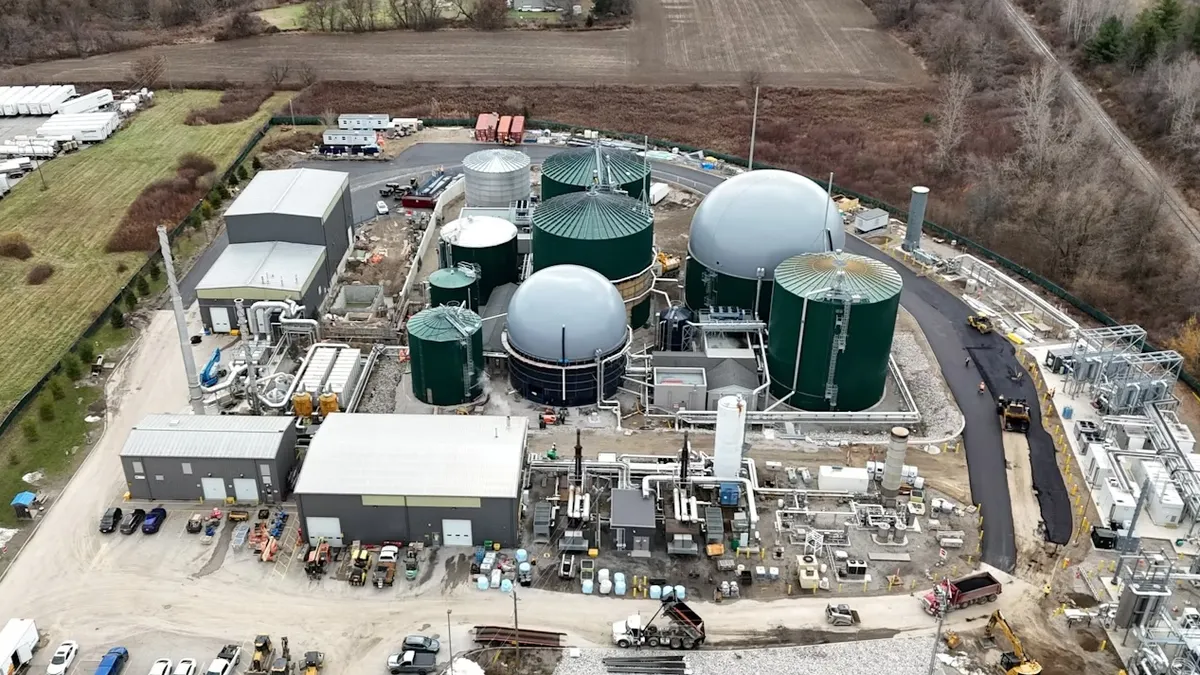
Meanwhile, the company continues to invest in projects that refine its landfill gas into RNG. GFL announced a deal with Opal Fuels on June 3 to build new RNG facilities at two U.S. landfills. In total, GFL expects eight new RNG facilities to come online by the end of 2028.
While some of its competitors are beginning to take a second look at landfill-gas-to-electricity amid rising energy demand from data centers, Dovigi still believes RNG is the safer play.
“I just think it's stable,” he said. “If you play the electrical utility trade, that may or may not work.”
EPR
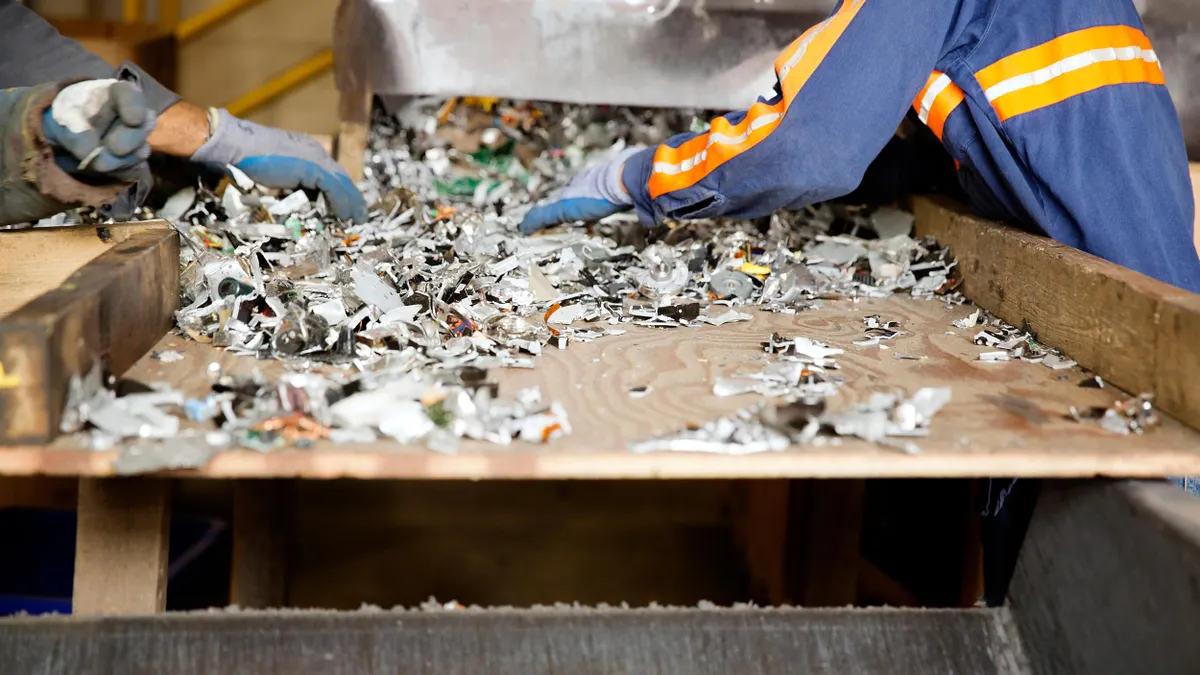
GFL also remains a major player in Canada's provincial EPR programs, several of which began at the start of this year. The company spent about $750 million on capital expenditures related to equipment and facilities to facilitate EPR’s rollout.
In general, Dovigi said that process has gone smoothly. Executives have previously said processing volumes ramped up earlier than expected, but Dovigi expects that volume will level out. More broadly, EPR is expected to generate the kind of steady returns that have become a staple of the waste and recycling collections business.
“It's not easy, and it requires real money. But we had real conviction with our partners around that program, and it's been successful,” he said.
In Ontario, the number of operating MRFs shrank from 52 to 10 as part of EPR’s rollout, with GFL controlling about 65% of that remaining capacity, Dovigi said. That increased efficiency was enabled by a regulatory structure that ensured tight control over material volumes. In comparison, EPR schemes in U.S. states like California and Colorado have led to little systemic change, which Dovigi says is a flawed approach.
“What you’re seeing in the U.S., and a lot of markets, is really everybody doing much of the same, just trying to get somebody else to pay for it,” Dovigi said.
Disclosure: Informa, which owns a controlling stake in Informa TechTarget, the publisher behind Waste Dive, is also the owner of the Waste Leadership Summit. Informa has no influence over Waste Dive’s coverage.