All financial information is in Canadian dollars.
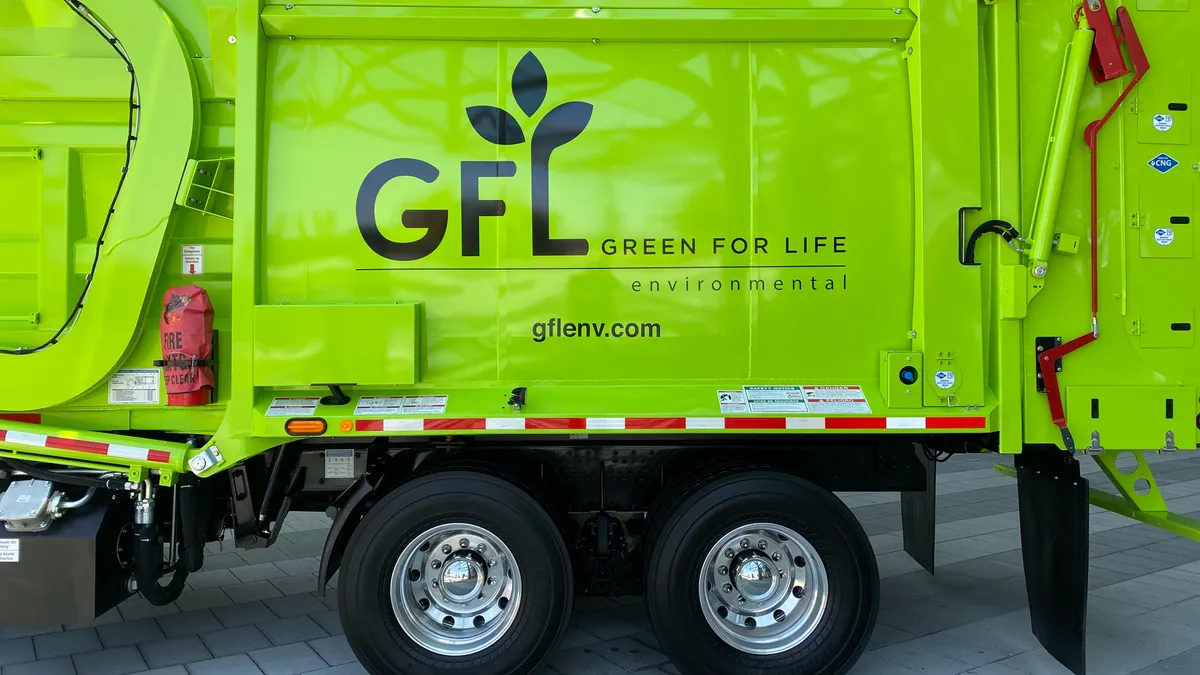
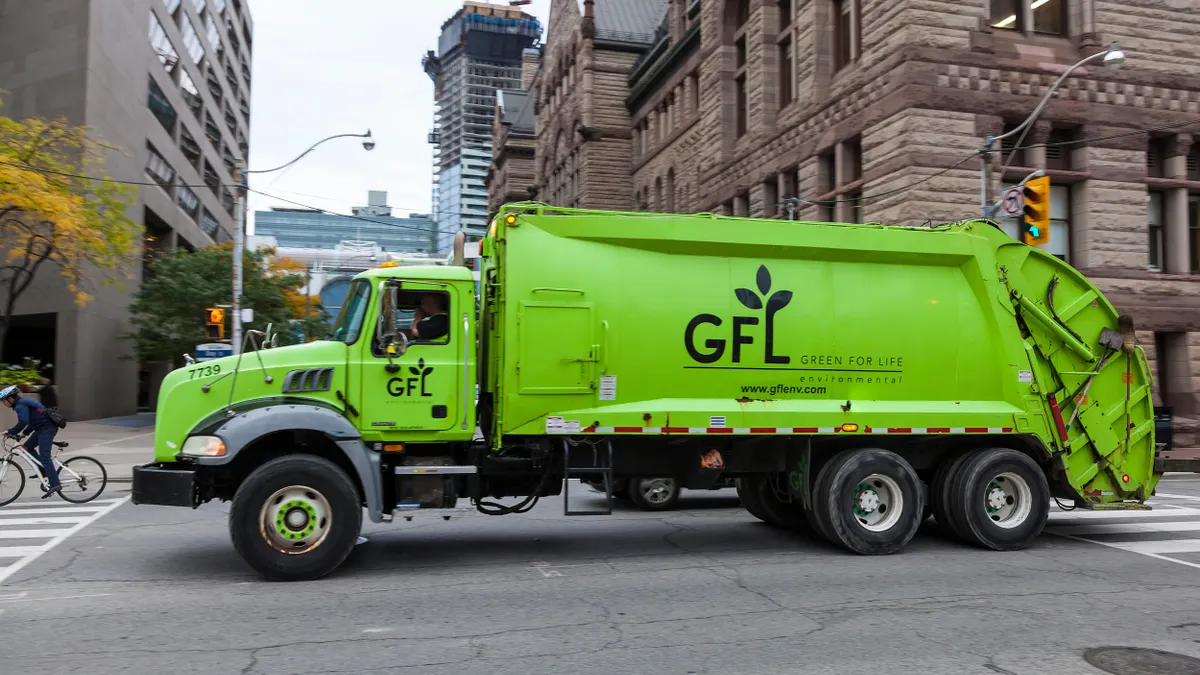
Reports indicate that GFL Environmental is entertaining either partial buyout or full take-private offers amid a slumping stock price. Analysts are beginning to weigh in on what such a deal might mean for the company.
Bloomberg broke the news of talks on Friday. GFL has reportedly retained advisors to assist in negotiations on a deal, and since Friday's report multiple major private equity funds have expressed interest, CTFN reported Monday.
GFL's stock shot up after the news broke. That's a departure from recent trends, as the company's stock price fell after it announced in April that it was finalizing a deal to acquire Canadian energy waste company Secure Waste Services.
"It's very frustrating to management because they think that they're getting a very good asset with good cash flows and margins, and their own stock came down," Shlomo Rosenbaum, a managing director at Stifel, told Waste Dive. "They think their stock is undervalued. They've been vocal about that, and I think that that is more likely what is generating these conversations."
Analysts say a deal to acquire all or part of GFL would be difficult to negotiate, but it may be attractive to executives who have waited for the public markets to catch up to their vision ever since the company went public in 2020.
GFL's stock has underperformed compared to its peers over the last few months. Between April 10, the day before the Secure deal was announced, and July 2, GFL's shares were down 11%, while WM's shares were up 0.4%, Republic Services' shares were up 1.2% and Waste Connections' shares were up 4.5%, Stifel reported. The S&P 500 was also up nearly 10% over the same period.
Executives have complained about the discount, and they have worked to explain the upside of the Secure deal to investors. Publicly traded Secure has higher margins and a stronger cash flow rate that would boost GFL's own adjusted free cash flow conversion, according to GFL. Executives have also noted that Secure's disposal infrastructure, which is almost entirely based in Western Canada, could unlock additional synergies for GFL's hauling network.
Even so, the deal is one of the largest GFL has pursued since it went public in 2020. GFL was founded in 2007 and grew with support from private equity managers, taking on debt as it did so. Following an abortive exploration of an IPO in 2017, BC Partners joined with the Ontario Teachers Pension Plan to buy out GFL's previous backers, which included Macquarie Infrastructure Partners.
BC Partners retains a significant stake in GFL today, alongside sovereign wealth fund GIP. GFL has continued to make deals with some of the largest private equity funds operating in the infrastructure space since going public.
That includes a recent recapitalization of its spun-off infrastructure services division, Green Infrastructure Partners, with Energy Capital Partners valuing the business at $4.25 billion. GFL also sold a majority stake in its environmental services business to Apollo Global Management and BC Partners last year for $8 billion.
The Secure deal isn't the first time GFL CEO Patrick Dovigi publicly expressed frustration with the public market's reaction to GFL's decisions. The company ran with a relatively high debt-leverage ratio compared to its peers for several years, during which Dovigi argued the ratio was necessary in order for GFL to achieve its growth targets. That tension was ultimately resolved when GFL lowered its debt last year through the environmental services deal.
GFL's current value is likely north of $20 billion, multiple analysts have noted over the last few weeks. Its size, in addition to the debt load it maintains, makes the financial math a private equity buyer must do difficult, Rosenbaum said.
Any deal must also earn approval from GFL's largest shareholders. Dovigi remains the largest, with an estimated 27% of all votes, according to RBC Capital Markets. In a take-private offer, analysts expect he would maintain his stake in the newly private company rather than exit.
Another option could be a buyer acquiring a partial stake in GFL, likely by buying out an existing private equity shareholder. If that deal involved BC Partners or GIC, they could similarly roll some of their proceeds from a deal back into an ownership stake in the company, RBC reported.
Rosenbaum said such a deal is unlikely to affect GFL much, as it would be trading one large shareholder for another.
“It just seems a little bit far-fetched to me. But it certainly could happen,” he said.
The fate of the Secure deal may also be wrapped up in a take-private offer. Secure's shareholders approved deal terms with GFL in May. That deal is now subject to final negotiations and approval from Canadian regulators, and is expected to close in the coming months.
Any take-private deal would likely also need to be approved by Secure shareholders. Stifel reported in its note to investors that GFL would only need to pay $20 million if the deal is terminated under certain circumstances, while Secure could need to pay up to $200 million.
Rosenbaum said Secure shareholders’ willingness to go along with a deal may come down to the strength of a buyer's offer.
"If they have gotten a premium on their own stock, and then someone's taking their stock out again at another premium, they might be interested in taking it," he said. "I think it would come down to price like anything else."
GFL's performance may also make a take-private deal less attractive. In a note to investors, William Blair’s analysts wrote they expect GFL to continue to drive shareholder returns in the medium-term above the average of its solid waste peers, fueled by investments in extended producer responsibility programs, renewable natural gas and other initiatives.
Rosenbaum said if the company's stock price improves this year, any potential buyers will have a harder time convincing shareholders they present a viable alternative to the public markets.
“As the stock price runs up, it's harder to do a [buyout],” Rosenbaum said. “What are you going to offer the existing shareholder that they can’t already get at that price in the market?”