Thrift stores are a first line of defense against textile waste, and changing attitudes about thrifting and resale could help shape recycling systems and divert more material from landfills in coming years, said speakers at the Northeast Recycling Council’s material reuse forum webinar on Tuesday.
Secondhand clothing is playing a powerful role in U.S. textile export markets, which in turn influences how and when textiles end up in recycling streams, said executives from thrift stores and researchers from the National Institute for Standards in Technology.
A rising interest in thrifting, upcycling and clothing repair could help keep clothing in use longer, and when textiles are too worn out to wear, newer sorting technologies could help sort end-of-life textiles more effectively for better end markets, they said.
Here’s a few takeaways from the webinar:
Thrift stores: making landfill diversion look cool
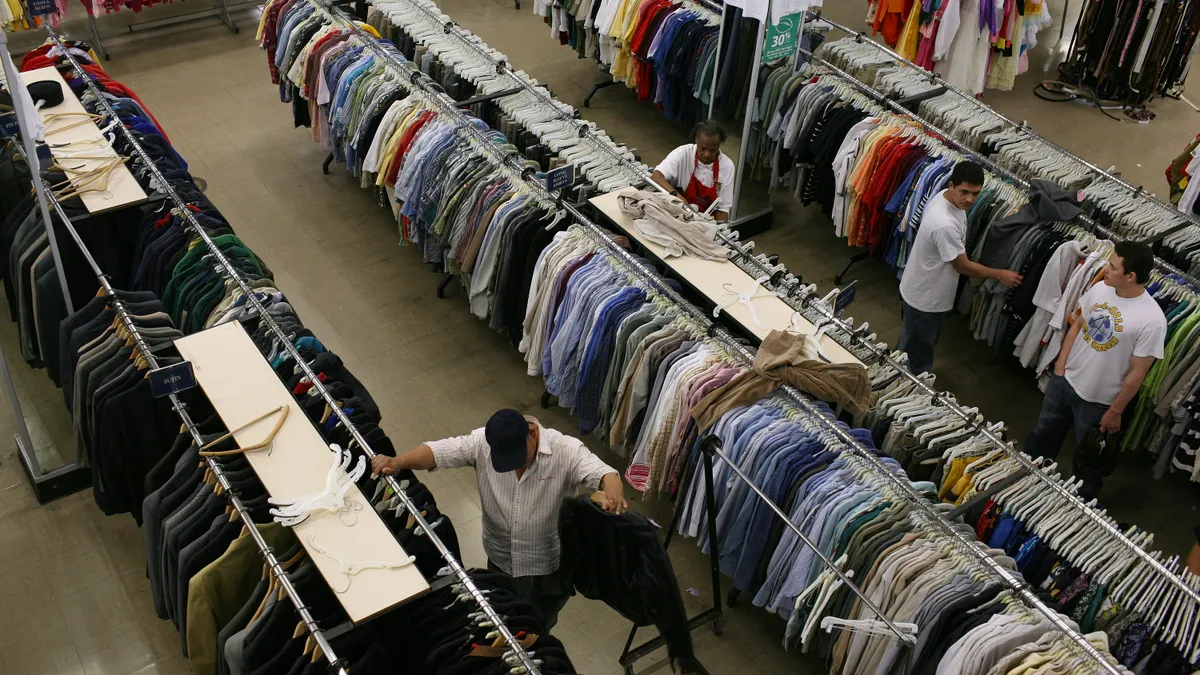
Thrifting is not a new concept, but Americans have become more and more receptive to thrifting in recent years due to a combination of rising expenses, tariff concerns and economic uncertainty. There’s also the lasting effects of the COVID-19 pandemic, when people had more time to look through their closets for unwanted items to donate, said Giana Manganaro Cronin, associate director of retail for More Than Words, a nonprofit youth job training program in the Boston area.
More Than Words uses its thrift stores as a key way to offer job training and provide stable jobs for the youth who participate in the program, she said. The organization used to sell used books, but a fresh wave of interest in secondhand shopping spurred by the pandemic prompted the nonprofit to switch to a thrift store model instead.
“This was not only a crucial pivot for the environment and to keep more things out of the landfill, but also do well for our business and our young people too,” she said.
The nonprofit’s thrift stores, called Boomerangs, offer a 98% margin compared to its previous 62% retail bookstore model, and Manganaro Cronin expects that to continue in coming years. Gen Z shoppers are leading the trend, in part because reducing their environmental footprint is a core value for the demographic, she said. About 64% of shoppers in that age range look at resale options before buying new products, she said.
Young shoppers are expected to continue influencing this trend, said Uli Stosch, chief officer of strategic development for Planet Aid, a thrift store nonprofit that has collected and reused more than 2 billion pounds of clothing since its inception in 1997.
Citing numbers from an annual resale report prepared by online thrift company ThredUp, she added that the U.S. secondhand apparel market grew 14% in 2024, and the market is anticipated to reach $74 billion by 2029.
The next step: Labor-intensive export and recycling markets
More Than Words and other thrift stores like it does its best to sell as many items as possible. But for items that can’t sell, the organization often partners with secondary buyers, such as wholesalers who have access to a broad range of additional secondhand markets, Manganaro Cronin said.
Stosch said thrift stores and other secondhand stores typically sell between 10% and 50% of their items, and a “small amount’ ends up going in the trash — mostly soiled items not fit for wearing or using.
Another portion gets classified as “mixed rags” and baled for export, where they are further sorted for more reuse, resale or recycling purposes, she said.
Many of these bales end up in Pakistan and Malaysia, where workers are trained to go through the time-consuming process of hand sorting each piece to separate out the quality clothes for resale while setting aside lower-quality textiles for other uses.
“It’s very, very labor intensive to do this. You stand for long hours and have to pick through all the right things,” she said. Because it takes so much time to sort these items correctly, “there’s a limit to how much textiles we can process this way,” she said.
From there, many of the clothes destined for resale go to countries in Africa, the Caribbean and Central America. More than 1.5 billion people around the world rely on second-hand clothing, she said, especially as an alternative to low-quality fast fashion brands.
Guatemala has a particularly strong secondhand import market, she said. A 2025 study from Full Cycle Resource noted that the country imported 290 million pounds of clothing in 2023 and reused more than 91% of it, with women-owned clothing stores making up more than half of the industry.
Complex streams, complex recycling options
When clothing or textiles are too worn out or unfit to be worn again, and have already been downgraded to be used as rags or industrial cloth, recycling is one of the next best options. That’s when a new set of challenges kick in, said Katarina Goodge, a materials research engineer at NIST.
Textiles are a complex and challenging waste stream to sort, in part because there are no set standards on how to handle the materials today, she said. Setting standards “would help scale up in efficiency in this system,” she added.
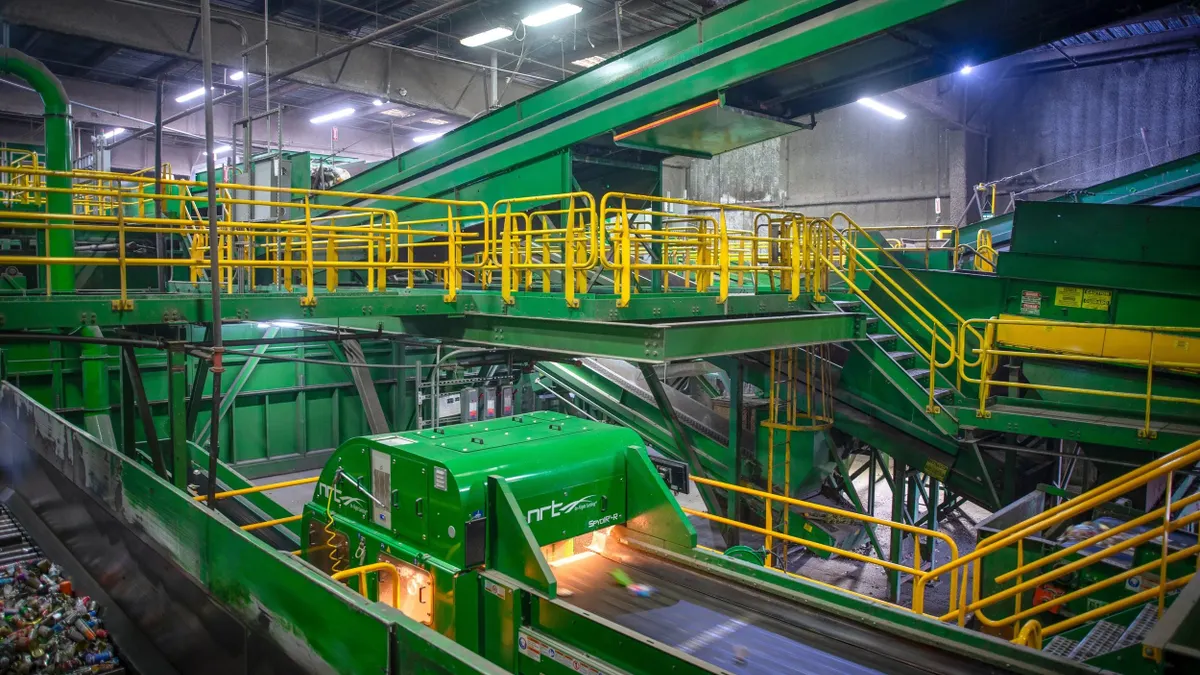
Another problem: Textile sorting is largely done by hand, as opposed to other recycled materials that can quickly be sorted by a range of AI-enabled robotic sorting technologies, Goodge said.
One reason hand sorting is the norm is because it’s tough to tell exactly what a garment is made of.
“We need to know the fiber content to know how to recycle that garment,” she said, but the tag inside might simply say it’s made of 95% rayon and 5% “other.” A particularly itchy tag might get cut out of the garment entirely. “We need to look at a more systematic and technological solution to this,” she said – and technology is catching up.
Handheld near-infrared devices can give insight into a garment’s material makeup, and when paired with AI or machine learning models, identifying fiber contents can become faster and more efficient. A handheld NIR scanner could be paired with hand sorting to guide garments into the right bins, Goodge said, and larger-scale solutions might be able to identify textiles while they’re on a conveyor belt, with a robotic arm component to pick off specific items.
In the U.S., textile recycling infrastructure is not as common as recycling systems for curbside materials, though some companies have invested in such technology in recent years.
A future of reuse, repair and policy change
Legislation could make a difference in textile recycling initiatives in coming years, the speakers said. California’s extended producer responsibility for textiles law is in the process of being implemented, which will prompt more outlets for clothing donation, repair and recycling, Stosch said. Countries in the EU are also on the hook to implement similar textile EPR programs.
Meanwhile, disposal bans in states like Massachusetts have prompted both thrift stores and lawmakers to wonder what to do with textiles that aren’t fit for resale but could be recycled into other products, Stosch said. Most thrift stores will accept apparel that’s torn or missing buttons, as long as it’s clean: “If it’s clean, it can be made into something else.”
There’s also more room for creative ways to reuse or repair clothing before it goes to a recycling center, speakers added. For example, community repair events are good ways to teach basic sewing skills and inspire people to make something new with old apparel, Goodge said.
“We used to have some infrastructure in the U.S. for repair, and that has largely sort of gone away, because it's really hard to keep that economically viable,” she said. Yet repair efforts “have a huge potential to keep a lot of these garments as garments.”
This story first appeared in the Waste Dive: Recycling newsletter. Sign up for the weekly emails here.