This is the latest installment in Waste Dive’s Biogas Monthly series.
One year after President Donald Trump signed the One Big Beautiful Bill Act, key questions about implementation of the Clean Fuel Production Tax Credit remain unanswered.
The credit, known in the tax code as 45Z, was created by the Inflation Reduction Act in 2022. It provides alternative fuel producers with a tax credit based in part on avoided emissions.
OBBBA made several changes to the IRA’s tax credits, slashing support for hydrogen fuels and certain other alternative energy sources. But it was broadly supportive of combustion fuels, incorporating several provisions important to the biogas industry. That includes extending the credit's expiration by two years, to the end of 2029, and preventing the credit from being used for fuels produced from feedstocks produced outside North America.
Yet the 45Z credit has remained largely out of reach for the biogas industry for much of its life due to ongoing questions about emissions calculations central to the credit’s implementation — namely, how to determine avoided emissions for fuels derived from different kinds of animal manure, including cow and swine.
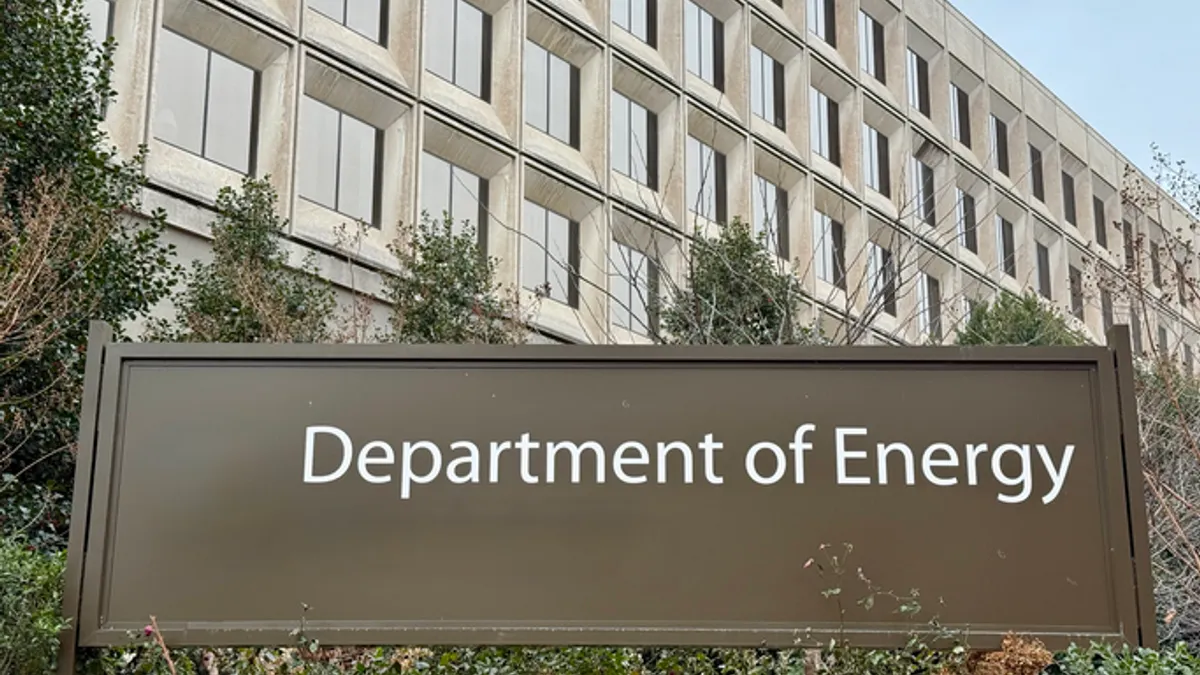
The U.S. Department of Energy on June 12 released updated life cycle emissions guidance for renewable natural gas and other alternative fuels, though it did not include the manure calculations. Nevertheless, that update included several changes to prior models. That includes the addition of carbon capture and sequestration parameters and clarifications about the treatment of process energy in RNG systems.
In a statement, the American Biogas Council praised the DOE for taking steps forward with the update, but noted more work is needed. Executive Director Patrick Serfass said in a statement that the calculation “can be make-or-break for farms that otherwise will have no projects to capture carbon emissions.”
"We're pleased to see several forward steps related to how lifecycle emissions are assessed for Section 45Z," Executive Director Patrick Serfass said. "The major updates needed, however, remain unfinished."
Below is a selection of biogas updates from June.
Waste Connections celebrates Canada RNG plant
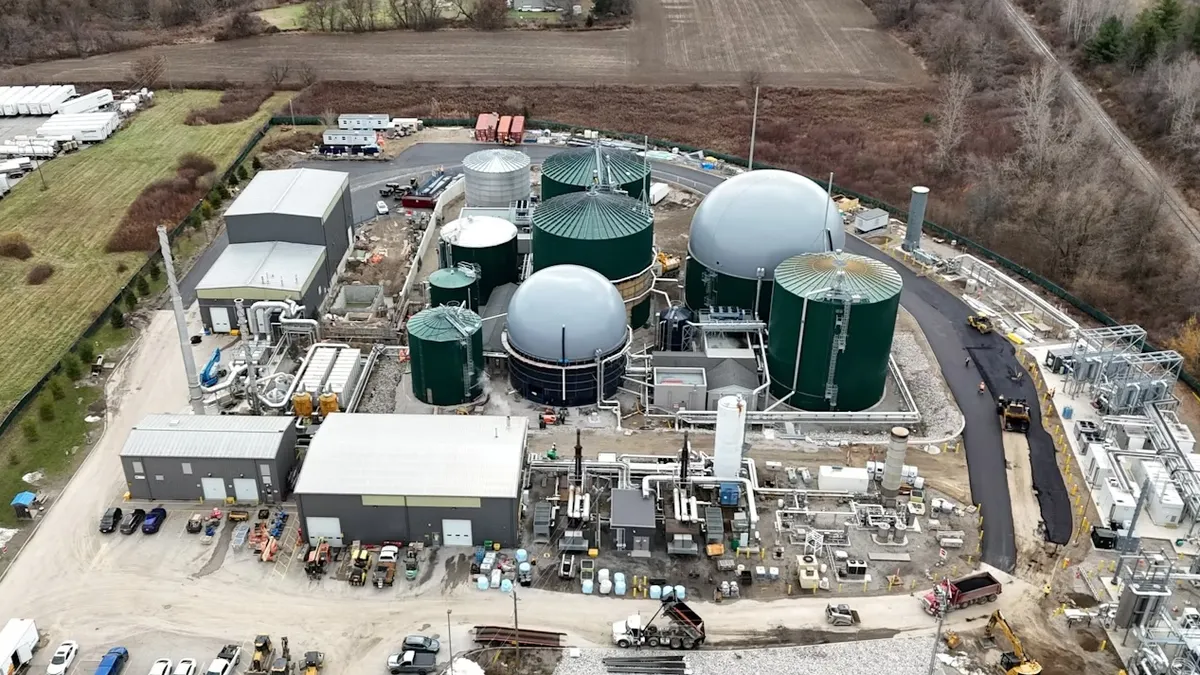
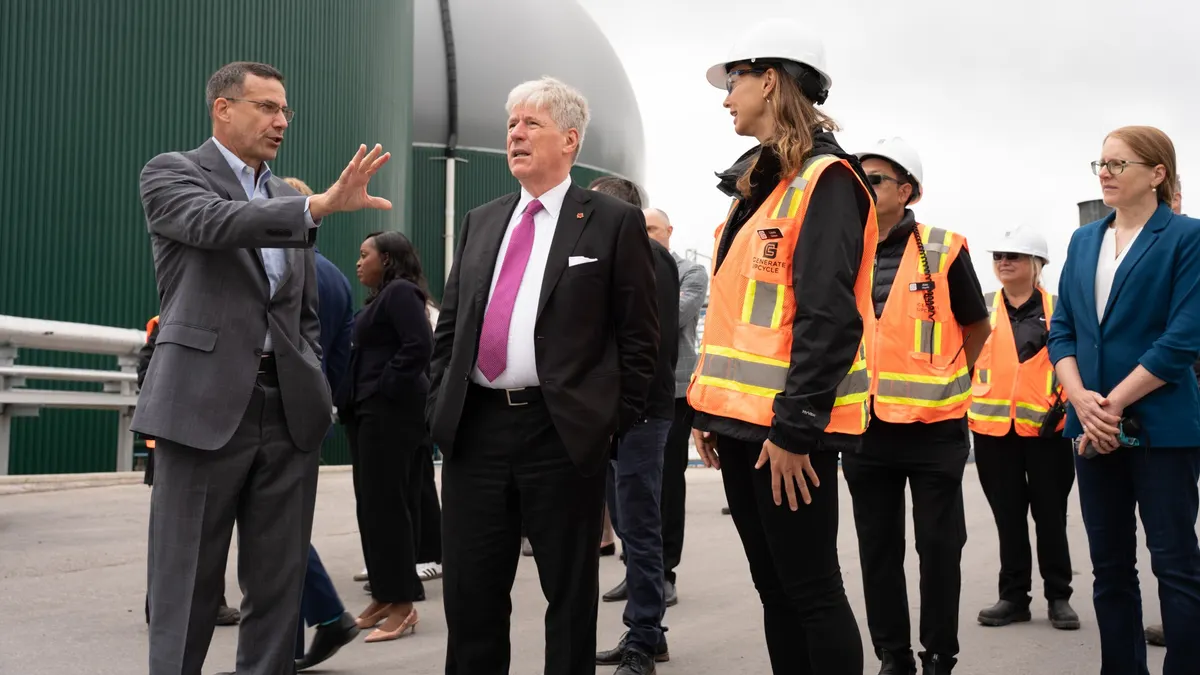
A landfill-gas-to-RNG facility at Waste Connections' Ridge Landfill in Chatham-Kent, Ontario, is now fully operational. The $100 million (Canadian) project was developed in partnership with Enbridge.
The project is expected to generate enough gas to heat more than 18,000 Ontario homes, about 40% of the municipality. It injects its gas into Enbridge's local distribution network.
The partners said the project officially came online in November, but equipment issues delayed it from operating at its full run-rate, CK News Today reported.
Waste Connections is in the process of doubling its portfolio of RNG facilities. The company had five facilities online at the end of 2025 and expects to bring five more online by the end of this year, CEO Ron Mittelstaedt told analysts in February.
Natural gas delivery begins at Anaergia wastewater plant
Anaergia and project partner Anew Climate celebrated the inaugural delivery of natural gas refined from the Victor Valley Wastewater Reclamation Authority in Victorville, California. They say it's the first project to deliver gas under California's SB 1440 Biomethane Procurement Program.
The SB 1440 program, passed in 2018, allows the commission to set biomethane procurement targets for investor-owned utilities. The project received final approval from the California Public Utilities Commission in March, and subsequently began ramping up operations.
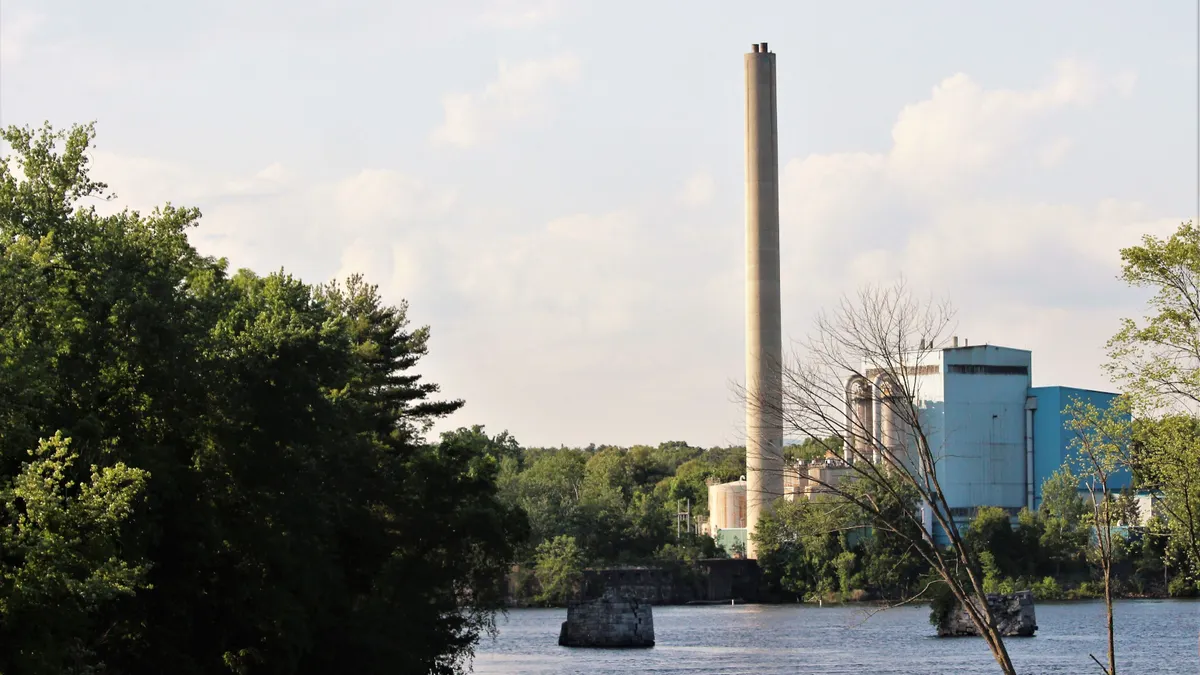
The Victor Valley system codigests wastewater and organic waste, and it can handle up to 104,000 tons of the latter material annually. Anew Climate markets the RNG produced at the facility, which is injected into utility Southwest Gas’ grid.
While Anaergia has pursued an asset-light strategy in recent years, it owns and operates the facility in addition to designing and building it. It has a similar arrangement with the Hale Avenue Resource Recovery Facility, a wastewater treatment plant in Escondido, California.
The company’s first-quarter financials showed growth. Revenues were up 122% year over year, while gross profit was up 135%. Anaergia reported a Q1 net loss of $4.4 million and adjusted earnings before income, taxes, depreciation and amortization of $1.1 million, both in Canadian dollars.
Vitol Biomethane launches first of two Texas facilities
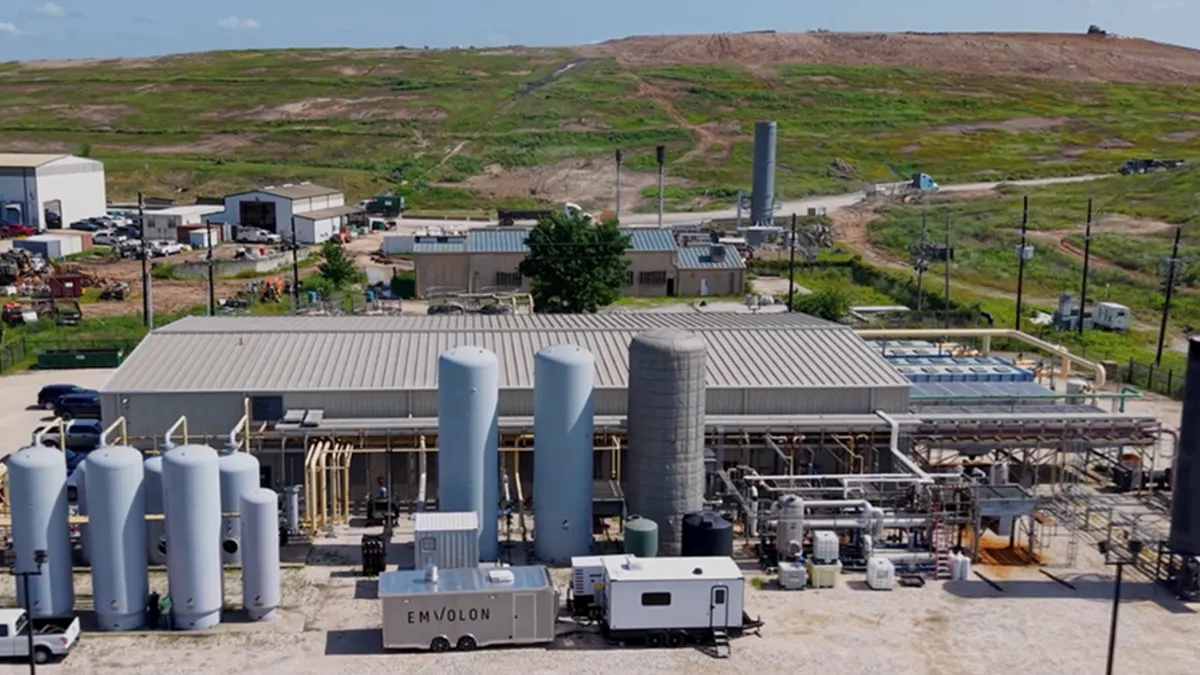
Alongside local officials, Vitol Biomethane last week celebrated a ribbon cutting at a landfill-gas-to-RNG facility in Whitesboro, Texas. The facility was developed at a landfill owned by the Texoma Area Solid Waste Authority.
Vitol is also upgrading the gas collection and control system at the Angelina County Waste Management Center in Angelina, Texas. Vitol will be responsible for marketing and selling the RNG produced there.
Switzerland-based parent company Vitol acquired Biomethane Partners in 2023 to enter the RNG space. The combined company is based in Texas, and it also has operations in Alabama and Louisiana. Vitol Biomethane continues to develop its pipeline of landfill gas projects.