Environmental groups led by Earthjustice and the Environmental Integrity Project are again taking the U.S. EPA to court over its air emissions rules for large municipal solid waste combustors. The petition for review seeks to tighten limits for a range of pollutants, and it comes after the agency finalized a more lenient version of the regulation in March.
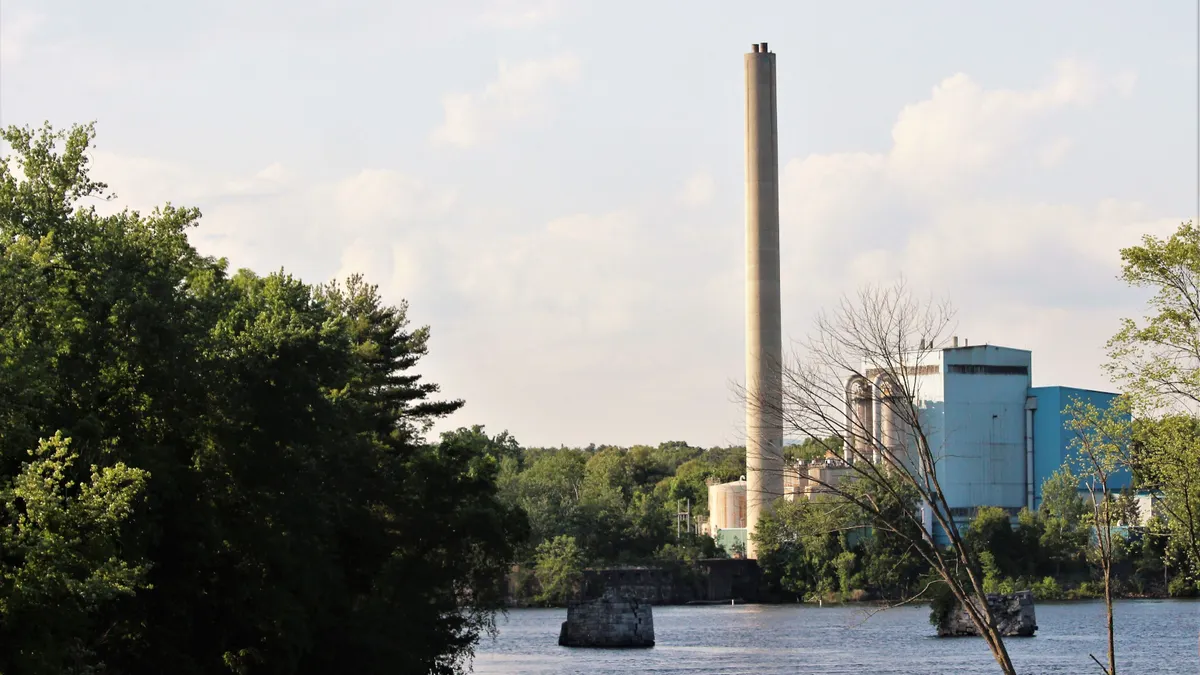
More than 50 incinerators nationwide are subject to the regulation, which seeks to tamp down on particulate matter, lead, nitrogen oxide and other air pollutants based on the best available emissions control technology. The final standards reduce the amount of regulated pollutants entering the atmosphere by 3,269 tons per year, according to EPA calculations. But that’s weaker than a proposal released by the agency in 2024, which would have reduced pollutants by roughly 14,000 tons per year, again per EPA’s own calculations.
Environmental groups have spent four years seeking to compel the EPA to update the rules, which it should have updated back in 2011 in accordance with Clean Air Act requirements. In their challenge, filed on May 11, the groups argue the agency is ignoring what modern pollution controls can achieve.
“These incinerators have been operating under illegal standards for decades while families in nearby communities get sicker,” Haley Lewis, senior attorney for the Environmental Integrity Project, said in a statement. “It’s time for the EPA to stand by the communities they are meant to protect.”
The fight over the rules has animated communities that live near these facilities. Two local groups, East Yard Communities for Environmental Justice and Ironbound Community Corp., were named as co-plaintiffs on the initial lawsuit compelling an update. They were again signed onto the petition filed in May seeking a review of the final regulation.
Jonathan Smith, a senior attorney with Earthjustice, said that roughly 80% of the incinerators covered by the regulation are located in environmental justice communities. As a result, the grassroots groups based in those communities represent those most affected by the regulation.
“It's important to have them be part of any lawsuit, especially around a rule that impacts these communities so much,” Smith said. “Too often, I think, EPA regulates at the national level without due consideration of the impacts on the communities that are just at the fence line.”
Ironbound has advocated for tighter standards of a Reworld-run facility in Newark, New Jersey. The facility began processing waste in 1990 and is located in a community where 78% of residents are people of color, according to EIP. While Reworld touts its pollution controls, environmental groups decry the added burden the facility places on a disadvantaged community. Reworld is not a party to the lawsuit.
“Ironbound residents live with elevated asthma rates, cancer diagnoses, and the daily reality of what comes out of that smokestack,” Alejandra Torres, assistant director of organizing and advocacy at Ironbound, said in a statement. “Our community should not have to go to court every time we want a company or the government to follow the law.”
Other communities seeking to shut down or prevent the construction of new incinerators have used the lawsuit as a rallying cry. The Zero Burn Coalition, a group looking to shut down the Hennepin Energy Recovery Center in Minneapolis, held a virtual press conference on Thursday hailing the lawsuit as a necessary corrective to the EPA's rulemaking process.
“We are here this morning because a federal lawsuit filed by Earthjustice and the Environmental Integrity Project has confirmed what communities like ours have known for decades: the EPA and agencies like it have been captured by the industries they were created to regulate. The rules are written to protect the polluters. The communities breathing the pollution are an afterthought,” said Nazir Khan, a member of the coalition and co-founder of the Minnesota Environmental Justice Table.
EPA records show the agency met with industry representatives after it released a draft version of the air emissions regulation. The Waste-to-Energy Association, which was one of the groups that met with EPA, largely approved of the final regulation, WTEA President Thomas Hogan said in a statement.
The WTEA has also filed a petition for the EPA to reconsider a “narrow set of technical implementation questions” related to the new incinerator emissions rules, per Hogan. The group did not elaborate on what it would like to see changed.
“Our member facilities already operate well below current limits, and we take seriously both our compliance obligations and the EPA’s authority to raise the bar. Even under existing standards, our member facilities have been demonstrated to be protective of human health and the environment,” Hogan said.
The petition process will play out in the U.S. District Court of Appeals for the District of Columbia for both cases. The plaintiffs still need to file briefs laying out their issues with the final regulation in more detail, after which EPA will have a chance to respond and the cases can proceed. Earthjustice will ask EPA to keep the final regulation released this year in place while it works on tighter standards, according to Smith.