The waste industry spent a record amount of money lobbying the federal government in 2025, according to federal data. This comes amid continued consolidation and the industry's rising interest in national debates about tax credits and other policy priorities, according to experts.
Spending topped $6.5 million in 2025 across public and private entities engaging in waste, recycling and wastewater activities, according to data compiled by OpenSecrets. The snapshot includes sanitary districts, industry groups and companies of all sizes. That spending surpassed the last peak reached in 2009, and is more than double what the sector was spending in 2019.
Top spenders in the category were typically solid waste companies. Among the nation's largest waste and recycling companies by revenue, eight in 10 have reported significant lobbying spending: WM, Republic Services, Stericycle, Waste Connections, Clean Harbors, Enviri, Radius Recycling and Recology. EQT, the backer of Reworld, has also spent significant sums in recent years.
GFL Environmental and Casella Waste Systems were the two major companies that did not report spending on lobbying in a given quarter in 2025 through the Senate’s Lobbying Disclosure Act database. Waste Connections is also a new entrant in the arena, reporting lobbying spending for the first time last year. The totals do not represent state-level spending on lobbying, where the industry is also often engaged.
The motivations of these large companies can vary, but many are focused on issues like tax rules and programs to promote renewable natural gas, a lucrative side business for landfill owners, public documents show. Other top priorities include policies surrounding recycling, site remediation, alternative vehicle credits and per- and polyfluoroalkyl substances, or PFAS.
Their lobbyists are often focused on Congressional offices, though they also disclosed interactions with the U.S. EPA, Department of Energy, U.S. Trade Representative and other federal offices.
The growing total also mirrors a broader trend in Washington. Last year, lobbying activity surpassed $5 billion for the first time, rocketing up as the first year of President Donald Trump's second term generated major interest, according to an OpenSecrets analysis. Every sector tracked by the nonprofit increased its spending in 2025, from construction to energy to finance.
Bang for their buck?
Reworld has consistently been the largest spender on waste issues, as the company navigates complex regulatory processes for waste combustors as well as the kinds of tax issues that animate related companies. In a statement, the company said it was focused on “policies that support innovation, resource recovery, and critical infrastructure investments, while working alongside government leaders to advance solutions that benefit both the environment and the communities we serve.”
Those policies included the recent update to emissions rules for large municipal waste combustors and methane measurement, as well as other policies related to waste-to-energy.
WM and Republic Services both declined to comment. WM listed several priorities in its 2025 disclosures, including waste-to-energy, PFAS, an extension of the alternative fuel tax credit and general recycling issues. Republic’s priorities included energy and water appropriations, hazardous waste issues and other broad issues related to waste and recycling last year.
Republic Services also lobbied on funding for the Army Corps of Engineers site remediation program. The program has been at the center of multiple controversies related to Republic' hazardous waste facilities, including in Michigan, where the company at one point had attempted to landfill technologically enhanced naturally occurring radioactive material from a former Manhattan Project site. That plan was later abandoned, and a judge in May banned the Michigan site from accepting such waste, though other Republic sites can still accept it.
It’s not always clear if policy changes are made as a direct result of the industry’s lobbying efforts. Some advocacy appears to have been unsuccessful last year, such as WM’s disclosed lobbying for the RNG Incentive Act, a bill that remains in Congress. But other efforts seem to have at least drawn attention to specific priorities.
Bridgeton Landfill and Rock Road Industries, two Republic Services subsidiaries, reported their lobbying spending separate from their parent company. They spent an average of about $180,000 annually for several years lobbying on Superfund rules and government oversight of landfills. Those subsidiaries are indirectly tied to the West Lake Landfill, a site that has drawn significant attention from Missouri officials over radiologically contaminated material.
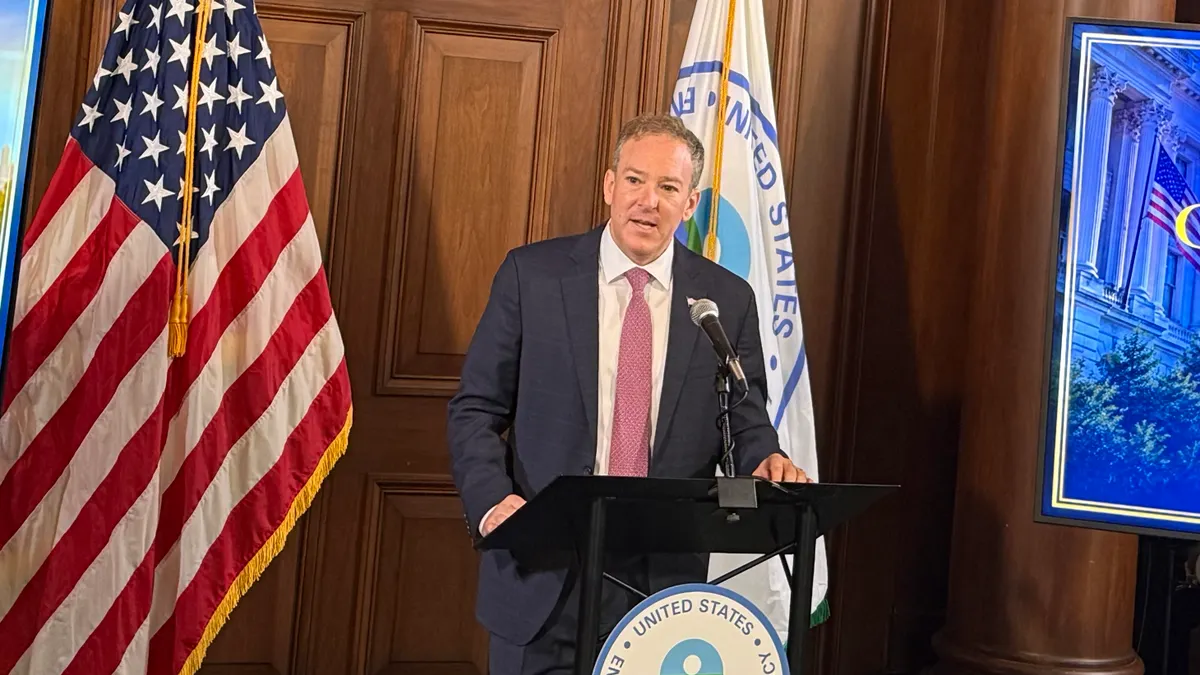
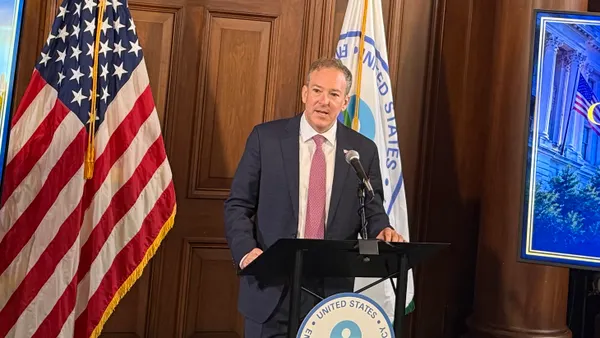
Pressure from Missouri Sen. Josh Hawley led EPA Administrator Lee Zeldin to visit the site and unveil an expedited cleanup timeline under the Superfund program in April of last year. The subsidiaries’ lobbying spending dropped below the $5,000 per quarter reporting threshold last year after those announcements, though it picked back up again in the first quarter of 2026. The lobbyists paid by the group included the daughter and former chief of staff of former Missouri Sen. Roy Blunt.
Recology was alone among the largest waste companies in responding to a request for comment. In an emailed statement in March, Recology spokesperson Robert Reed listed the company's current federal priorities as truth-in-labeling standards for packaging, protecting recycling requirements on the West Coast, protecting compost quality and addressing concerns regarding passive receivers of PFAS.
Reed said the policy environment has shifted toward "liability, compliance, and regulatory certainty," leading Recology to place a greater focus on regulatory exposure to regulations like PFAS for waste and recycling operators, as well as the changing priorities of Congress.
"Recology’s federal priorities have remained largely consistent. But the policy emphasis and approach have evolved with changes in the administration, congressional leadership, and timing of various reauthorizations such as the farm bill or surface transportation reauthorization," Reed wrote.
GFL and Waste Connections did not respond to a request for comment on their spending. A spokesperson for Clean Harbors declined to discuss the company’s spending directly.
Some niche waste companies have also ramped up their spend. Vaulted Deep, an injection well company that started in 2023, reported spending $20,000 on lobbying in 2024 and $300,000 in 2025. The company's 2025 disclosures list priorities like monitoring permitting reform and permitting pathways for slurry injection, advocating for changes to the tax code and cross-border water contamination issues.
Wastewater players have also reported major spending, with the largest spenders including Denali Water Solutions, Sedron Technologies and the San Gabriel Basin Water Quality Authority.
Waste’s return to Capitol Hill
While the waste industry is one of several lobbying on tax incentives in recent years, the question of PFAS disposal has uniquely animated several prominent waste players. Since the Biden administration declared certain PFAS chemicals as hazardous substances and began rolling out drinking water standards, the waste industry has attempted to defend itself from potential liability.
The Environment Technology Council, which reported spending under $5,000 per quarter on lobbying last year, has engaged with the federal government on PFAS issues on behalf of its members, which are companies that manage hazardous waste facilities.
James Williams, the organization’s executive director, said a growing economy also lifts the industry, as increased activity generates more waste. That’s especially true in manufacturing, which generates more complex wastes including those laden with PFAS. When waste activity grows, lobbying tends to follow, he said.
“With PFAS destruction and disposal really driving the discussion from an environmental perspective, it's only right that you would see increased lobbying in those areas,” Williams said.
Fleets and renewable natural gas were also common priorities for waste companies. David Biderman, a consultant and former CEO of the Solid Waste Association of North America, said the prevalence of lobbying on such issues is an example of why spending has grown in the first place — waste companies have gotten big enough to lobby in favor of their ancillary needs.
That wasn't always the case, says Biderman. Since many essential regulatory decisions that involve waste facilities, including permitting and collection, are decided at the state and local level, some companies haven't seen a need to spend so much on lobbying the federal government, Biderman said.
"Many companies took a 'Washington D.C. doesn’t matter to us,' approach to [their] thinking," he noted.
Yet attitudes began to change as more companies grew from local to regional to national operators. From 1992 to 2024, publicly traded waste companies have grown their share of revenue generated by waste activities in the U.S. from 41.2% to 64.8%, according to the Waste Business Journal. Private companies accounted for about 18.3% of revenue in 2024, while the rest was generated by government-run entities.
"As the industry has consolidated … we’ve seen a greater interest in understanding that what happens in Washington can impact what happens to the bottom line of waste companies," said Biderman.
As spending has risen, industry groups that represent the waste industry have also begun engaging more closely with Capitol Hill to change narratives around the company’s work.
The Recycled Materials Association spent nearly $387,000 on lobbying in 2025, per OpenSecrets data. Kristen Hildreth, the industry group’s vice president of government relations and public policy, said there’s a growing sense on Capitol Hill that lobbying should be driven by coalitions with steady engagement. That became especially true following the passage of the Infrastructure Investment & Jobs Act of 2021 and Inflation Reduction Act of 2022, which spurred significant changes to federal tax policy.
“During the implementation phase, after IRA passed, you saw a lot of industries working heavily with Congress or within the IRS to make sure the guidance they had for a lot of those tax credits included those materials or their own commodities,” Hildreth said.
Those policies represented the biggest change in federal rules for the waste and recycling industry in a generation, said Michael E. Hoffman, president and CEO of the National Waste & Recycling Association.
“In the last five years there's been more things happening at state and federal government, from an agency, regulatory, policy standpoint, regardless of blue or red, than I've seen in the bulk of my career,” Hoffman said.
NWRA reported spending about $10,000 in 2025. Hoffman said the industry group has long had a good relationship with federal agencies, but in recent years it’s worked to engage further on Capitol Hill.
That’s due in large part to growing regulatory scrutiny of PFAS, but it’s also due to greenhouse gas rules, since landfills remain one of the leading generators of methane.
“We didn't do a very good job of telling our story,” Hoffman said.
Hildreth also said the recycling industry has begun pitching its role in bolstering American manufacturing as policy interest in that sector has grown. She noted that the industry group remains engaged on supportive policies coming out of the One Big Beautiful Bill Act signed last year.
“We see this wave of interest for recycling which I expect will continue to grow as we enter a new phase of geopolitical uncertainties,” Hildreth said. “I don't see it decreasing any time soon.”