Landfill operators across the country continue to adjust to new regulations and court orders.
A judge ruled that a landfill in Michigan cannot accept radioactive waste, while Colorado passed a new law allowing landfill operators to apply for grants to help pay for upgrades to comply with state air emissions regulations. Landfills in Washington, Florida, Pennsylvania, North Carolina and Hawai’i are pursuing expansions.
Here’s a selection of landfill highlights from the last month:
Judge bans radioactive waste at Republic’s landfill in Van Buren Township, Michigan
A judge in Wayne County, Michigan, has permanently banned a landfill run by a Republic Services affiliate from accepting multiple categories of radioactive waste.
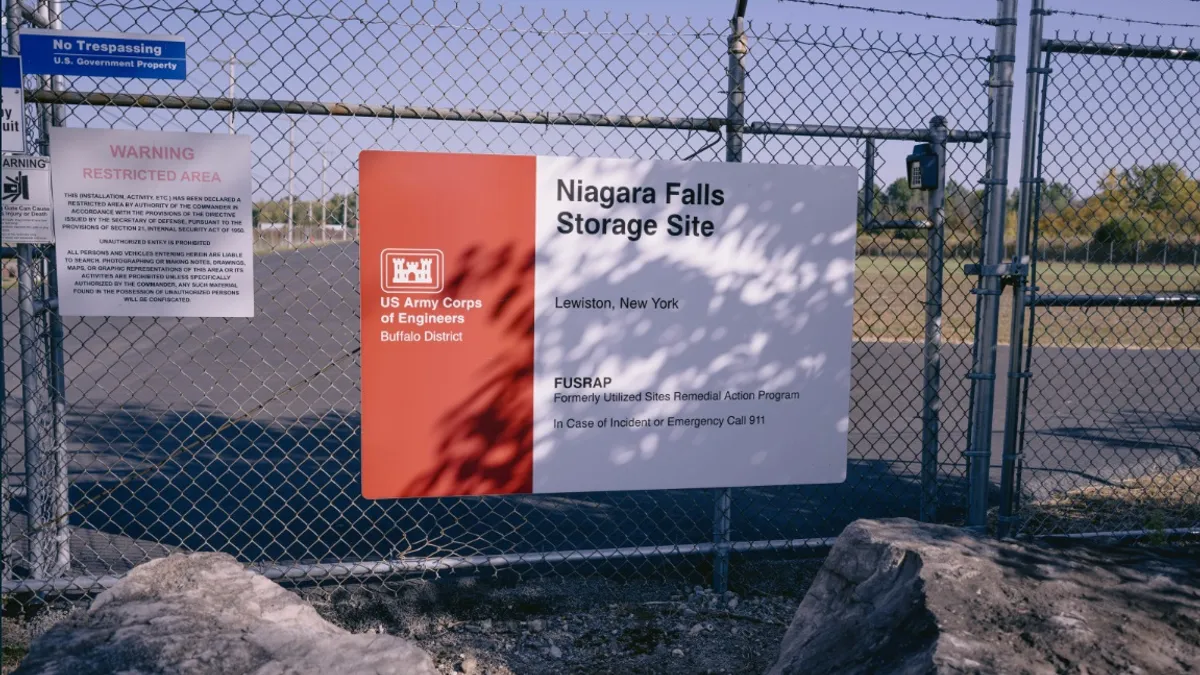
The lawsuit, first brought in 2024 by a group of cities and townships in Michigan, concerns a proposed shipment of radioactive waste that originated at a U.S. Army Corps of Engineers storage site near Niagara Falls, New York. At least 6,000 cubic yards of the waste, connected to the Manhattan Project, was scheduled to be transported to Wayne Disposal’s Van Buren Township facility under the federal Formerly Utilized Sites Remedial Action Program, according to court documents.
Judge Kevin Cox issued the permanent injunction on May 27. The ruling states that Wayne Disposal is prohibited from accepting technologically enhanced naturally occurring radioactive material from the Niagara Falls facility or from other sources.
Republic Services acquired the landfill through its acquisition of US Ecology in 2022.
A group of communities near the landfill argued that they would suffer negative health and environmental impacts from the arrangement. The landfill is within a Great Lakes watershed that drains into parts of the community, and it is located within three miles of eight different schools and 30,000 residences, court documents say. The water treatment authority that handles wastewater discharge from the landfill does not test or treat for radioactive material, court documents say.
The court found that “monitoring and engineering controls are insufficient” at the Van Buren Township landfill because “radionuclides can permeate covers; Radon cannot be contained, can migrate through liners, and is not otherwise monitored at nearby schools and communities.” Court documents allege that Wayne Disposal changed its monitoring and measurement protocols to stay within state-mandated levels for radium and Lead-210.
The ruling noted “substantial and credible evidence” that cancer risk was higher in communities near the Niagara Falls site, and that radiation gas levels have increased at the Wayne Disposal site each year since it began accepting radioactive material in 2017.
The judge also ruled that “alternative disposal sites exist that do not present the same substantial risk factors as the WDI facility” due to its proximity to high populations and its location near water sources.
Court documents identify four sites throughout Texas, Idaho and Utah that were capable of taking the waste and were located in drier, less populated areas. The Idaho site is also operated by Republic.
Van Buren Charter Township, along with the City of Belleville, City of Romulus and the Canton Township, applauded the court decision in a joint statement.
“By fighting this issue, our communities made it clear that we would not quietly accept the importation of atomic waste in our backyard which by its proximity to 21% of the world’s fresh water is in truth, everyone’s backyard,” said Belleville Mayor Ken Voigt.
Republic Services did not immediately respond to a request for comment. In a statement to Click on Detroit, the company said it would appeal the ruling.
“Wayne Disposal, Inc. is a safe, well-managed facility that is specifically engineered to handle FUSRAP TENORM and other complex waste streams,” Republic wrote. “This ruling sets a troubling precedent that undermines protections afforded to interstate commerce and impedes site remediation, as well as the safe and effective long-term management of these materials for customers in Michigan and throughout the country.”
The ruling comes a few months after Republic Services in January received approval to expand the Wayne Disposal hazardous waste landfill, as its permit was up for renewal. The expansion would grow the facility’s capacity by about 24%, add more than 5 million cubic yards of space, and include a vertical expansion.
Members of advocacy group Michigan Against Atomic Waste told Click on Detroit they would fight the expansion.
Colorado governor signs law meant to help landfill operators comply with new state air emission regulations
Colorado Gov. Jared Polis signed a law meant to help landfills, particularly publicly operated ones, comply with new state emission requirements that can be costly to implement.
Some landfill operators may need to install or upgrade their methane capture systems and ramp up monitoring efforts under new rules adopted last year by the Colorado Air Quality Control Commission. The regulations, which take effect in 2029, will restrict open flares and put stricter thresholds on gas collection and control systems, among other updates.
The new regulation aims to help Colorado meet its goal of 100% net-zero greenhouse gas emissions by 2050.
SB 101 allows landfill operators to apply for grant funding through the state’s Community Impact Cash fund to help pay for methane emission reduction projects. It’s meant to help prevent costs from being passed on to residents through higher tipping fees, Sky-Hi News reported.
Certain mountain towns with publicly owned landfills are already estimating the costs of installing new equipment will be somewhere between $2 million and $3.5 million, Sky-Hi reported.
The law requires that an environmental justice advisory board prioritize grant requests from landfills run by local governments over privately run landfills. It also requires entities that receive money to use it as supplemental funding only.
Lee Helfend, director of campaign strategy for advocacy group Full Circle Future, said in bill testimony that the new landfill regulations already offer “multiple monitoring and repair pathways that allow operators to address emissions before more costly infrastructure is required.” Helfend estimated many landfill operators have until sometime after 2030 before needing major capital investments.
Other landfill news:
- The U.S. Department of Energy is constructing an 11th cell at its Environmental Restoration Disposal Facility in Richland, Washington, marking the site’s fifth expansion. The “super cell” will have an estimated 2.8 million cubic yards of additional capacity for low-level radioactive and hazardous waste from the ongoing cleanup at the Hanford site, which produced plutonium for more than 40 years. (DOE)
- Commissioners in Collier County, Florida, voted to approve an eastward landfill expansion based on analysis from SCS Engineers. This would involve more than 180 acres of land and could add an estimated 79 years of capacity. The current WM-operated landfill still has an estimated 35 years of capacity. (Marco Eagle)
- Commissioners in Lycoming County, Pennsylvania, voted to approve an expansion plan for their own county-operated landfill. The current site is expected to reach capacity within six years, which is considered a potentially tight timeframe for permitting with the state’s Department of Environmental Protection. (Williamsport Sun-Gazette).
- Gaston County, North Carolina, is considering an expansion of its own publicly-operated sites, which are expected to reach permitted capacity within five years. A proposed 10-million-cubic-yard expansion could add another 15 years. The proposal drew mixed reactions at a recent public meeting. (WBTV)
- The publicly operated Kekaha Landfill in Kau’ai County, Hawai’i, could also expand. The site is currently projected to reach capacity by the end of 2030. The county is planning to build a new landfill, but is currently looking at a vertical expansion of Kekaha that could add 12 years of capacity. (Honolulu Civil Beat)