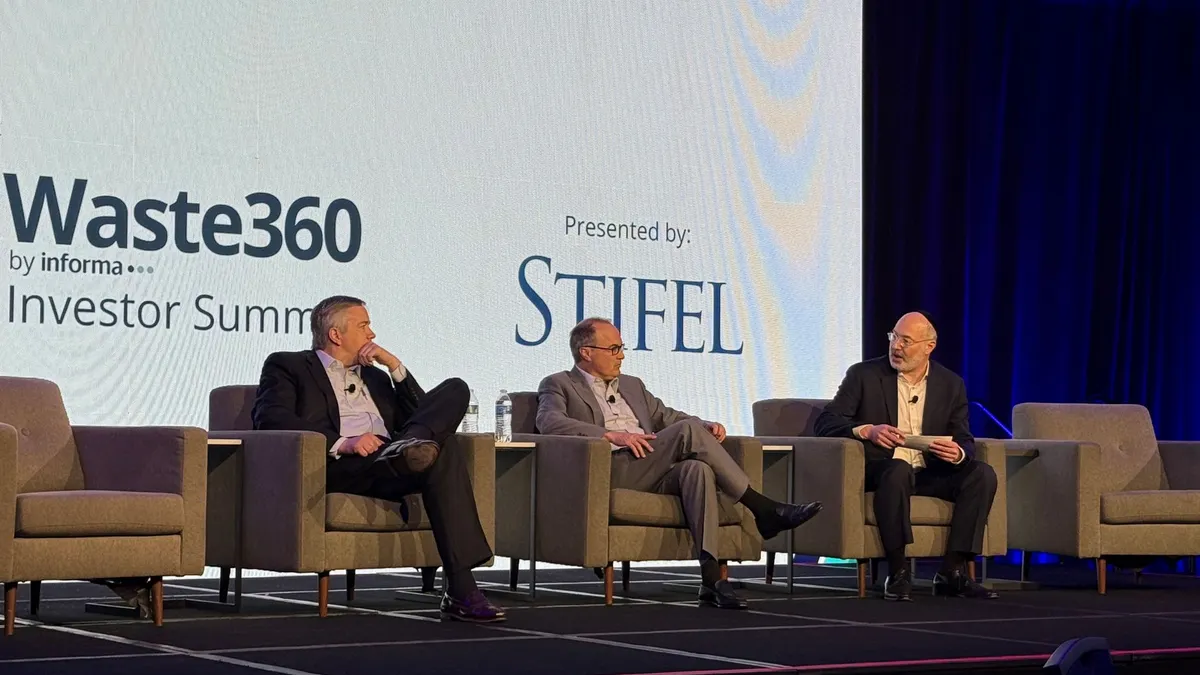
Ned Coletta has always seen himself as a big planner, and in the five months since he took the helm as CEO at Casella, he’s taken on even more of the company’s long-term plans for growth.
The Vermont-based company, which reported $1.84 billion in revenue last year, has completed four acquisitions so far this year with about $150 million in aggregate annualized revenues. That includes the January acquisition of Mountain State Waste in West Virginia and the April acquisition of Star Waste Systems in the Boston area. Casella recently acquired Cougle’s Recycling in Pennsylvania to expand its presence and recycling infrastructure in that region. It also acquired the residential and commercial curbside collection services of Recycle Depot in Poughkeepsie, New York.
The company is continuing its focus on Northeast and Mid-Atlantic markets. “We still have a lot of room to grow in the Northeast, but stepping into new geographies has allowed us to really regulate our organic growth and look at our sales pipeline,” Coletta said during a presentation at the Waste Leadership Summit in Washington, D.C. last week.
Casella is also in the midst of expanding two New York landfills to counteract the planned closing of the Ontario County landfill in 2028.
Coletta said the company is currently experiencing a seasonal uptick in business, even amid inflation and high fuel prices. But long-term plans matter just as much as quarterly progress, Coletta said.
Coletta sat down with Waste Dive during the conference last week to talk about the company’s trajectory, its work to improve PFAS management, landfill diversion and recycling infrastructure, and how it’s approaching employee safety and training.
This conversation has been edited for clarity and brevity.
WASTE DIVE: You stepped into the CEO role in January. What has changed for you and for the company since you've taken that position?
NED COLETTA: I've been with the team for 21 years, CFO for 12, president for three before I stepped in a CEO's role. A lot of our strategy, a lot of our execution over the years is mine. John [Casella] and I had an amazing partnership for many years, but there are some things I have a little different vision on. One of my mentors said to me this fall, coming into the CEO's role, that I may have a list of things I want to do in a year, but to focus on three really simple things.
The first one was a safe and supported workforce. We really needed to drive down more on safety. We're driving a lot of innovation for a supported workforce.
We also need to get communication down through the business better. In 2020 we had about 2,000 employees, and we’re 6,000 employees today. We need to make sure that we can communicate to everyone in the organization. We created this app called Casella Connect, which is like Facebook for inside the company. Some mornings we have drivers who have posted pictures of the sunrise at a landfill. Sometimes we have a safety message. It's fun for everyone to interact.
I've also been doing these Casella conversation events, which is a town hall meeting with everyone in the company.
My third goal is to become more strategic and less reactive as a management team, and that's one that's deep and dear to my heart. I'm a big planner, and I love to make sure everyone's working a plan. Don't just show up to work and react to what comes at you. Some days, you need to do that, but you should always be working a multi-year strategy to get better.
Since workforce communication and training is a big focus for Casella, I’m curious about how the business has been affected by changes to the CDL license eligibility requirements and hiring and training in general?
We've done a really nice job over time making sure that we have a legal workforce, and we spend a lot of time on I-9 and E-Verify [requirements] to make sure that we understand who’s working for us and that they can be working legally in the U.S.
But one change is that drivers have to be able to do everything in English, whether it’s with a roadside or inspection or whatnot. That can be a little bit challenging for some of our employees whose first language is not English. They've gotten valid CDLs and worked hard to achieve those, so it's something we've tried to be really proactive with our employees and make sure they have the tools — if they need additional classes in English, and things like that — to just be helpful.
They’re hardworking people, and just because English isn't your first language doesn't mean you shouldn’t be able to drive a truck. That’s really not fair and not right in a lot of different ways. We've seen people really change their lives and change their family's lives by working hard in our industry, and I don't want to see that go away.
We really haven't had any sort of major disruption now, given our proactive approach over time, and as you know, we've invested a ton in our CDL training school. We've graduated over 400 employees.
If you have a CDL, you have to be 21 years old to drive across state lines, but you can be 18 years old if you drive inside a state. So one day we woke up and we're like, we're missing out on all these great kids graduating from high school, and then they're going into other vocations, and it's hard to get them back. Our driver apprentice role has helped give them careers in the industry.
One of the other really fun things we did was getting a D3 football coach to be our head high school recruiter now, and he loves it. He goes to locker rooms, meets with coaches, and talks to students about our diesel tech school and our CDL school. He's got an amazing pipeline of really hard working kids who are coming in and learning the industry and creating a life for themselves.
Casella has also completed a few notable acquisitions this year, including Star Waste in the Boston area and Mountain State Waste in West Virginia. How are you approaching your integration strategy as you expand and fill in your footprint, especially in two places that seem to have such different populations and environments?
We're looking for great acquisitions that add to existing markets and add additional density or services, but also adjacencies like a West Virginia market, so overall it just speaks to the overall strategy: the integration playbook is generally the same every time, but there are little nuances. In West Virginia we'll keep the brand of Mountain State Waste for a little bit longer, because it's a highly regulated market.
In Boston, you know, we'll move to the Casella brand a little bit faster, because we really have the premier brand in the Boston market. We already work there with Harvard, MIT, Boston University, Boston College, Tufts, Logan Airport, for example.
People really look at us as a partner for sustainability and circularity. Most private companies we're buying are just not as focused on how to create value for customers by reducing their waste stream, driving more recycling, more organics management, creating more value for the world around us by reducing our environmental impact. That's one thing along that integration journey. I think in almost every single market we're in, where typically a private company is a little less focused on that than we are, and maybe a little less focused on those really complex accounts, like a big college or a big industrial site.
You’re also operating in markets with looming landfill constraints. What’s your general waste diversion investment strategy as it stands now, especially considering the Ontario landfill you operate in New York is closing within a few years?
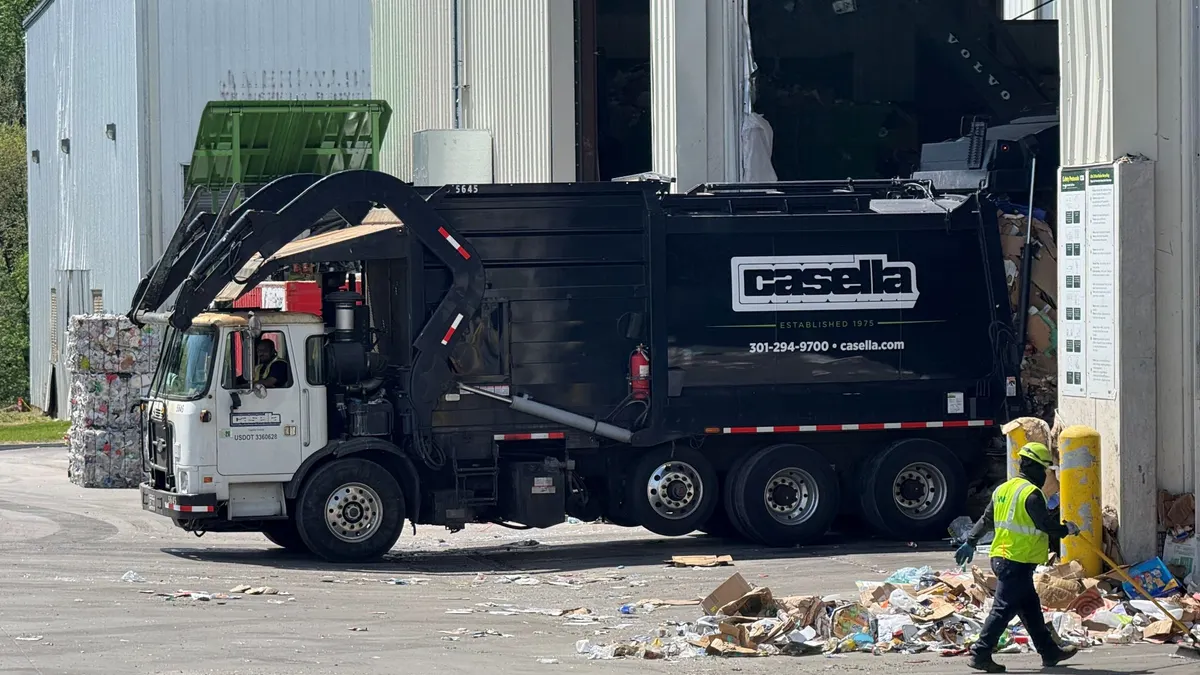
It starts at the basic level with every customer. We're one of the only companies in the country who buy a lot of split body trucks. Inside most of our garbage trucks, there's a middle section, and we can pick up with automated side load recycling and waste at the same time. So, even in rural markets, when we're passing households or we're going to small businesses, we're picking up waste and recycling and we're getting the recycling through our transfer network into our leading set of recycling facilities.
We invested heavily in our Boston recycling facility a few years ago, one of our largest facilities in the country. We finished a major investment in Connecticut this last year to completely redo it with Machinex technology at our Willimantic facility.
We're about to put in a state-of-the-art, brand new recycling facility in the Allentown market in Pennsylvania. It will be a full-scale recycling facility with about 150,000 tons a year capacity. We haven't awarded the equipment vendor yet, but that'll be done really soon. It will be about a year-long development project.
In that marketplace today, quite a bit of recycling that's flowing through our system is going to third-party facilities, so this will be a way to internalize that. There is not a lot of infrastructure in that marketplace, so when we showed up in the Mid-Atlantic, we looked around and saw people are not recycling the same way they are in the Northeast. It’s going to be a journey, and it's going to take a little bit of time, but we're getting the right truck assets in place, the right programs for our customers, and the right transfer stations and recycling facilities in place.
We do have one small [MRF] in the Scranton market, which came with the GFL transaction. We also just bought a company called Cougles Recycling in Pennsylvania on April 1. It’s a long-term, family-owned business with recycling both single stream and high grade recycling. So the [new MRF] will be our third recycling facility in Pennsylvania in pretty short order.
Very high fuel prices are affecting many aspects of waste industry operations right now. How is Casella adjusting?
Diesel is up 50% year over year, but we're doing relatively well, because almost all of our customers have floating fuel surcharges. I created the fuel surcharge [for Casella] many years ago, because I think it’s fair. If diesel prices go up, everyone shares a bit in that additional cost, and when they come back down, their bill reduces. With new acquisitions, a lot of companies we buy don't have floating fuel surcharges. With diesel spiking, we're going out to these new customers saying, “This is one thing we need to change and this is how we do business.”
I've noted over the years that some small haulers in that environment will just start raising their prices, but I think those are kind of bad profits. You raise your price, you cover the fuel, but when fuel prices drop, all of a sudden you have all this additional profit. Then, if fuel prices come back up, you have no way to make it up. I would rather come up with a fuel surcharge, give it back to the customer. For us, being more stable and predictable with earnings is more important than a one-time price increase.
What’s the latest with how the company is managing PFAS and your relationships with water treatment facility operators, especially since you operate in states with strict PFAS regulations and the U.S. EPA has changed regulations related to PFAS in drinking water?
Being in the Northeast, we try to educate regulators and politicians that [PFAS-containing items] come into our landfills, but we didn't create any of this. It's just showing up in the waste stream. We need to go back and we need to really think about more producer responsibility in these areas.
At the end of the day, when we pump leachate, we've worked for many years with wastewater treatment plants to help to treat that and make it safe for the environment. We’ve also invested in treatment technology at the landfill, specifically for those chemicals. We got one of the first treatment foam fractionation facilities in the country at our Vermont landfill and it’s treating at a very high efficiency rate.
We’re looking to implement similar technology at other landfills. Maine will probably be the next place where we have treatment technology. We’re working hard to choose the right vendor and the right technology. It will be another foam fractionization unit. What’s really cool about this is we're treating tens of millions of gallons of leachate a year, but the percentage of PFAS-concentrated foam is maybe 1,000 gallons a week.
We mix cement with it and put the hardened cement block back in the landfill. It takes up a little air space, but there’s no expensive technologies, no burning or incineration or something that could negatively impact the environment. The leftover leachate has 99% or 99.9% of PFAS taken out of that, and then we partner with our wastewater treatment plants to clean the rest of that.
There’s a symbiotic relationship there as well, because the biosolids that come out of the back of the wastewater treatment facility after they digest the wastewater, a lot of that comes to our landfills. Many years ago, we were the largest producer of compost materials and soil remediation and fertilizers, but we've moved away from those product lines because of forever chemicals. We’ve instead partnered to get more of those biosolids into landfills.
We're bringing leachate to [water treatment facilities], they need outlets for their biosolids, and we provide a safe outlet. It’s a corner of the world that not a lot of people are thinking about. You flush your toilet, no one's thinking about it. You put your waste at the curb. No one’s really thinking about the end state.
Disclosure: Informa, which owns a controlling stake in Informa TechTarget, the publisher behind Waste Dive, is also the owner of the Waste Leadership Summit. Informa has no influence over Waste Dive’s coverage.