
Dive Brief:
- A judge in California has granted a preliminary injunction that will block upcoming enforcement of SB 343, the groundbreaking “truth in labeling” law passed in 2021 that aimed to reduce consumer confusion by ensuring that packaging does not feature recyclability symbols like the chasing arrows unless certain criteria are met.
- The law, which was due to take effect Oct. 4, created challenges for businesses navigating packaging labeling in California and beyond. Packaging associations including the Flexible Packaging Association and the American Forest & Paper Association, along with more than a dozen other groups, filed a federal lawsuit in March, arguing that SB 343 restricts free speech.
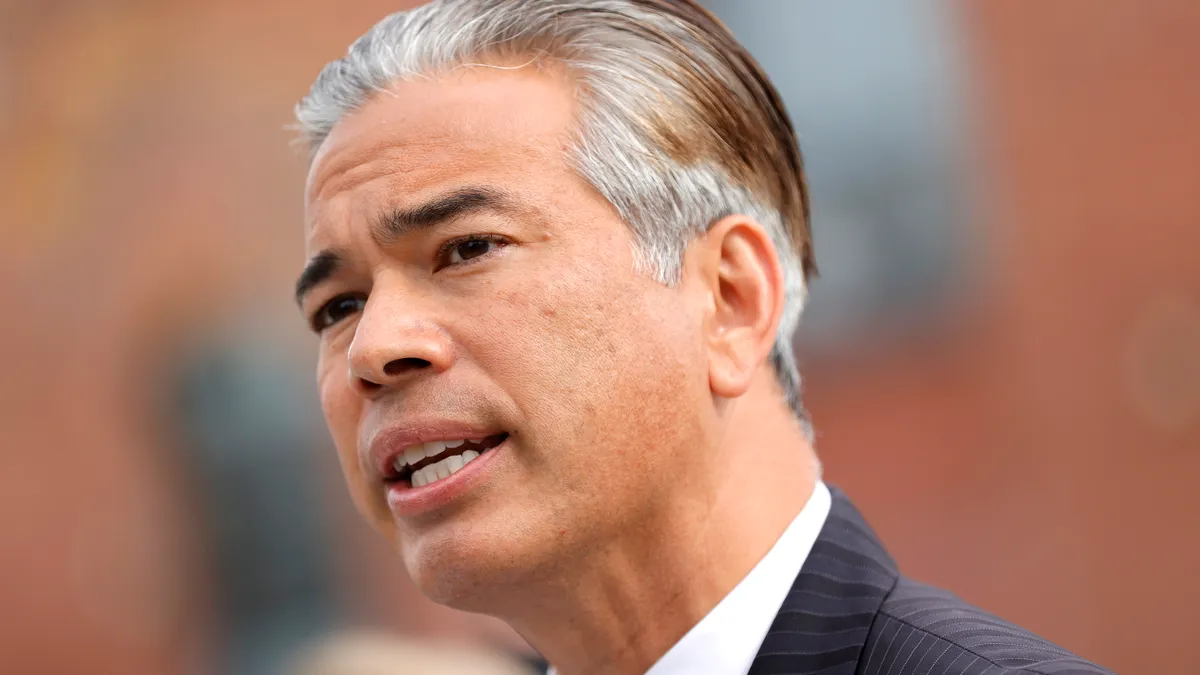
- There was a hearing in early June leading to this week’s decision. Judge William Q. Hayes found merit in the First Amendment challenge. California Attorney General Rob Bonta, the defendant in the case, is now “enjoined from enforcing SB 343 until further order of the Court.”
Dive Insight:
In issuing the pause, the judge described SB 343 as more extensive than necessary to achieve its stated aims.
He sided with the plaintiffs’ arguments over vagueness, including related to provisions on how to determine whether something is considered recyclable. These included tie-ins to aspects of the Basel Convention and the APR Design Guide.
The judge also said that while the law purports to end consumer confusion, improve recycling rates and reduce the amount of material going to landfills in California, the evidence does not adequately support this. “The current record indicates, conversely, that SB 343’s requirements will result in manufacturers choosing to forgo recyclability claims that would provide consumers with environmental information for fear of enforcement actions,” the order states.
Julie Landry, vice president of government affairs at the American Forest & Paper Association, called the ruling “a significant win, not just for our members, but for every business that wants to give consumers accurate information about the products they buy.”
Dan Felton, president and CEO of the Flexible Packaging Association, said the group is still reviewing the preliminary injunction to understand its full implications. “In the meantime, we maintain that SB 343 restricts our ability to provide important recycling information and relies on standards that do not always reflect real-world recycling conditions,” he said in an emailed statement.
Californians Against Waste, which supported SB 343, decried the decision.
“SB 343 is a straightforward truth-in-advertising law. It does not prohibit companies from making environmental marketing claims. It simply requires recyclability claims to reflect what actually happens in the real world,” Advocacy Director Nick Lapis said in an emailed statement. “The idea that companies have a First Amendment right to make misleading recyclability claims turns decades of consumer protection law on its head.”
Lapis said CAW is “confident that the state will ultimately prevail,” but suggested that the delay reverses a leveling of the playing field. “Many companies have invested significant time and money to redesign their packaging or switch to materials that are actually recyclable under California's recycling system. Those companies should not have to compete against businesses that can make the same marketing claims without making the same investments,” he said.
Another monumental California packaging policy – upcoming extended producer responsibility and source reduction law SB 54 – is also currently the subject of multiple other ongoing lawsuits.
One of the central challenges for brands with SB 343 is that many businesses sell nationally, so it’s difficult to tailor packaging changes for a specific jurisdiction. An Ameripen-backed bill known as the Pack Act was introduced in Congress last December to potentially establish a federal labeling framework.