Dive Brief:
- The U.S. EPA and Reworld last week released a new report finding a large municipal waste combustion facility performed better than expected at destroying PFAS-related compounds. The study found a roughly 98% destruction and removal efficiency during tests at the Reworld Lake County Resource Recovery Facility in Okahumpka, Florida.
- The study had key differences from a previous study the EPA performed at Clean Harbors' hazardous waste combustion facility in Utah. Differences include researchers' ability to determine actual PFAS destruction, since it can be difficult to measure the chemicals' concentration in the complex municipal solid waste mix that enters large municipal waste combustors on a daily basis.
- EPA scientists characterized the study as "promising," especially considering PFAS has also been found in landfill leachate and gas. But they noted municipal waste combustors vary in design, and more testing is needed to determine PFAS' true fate in these facilities.
Dive Insight:
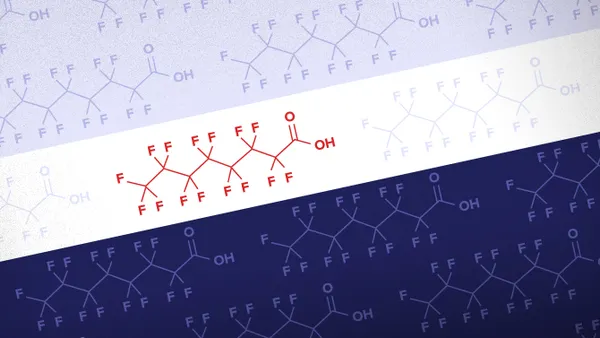
Despite rising support for product bans in certain states, per- and polyfluoroalkyl substances are found in a wide range of consumer products. Those products often end up in the municipal waste stream when people throw out pizza boxes, textiles and other items.
The PFAS family of chemicals includes thousands of substances, many of which are difficult to break in the environment due to a strong carbon-flourine bond. Due to their highly persistent nature, they can travel through the waste system and end up leaching out into the environment. This phenomenon has driven regulators to take a close look at landfill leachate, which can contain relatively high concentrations of PFAS.
But PFAS chemicals can also become gases that escape the waste stream in other ways. That includes in landfill gas, where recent studies have suggested certain kinds of PFAS are prevalent. The fate of PFAS in incinerators has also remained uncertain, with early studies suggesting that certain kinds of PFAS can survive the temperatures typically reached in municipal solid waste combustors.
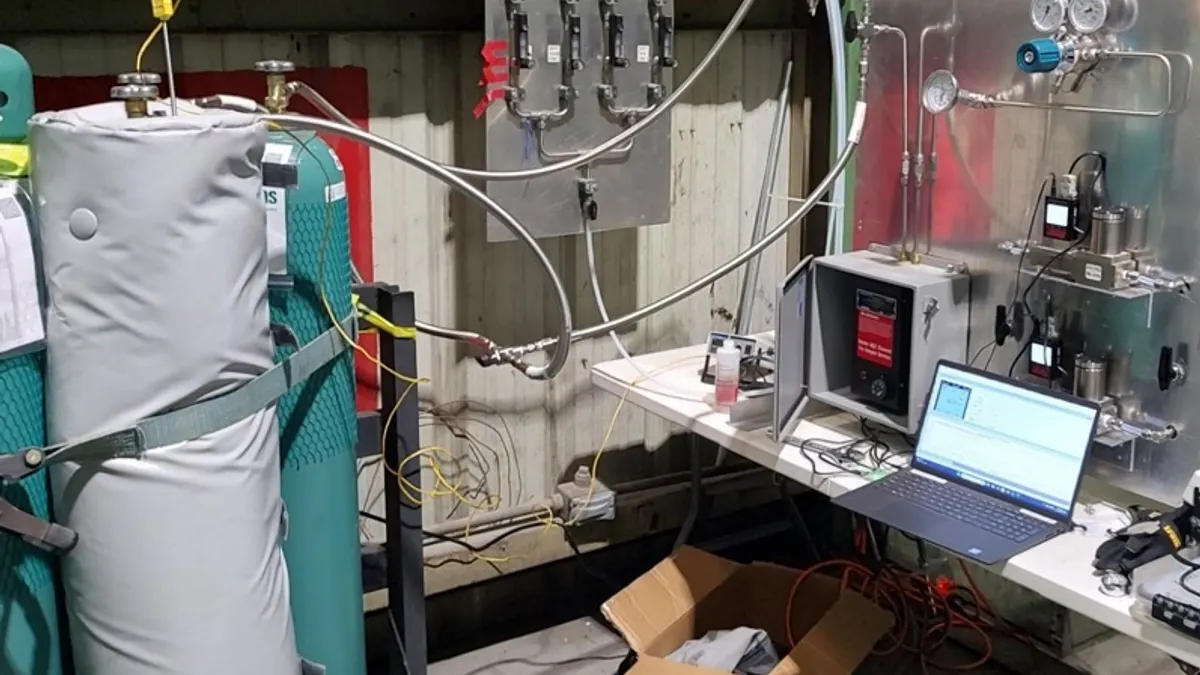
To take a closer look at this emerging area of concern, EPA researchers partnered with Reworld at its Lake County facility. They conducted multiple tests in 2024 in which hexafluoroethane and tetrafluoromethane gases were injected before the incineration process in order to determine the destruction efficiency of PFAS chemicals. Those gases are more difficult to destroy than other kinds of PFAS, which could allow the researchers to develop a sort of worst-case scenario indicator of incinerator performance, per the report.
The study used two methods of sampling to cross-check destruction results. The two methods include Other Test Method 50 — a method of extracting gas samples developed by EPA in the last few years which has been used in other PFAS incineration tests — and Fourier transform infrared spectroscopy, which provides real-time measurement of gases after combustion.
The study's 98% destruction and removal efficiency result is higher than previous studies conducted at the temperatures seen at the Lake County facility, which operates at temperatures above 2,000 degrees Fahrenheit. The researchers also estimated total PFAS air emissions from the facility were 7.8 grams per year. That includes less than 0.5 grams of PFOA and no detected PFOS, two PFAS chemicals of concern
Reworld celebrated the results in a release on Thursday that called PFAS contamination an environmental crisis.
"This EPA study marks a turning point by demonstrating that compounds specifically engineered to resist degradation can be permanently destroyed. It proves that PFAS destruction is achievable at scale, and that Reworld has the technology to confront this challenge," Reworld President and CEO Azeez Mohammed said in a statement.
While that efficiency is significant, it's lower than the destruction efficiency observed at hazardous waste incinerators, which operate at higher temperatures. Clean Harbors' test with the EPA recorded 99.9999% destruction efficiency, and Veolia North America reported the same results in an independent test.
The results of these tests have come amid changing recommendations from the federal government for PFAS destruction and removal guidance. The Department of Defense recently lifted a moratorium on incineration of aqueous film-forming foam, a firefighting material that contains PFAS. And the EPA has also updated its PFAS destruction and disposal guidance, which cites the research into hazardous waste incineration.