Dive Brief:
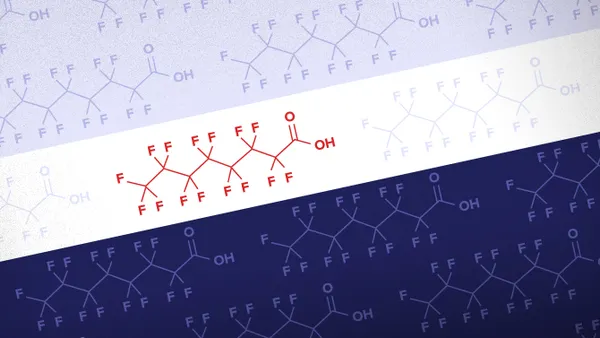
- The U.S. EPA announced Wednesday it is releasing new draft guidance on the risks of PFAS contamination in biosolids. The decision comes after longstanding uncertainty over the future of a draft risk assessment on the same subject released in the final days of the Biden administration last year.
- In a release, the agency said the Biden-era assessment “relied on assumptions too disconnected from real-world conditions to give Americans clear, actionable information.” It committed to a “radically transparent approach” with this second draft.
- The prior assessment drew criticism from industry groups that claimed significant contamination was limited to plants that accepted industrially impacted effluent. But environmental and public health groups have urged the EPA to crack down on the the use of biosolids as fertilizer.
Dive Insight:
The EPA has spent several years across multiple administrations developing a plan to address potential per- and polyfluoroalkyl substance contamination of agricultural land. In some cases, testing has revealed significant contamination on land where biosolids, also known as sewage sludge, have been used as fertilizer.
The draft risk assessment on such use of biosolids began during President Donald Trump's first term in 2019. It was released last year in the final days of President Joe Biden's term.
That assessment revealed the potential for health impacts on farmers that use biosolids, in some cases several orders of magnitude above thresholds the EPA deemed acceptable. The agency did not find enough evidence to suggest that the general food supply from such farms was contaminated by PFAS in biosolids.
The assessment went through a public comment period after it was released, but the EPA did not finalize it in the following months. During budget negotiations in Congress last year, Republicans attempted to introduce language preventing the EPA from considering or finalizing the assessment.
At the same time, the second Trump administration has taken a less aggressive approach to PFAS than his predecessor’s. While EPA has continued to defend the designation of PFOA and PFOS as hazardous substances under Superfund rules, it has rolled back planned drinking water standards for other PFAS chemicals.
The administration has also been permissive of PFAS-containing materials on farmland, approving three new pesticides that are considered PFAS under some definitions.
EPA released a nine-page draft guidance document for sewage plant operators on Wednesday in conjunction with the draft guidance announcement. In it, the agency defended land application as a “cost-effective strategy for adding nutrients and improving soil quality.” It noted industrial pretreatment programs in states like Michigan that seek to manage upstream contamination can be effective in reducing PFAS entering wastewater facilities.
The agency also wrote that last year’s draft risk assessment relied on higher-risk scenarios that may have misled the public.
“A misconception has arisen that all biosolids and sewage sludge use and disposal practices will negatively affect the public,” EPA wrote. “This draft guidance aims to provide clarity to stakeholders about the more common potential risks from PFOA and PFOS and identify some potential practices that can be taken to reduce PFOA and PFOS exposures.”
The National Association of Clean Water Agencies, which represents public water utilities, is pleased the EPA is soliciting additional input, said Nathan Gardner-Andrews, chief advocacy officer.
“[NACWA] is pleased the Agency has recognized the draft biosolids risk assessment issued last year does not appropriately reflect real world conditions,” Gardner-Andrews told Waste Dive in a statement.
The industry group has met with EPA repeatedly since last year as it weighs biosolids regulations, and plans to continue discussions, Gardner-Andrews noted.
Environmental groups, meanwhile, said they have been shut out of the process. Laura Orlando, a senior scientist at Just Zero, said her group has attempted to submit a petition to the EPA urging finalization of the draft risk assessment. But EPA officials have not responded to the group’s emails, she said, and have even declined to accept hard copies sent through the mail.
“It is difficult to reconcile EPA’s claims of transparency and stakeholder engagement with its refusal to accept a petition from a public interest organization while simultaneously meeting with organizations representing wastewater utilities and the sewage sludge industry,” Orlando said.
She also expressed skepticism about the EPA's distinction that “ordinary household biosolids” are safe for land application, compared to biosolids from industrially impacted facilities.
Orlando said Just Zero and the Coalition for Sludge-Free Land, of which her organization is also a member, stand by comments submitted last year urging stronger regulation of biosolids. She said the organizations plan to submit comments again on the latest EPA guidance.