Dive Brief:
- Mint Innovation, a New Zealand-based company that extracts critical materials from items like circuit boards and lithium-ion batteries, has spun out its battery recovery business into a separate company called Linca.
- Mint will retain a minority stake in Linca. As part of the spin-off, Matt Bedingfield was promoted from global president to global CEO of Mint, taking over from founder and CEO Will Barker. Mint co-founder Ollie Crush will lead Linca as its CEO.
- The company says the move is meant to “sharpen focus” between its two business lines as it works to open its first U.S.-based critical minerals recovery facility in Longview, Texas, under the Mint name.
Dive Insight:
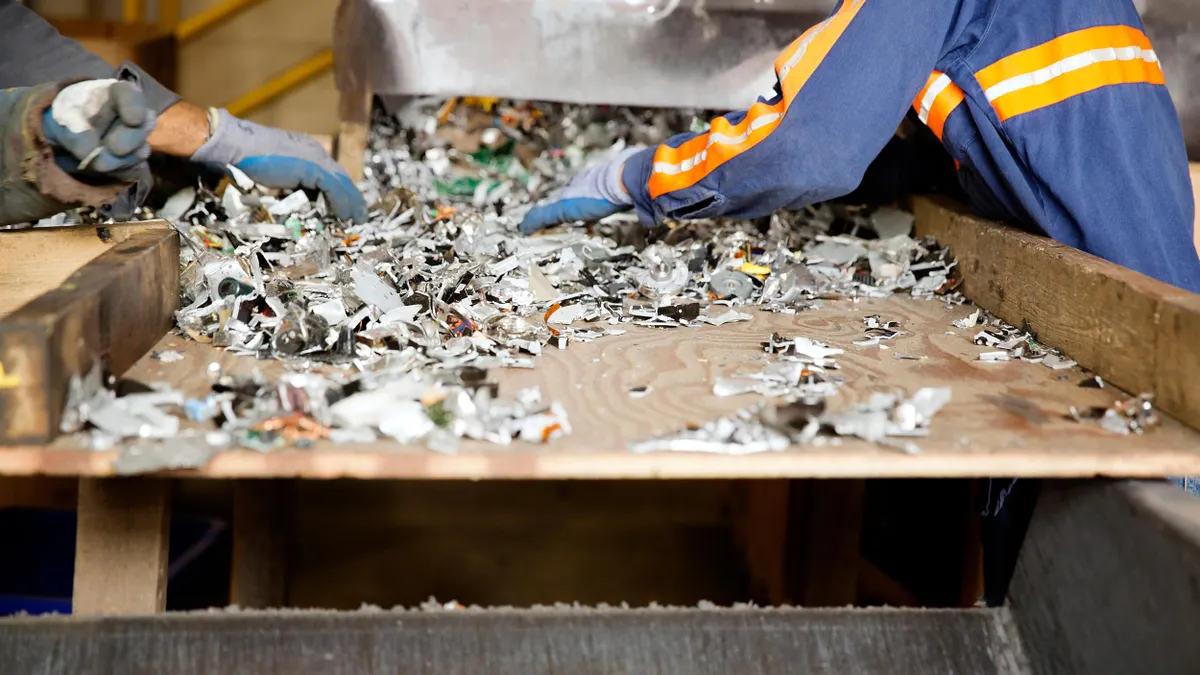
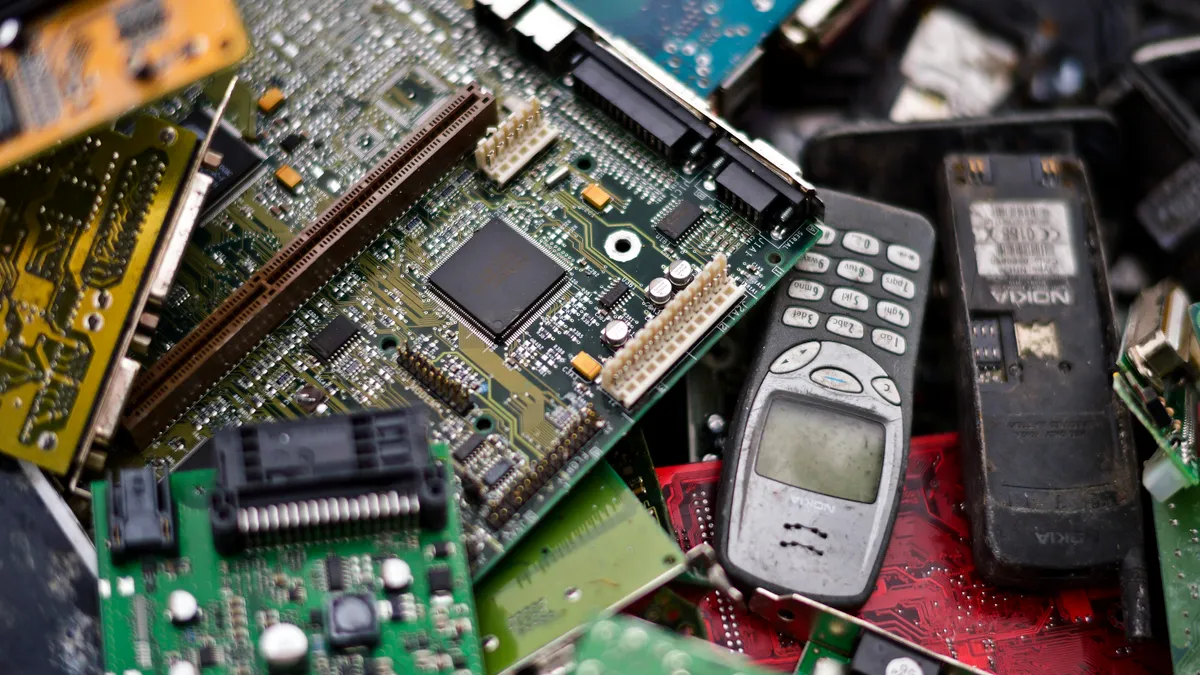
Mint’s main focus will be on recovering copper, gold, silver and other metals from printed circuit boards and other e-scrap. Linca will focus on recovering lithium, nickel and cobalt from end-of-life lithium-ion batteries. Mint’s company reshuffle aims to help align its U.S. operations with the country’s recent focus on boosting domestic supply chains for critical minerals used in electronics, batteries and magnets.
It’s become a notable economic and manufacturing priority in the U.S., partly because countries like China have cornered the market on certain minerals used to manufacture those items, and recent geopolitical pressures like tariffs and the war in Iran have further strained supply chains for some industries.
The rise of AI and the prevalence of data centers is also driving higher demand for copper, added Matt Bedingfield, Mint’s new global CEO. Bedingfield estimates an upcoming global copper shortage of between 6 million to 10 million tons by 2035.
“Every single data center, every single battery electric vehicle, every single energy transition item, be it solar farms or wind turbines — they take an absolute ton of copper, so that's what's powering societal growth,” he said in an interview.
The business reorganization will help Mint focus U.S. resources on targeting copper and other critical minerals from printed circuit boards and other e-scrap, he said. The company describes its recycling system as a “proprietary low-carbon hydrometallurgical process.”
In March, Mint partnered with electronics company HP to produce what it said is the industry’s first batch of “closed-loop recycled copper,” which will be used in specific HP product lines.
The company plans to continue using that hydrometallurgical process at its planned commercial facility in Longview.
Mint says the Longview facility is “currently under construction” and targets a 2027 opening date.
Meanwhile, Linca will focus on recovering lithium, nickel and cobalt from end-of-life lithium-ion batteries, which the company said will “target the rapidly expanding electric vehicle and energy storage markets.” Linca’s technology refines black mass through what the company also describes as a “proprietary hydrometallurgical process.”
Many critical mineral recycling projects in the U.S. and abroad are focusing on lithium, nickel and cobalt recovery from batteries, and the Linca spinoff will help the company devote time and resources to that effort, Bedingfield said.
"The EV battery recycling market is at an inflection point, and the opportunity demands a company built specifically to capture it," Crush said in a statement. "We've proven our hydrometallurgical process can recover lithium, nickel, and cobalt. As an independent company, Linca can move at the pace this market requires to scale the technology further."
Before Linca was spun out into its own company, the lithium-ion battery program and its efforts to build a demonstration-scale black mass refining technology had attracted £8.1 million in consortium backing from Jaguar Land Rover, LiBatt Recycling and the Warwick Manufacturing Group at the University of Warwick, Mint Innovations said. Linca's seed funding round, led by Motion Capital, has recently reached its first close.
Bedingfield said both Linca and Mint’s focused operations are needed to help build up domestic supply chains of critical minerals in the U.S., especially as more companies commit to reshoring operations.
“If we don't have the raw materials here to keep them going, then we've really done nothing from a supply chain vulnerability perspective,” he said.