Dive Brief:
- Organizations in the Canadian Zero Waste Coalition submitted joint comments opposing an Ontario regulatory proposal that would allow waste incineration to be considered a form of renewable energy. The province should instead focus on improving waste diversion efforts already underway, the coalition said.
- The proposal would consider biogenic materials in MSW to be biomass and designate facilities that burn such material as renewable energy producers. It would also streamline certain permitting rules for waste incineration facilities.
- In an explanatory note, the Ontario Ministry of the Environment, Conservation and Parks said the changes would “help promote more investment in [incineration] facilities in Ontario, help reduce the volume of waste going to landfills and increase the recovery of energy from the waste Ontarians produce.”
Dive Insight:
Ontario, Canada's most populous province, has made a variety of changes to its municipal solid waste and recycling infrastructure in recent years in an effort to move away from disposal. Those include the rollout of an extended producer responsibility framework for packaging and a growing number of municipalities separating organic waste for processing via anaerobic digestion.
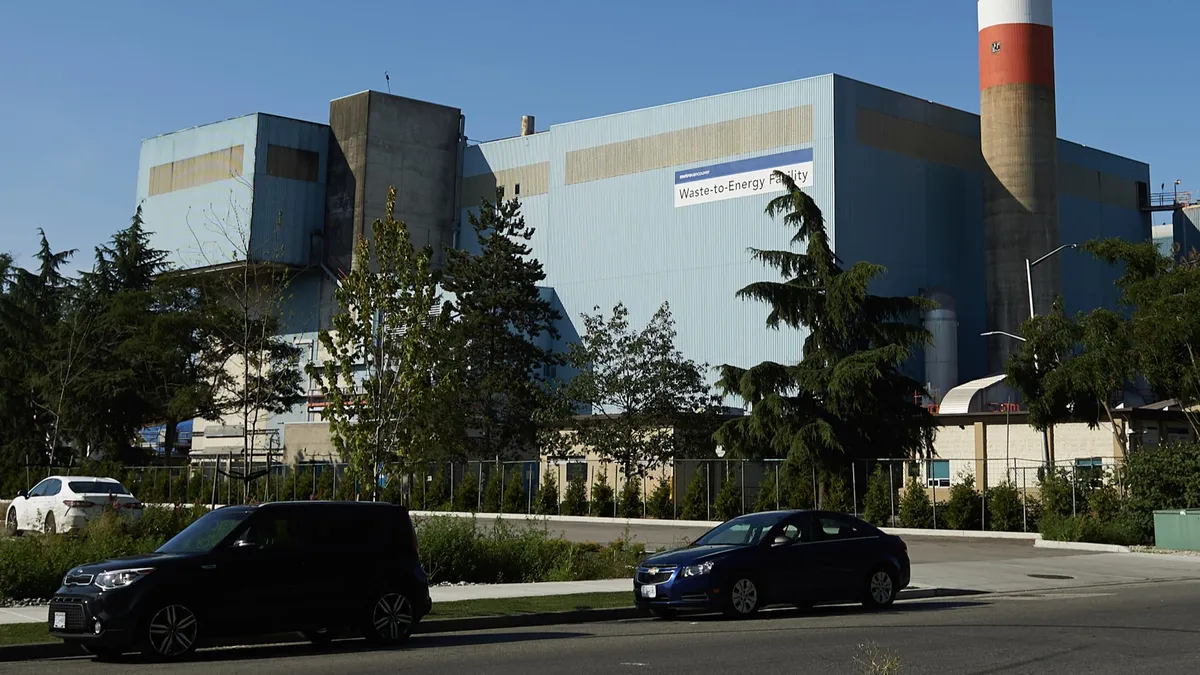
The province is already home to two waste incinerators. In Brampton, contractors are planning to expand the existing Emerald Energy from Waste facility by 2030. At full build-out, the facility will be capable of processing 900,000 metric tons of waste annually and generating up to 100 megawatts of energy daily, making it the largest waste incinerator in Canada.
The publicly owned Durham York Energy Centre in Courtice also provides 140,000 mt per year of annual capacity. Other regions within the province have considered building their own facilities.
At the same time, several private landfill operators have pursued expansions in the province in recent years. WM of Canada recently submitted an environmental assessment in support of a vertical expansion of the Twin Creeks Landfill in Watford. Waste Connections previously received approval to expand the Ridge Landfill in Chatham-Kent.
A report compiled last year by Waste to Resource Ontario found that the province generated nearly 17 million metric tons of waste in 2024, about three-quarters of which was sent to landfills. If present trends hold, the province is expected to run out of landfill space by 2037.
Toronto in particular is navigating an expected disposal crunch. The city-owned Green Lane Landfill is projected to reach capacity in less than a decade. City staff warned council members that Toronto would likely need to expand the landfill, identify a new landfill site or pivot to waste incineration.
Toronto leaders are exploring their options, with staff expected to make another report next year. To gauge interest in waste incineration, the city conducted a public opinion survey of residents both through an online portal and via an outreach campaign run by a consultant. The survey found that 72% of online polling respondents and 79% of public survey respondents support Toronto exploring ways to generate energy from waste, including incineration.
Yet environmental groups have pushed back against the city’s framing of the issue, and in particular its assertion that incineration produces less greenhouse gas emissions than landfills. A report published by the Toronto Environmental Alliance asserted that Ontario’s landfills emit fewer greenhouse gases when factoring in methane capture systems, and further said that incinerators produce more greenhouse gas emissions than most other energy sources on the province’s grid.
The Canadian Zero Waste Coalition, which counts TEA and Global Alliance for Incinerator Alternatives among its members, said Ontario’s newly proposed permitting approach to incinerators would diverge from the province's approach to landfills. In regulatory amendments passed in 2020, municipalities were given the ability to weigh in on landfill siting decisions. The coalition said the new proposal would make it more difficult for municipalities to have the same level of input on incinerator siting.
The group further argues that counting organics as a net positive in the waste stream could undermine efforts to improve the source separation of organics and other recyclable materials, “perversely incentiviz[ing] the re-diversion of organic waste back into the waste stream.”
Comments closed Monday for the proposal. Ontario regulators are currently reviewing the submitted comments. The Ministry of the Environment, Conservation and Parks did not respond to a request for comment on an expected timeline for a final decision.