This is the latest installment in Waste Dive’s Biogas Monthly series.
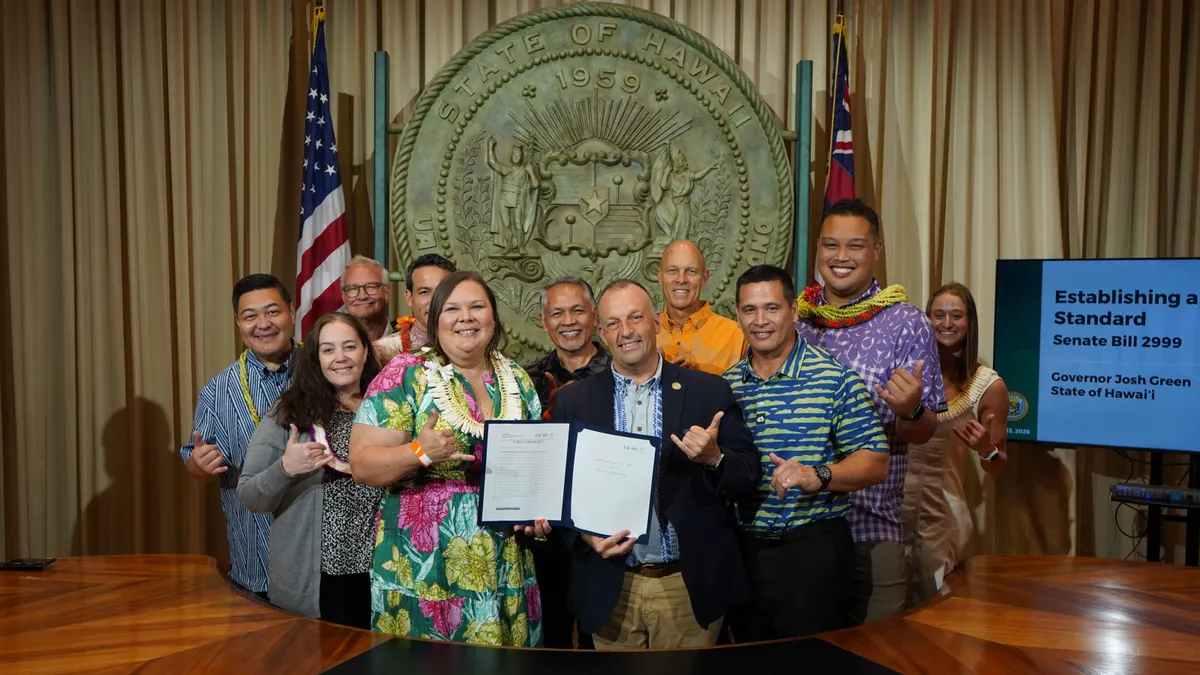
On July 14, Hawai'i Gov. Josh Green signed legislation setting up a clean fuel standard in the state. It’s the fifth state to enact a low-carbon fuel program, following California, Oregon, Washington and New Mexico.
Hawai’i SB 2999 directs the state department of transportation to adopt rules incentivizing the adoption of less carbon-intensive transportation fuels by 2028. The law sets emissions reduction targets of at least 10% below 2019 levels by 2035 and 50% below 2019 levels by 2045.
“A clean fuel standard supports local agriculture and renewable energy industries and expands markets for homegrown renewable fuels and materials, including options that can turn waste products into energy sources,” the governor's office wrote in a release.
Biogas groups like the RNG Coalition and American Biogas Council praised the bill signing. The state currently has just one facility producing renewable natural gas at the Honouliuli Wastewater Treatment Plant on Oahu. Other facilities exist on the island to convert biogas into on-site electricity and provide heating; roughly 4.5 billion cubic feet of biogas is captured in the state each year, according to ABC.
The group notes a further 25.2 bcf of RNG could be captured on the island from facilities processing manure, food waste, wastewater and landfill gas. That fuel may be further refined into a broader range of end uses, since Oahu is the only island with a large utility gas pipeline system. SB 2999 specifically requires the Hawai’i Department of Transportation to allow marine end uses to generate credits, which could pave the way for methanol, a key growth area for the industry.
Hawai’i’s program is also likely to differ from other states' approach to low-carbon fuels. The law includes a consumer safeguard to ensure the program won't adversely impact fuel prices, triggering a review if calculated compliance costs exceed 15 cents per gallon. Its carbon intensity requirements are initially lower than other states', but its 2045 goal surpasses them all.
There are still details of the program that HDOT must iron out. The bill does not specifically approve methanol as a low-carbon fuel, and questions remain about lifecycle emissions accounting, book-and-claim credits and the inclusion of an avoided methane credit for livestock operations.
HDOT has not yet set a date for its first public hearings on the program. The RNG Coalition notes advocacy continues around clean fuel program legislation in several other states, including Illinois.
Meanwhile, work continues at other biogas facilities around the country. Below is a selection of biogas updates from July.
Casella, Waga start operations at New York landfill
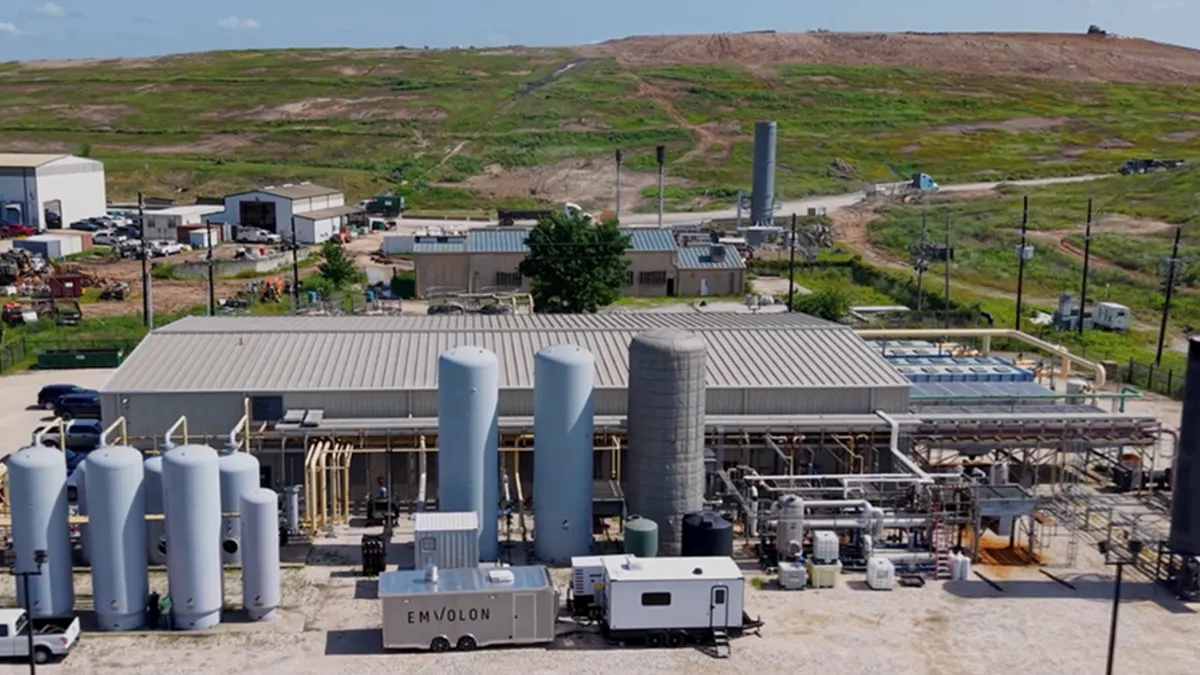
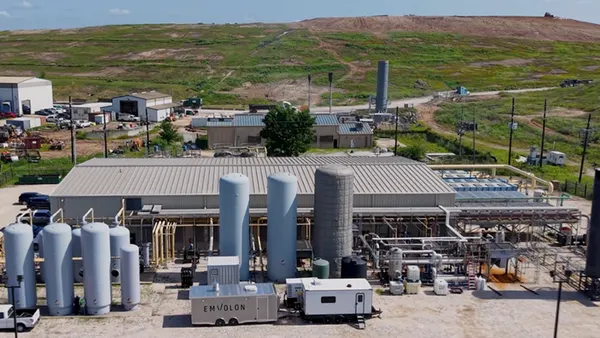
A landfill-gas-to-RNG facility built at the Hyland Landfill in Angelica, New York, began operations on July 28. The project was jointly developed by Waga Energy and Casella Waste Systems, which operates the landfill.
Waga Energy will own and operate the RNG facility for 20 years, according to an agreement between the two parties. It’s expected to generate about 610,000 mmBtus of RNG annually, per a release.
This is the fourth RNG project to come online at a Casella landfill, and the second of three in the company’s partnership with Waga. The first joint project between the two companies was at the Chemung County Landfill, also in New York.
“Several years ago, we made the strategic decision to work with RNG experts to develop the capacity at our landfills, and we have not been disappointed about our decision to partner with Waga Energy,” Ned Coletta, president and CEO of Casella, said in a statement.
The RNG produced on the site is injected directly into the Eastern Gas Transmission and Storage network, and is expected to qualify for tax incentives set up by the Inflation Reduction Act of 2022. Casella and Waga will share the revenue generated from RNG sales.
Redtail Renewables to develop facility at public California landfill
The Yolo County, California, board of supervisors agreed to a contract with Redtail Renewables for a landfill-gas-to-RNG project at the Yolo County Central Landfill. The facility is expected to generate up to 500,000 mmBtus of RNG annually when it’s completed in mid-2028.
The project agreement includes annual revenue payments to Yolo County to support landfill enterprise operations. It replaces a gas-to-energy facility at the landfill that dates back to the 1980s, per a release.
“This is 40 years in the making which will take us into the future with better gas capture and a cleaner end product,” Integrated Waste Management Division Director Marissa Juhler said in a statement. “We have a lot to be proud of in this partnership.”
Redtail Renewables was founded in 2023 by Casey Holsapple, who previously founded RNG platform Kinetrex Energy before it was acquired by Kinder Morgan, and Corey Holsapple, who was previously CFO for commercial bank Fortis Financial. The company later brought on Claus Nussgruber as CEO, who had previous experience in the industrial gas and energy sectors.
Redtail Renewables launched with backing from private equity firm Inyarek Partners. It acquired ownership stakes in a pair of landfill RNG projects in Kentucky and New York with additional support from private investment firm Pacolet Milliken.
“Redtail was founded on the conviction that organic waste streams hold enormous, largely untapped clean energy potential,” Nussgruber said in a statement. “The Yolo County Central Landfill project is a flagship example of the possibility when a forward-thinking county government and an experienced renewable energy developer share a common vision.”
Convertus announces AD project financing
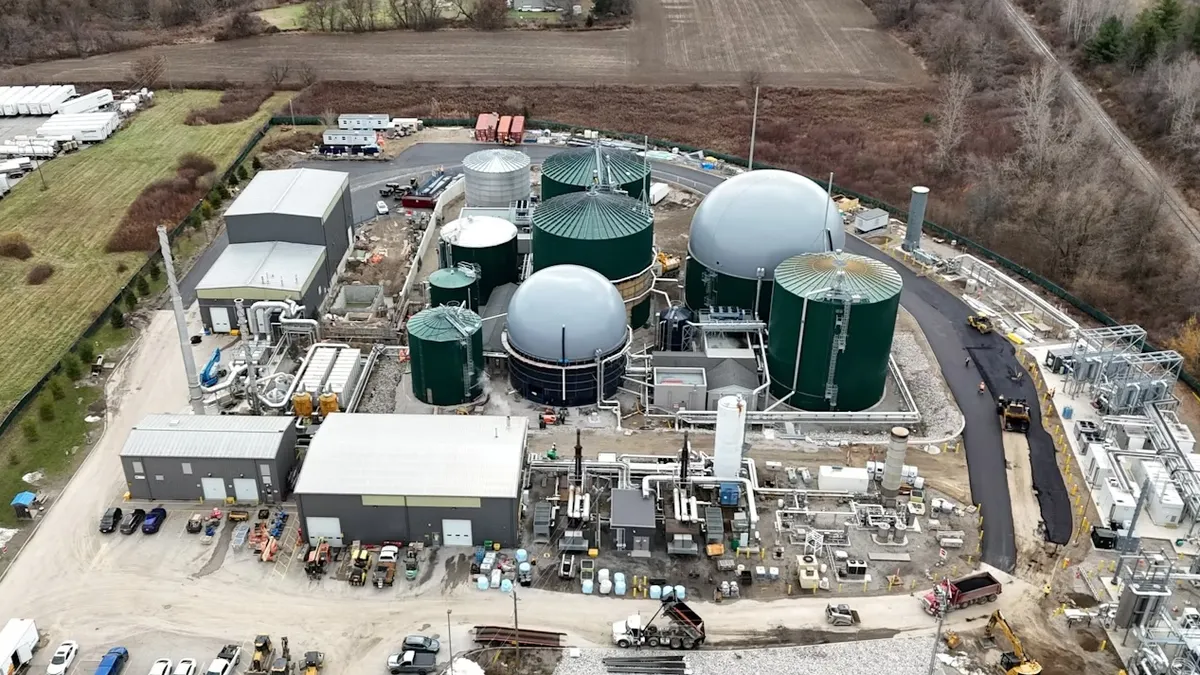
Private equity-backed Convertus announced the closing of $135 million (Canadian) in financing for an anaerobic digestion facility in Ontario. The funding will go toward a facility expected to be able to process up to 200,000 metric tons of source-separated organic waste annually.
The facility will accept most of its waste from the York Region of Ontario under a 20-year contract. The region generated about 106,000 metric tons of organic waste in 2022 and sends its green bin material to three separate facilities elsewhere in the province. By centralizing processing at the Convertus facility, the region is expected to save $85 million.
Construction is underway at the facility, located on a 12-acre site in East Gwillimbury. The site is expected to become operational next year. Infrastructure lender Power Sustainable Infrastructure Credit provided the latest project financing.
“The York Biofuel Facility will provide essential environmental infrastructure for York Region and the Greater Toronto Area, adding critical long-term organics processing capacity through a state-of-the-art facility designed with robust operational redundancy,” Benjamin Shenwick, principal at PSIC, said in a statement.
Convertus was formed in 2019 through the merger of Renewi Canada and Waste Treatment Technologies. After merging with Envirem Organics, it says it became the largest organic waste processor in Canada. Convertus also expanded into the U.S. in 2024 through its acquisition of a composting facility in Virginia.
Springfield, Missouri, looks for RNG partners
Springfield, Missouri, announced on July 22 that it’s looking for partners to develop RNG facilities at both its landfill and wastewater treatment plant. The city issued a request for proposals that lays out what it’s looking for at the Noble Hill Sanitary Landfill and the Southwest Wastewater Treatment Plant.
The city had previously explored a design-build project approach at the sites in 2023 and 2024 which fell through. It’s now pursuing a model in which a private developer will be responsible for financing, designing, constructing, operating and maintaining RNG facilities at the sites, per the release.
“Springfield is joining a growing number of forward-looking communities that are turning everyday municipal operations into clean energy opportunities,” Erick Roberts, Springfield’s assistant director of environmental services, said in a statement. “By leveraging both our landfill and wastewater treatment plant and inviting private-sector investment to finance and operate the facilities, the City is pursuing an innovative approach that reduces emissions, creates renewable energy and minimizes financial risk to taxpayers.”
The city is holding an informational meeting about the RFP on Aug. 26. Proposals are due by Dec. 1, and the city plans to announce its intent to award a contract in January.