Dive Brief:
- Emvolon, a startup spun out of the Massachusetts Institute of Technology in 2021, announced an offtake agreement and investment from Freepoint Commodities valued at $450 million. The deal is expected to boost the company's deployment of facilities capable of turning reclaimed gas into biofuel.
- Freepoint signed a seven-year agreement to serve as the primary buyer for Emvolon's planned production of up to 300,000 tons of annual fuel production.
- Freepoint has also secured the right to deploy equity and debt to back Emvolon's project portfolio, providing key financial support as the MIT offshoot scales up.
Dive Insight:
Emvolon's technology uses repurposed car engines to upgrade methane-rich gas, like the kind collected and refined from landfills or anaerobic digesters, into methanol.
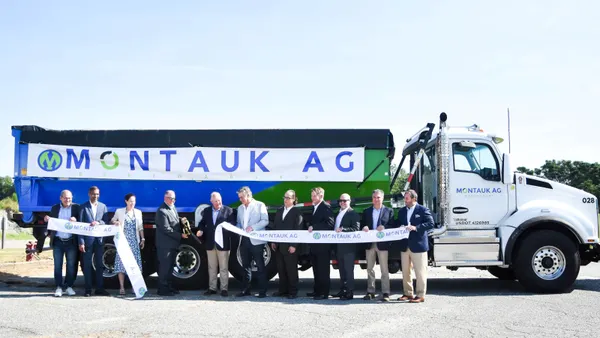
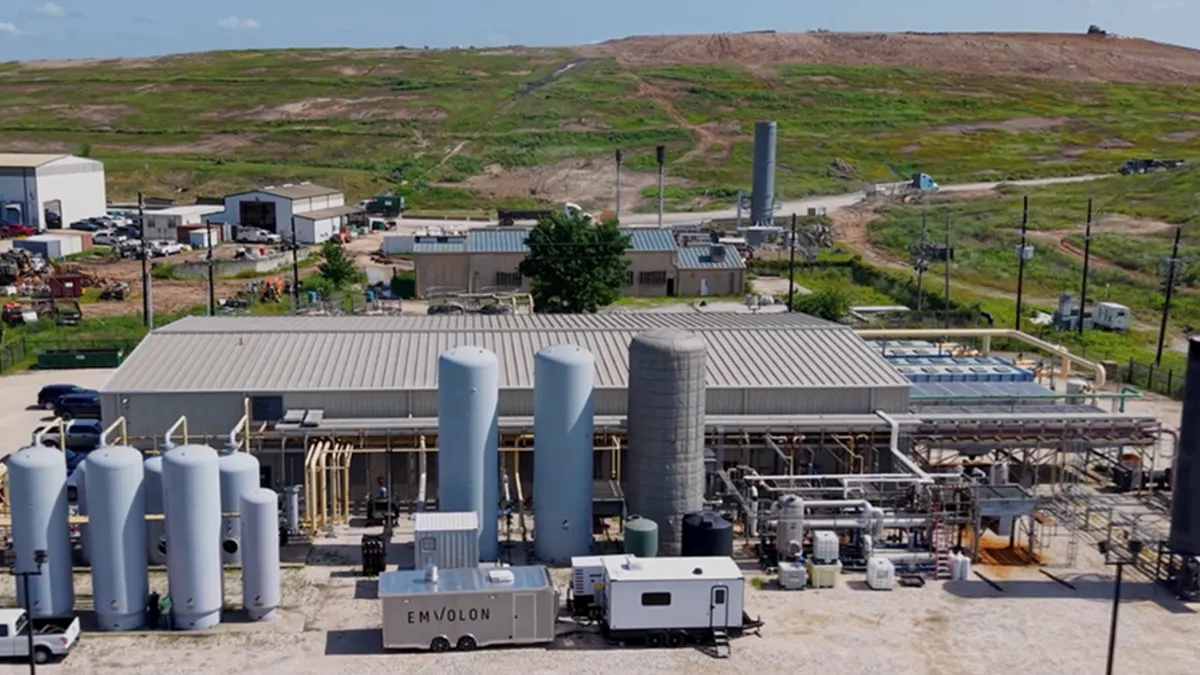
The company deployed its first pilot two years ago through a partnership with Montauk Renewables at the WM-run Atascocita Landfill near Houston. It turned landfill gas at the site into methanol, a liquid fuel with increasing applications in maritime and other sectors.
Emmanuel Kasseris, co-founder and CEO of Emvolon, said the system is a good option for landfills that are too far away from a gas pipeline or electric grid to build a cost-effective tie-in but still want to monetize their gas. There are hundreds of billions of cubic feet of landfill gas in the United States currently being flared that could be converted to a profitable fuel thanks to technologies like Emvolon's, he said.
“Landfills are a great opportunity. There's a lot of gas that's being flared because you cannot do much with it,” Kasseris said.
Emvolon's technology is also cost-effective at smaller landfills, allowing it to co-exist alongside the renewable natural gas developers that have targeted the largest gas-producing landfills, he said.
Because the fuel is derived from gas that would otherwise be flared or released, Emvolon's methanol can also benefit from green fuel markets. That's especially true in Europe, where methanol could be blended into gasoline, Kasseris noted.
Kasseris said Freepoint agreed to handle logistics for fuel produced at Emvolon's sites and also agreed to a minimum price that allows Emvolon to get good returns. Emvolon's first commercial project will expand operations at the Atascocita Landfill. Kasseris estimates the landfill could generate roughly 4,000 tons of fuel per year.
"All the pieces of the puzzle are there," Kasseris said.
The Emvolon system is designed to be modular and sit on skids, enabling faster deployment once the equipment is manufactured and delivered to a site. Kasseris said the Atascocita pilot project was up and running days after it was delivered.
"We're trying to really build these as more like a generator, more like an industrial piece of hardware," he said.
Emvolon reached its agreement with Freepoint before the war in Iran began. Fuel prices have since shot up and further elevated demand for alternative fuels. Kasseris said Emvolon's process still profits at lower fuel prices, but the conflict has further underscored a durable market for the company's fuel.
"I think there's also a lot of interest in terms of energy security in some of these liquid fuels because of supply chain limitations. It's not just sustainability," Kasseris said.