This is the latest installment in Waste Dive’s Biogas Monthly series.
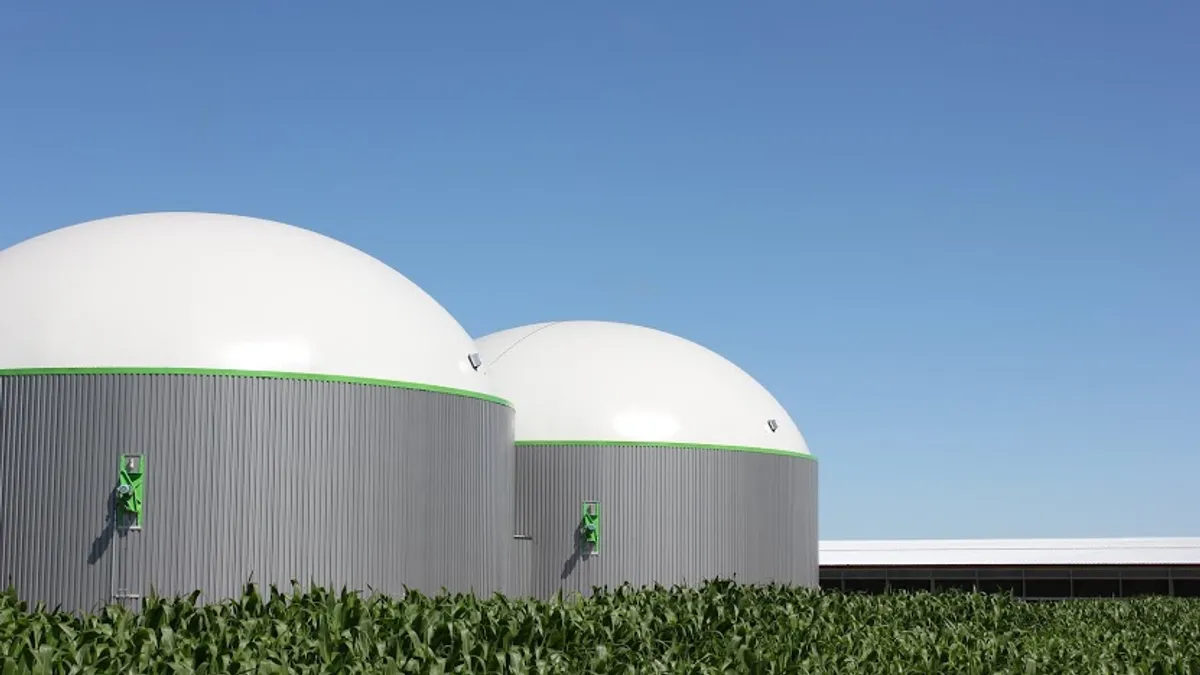
Wastewater treatment plants were the earliest adopters of anaerobic digestion technology, and they continue to add new facilities. They continue to dominate the biogas space, operating 47% of all anaerobic digesters installed in the U.S., according to a new report from the American Biogas Council.
The report, released last week, provides updated data on the number of wastewater treatment plants with anaerobic digesters. The industry group found 29 new facilities have come online in the United States since 2020, for a total of 1,213 plants with digesters.
Wastewater treatment plants are generally considered good candidates for digesters when their flow rate is at least 1 million gallons per day. ABC noted that about 24% of such facilities currently operate digesters and argued that the remaining facilities could add significantly more biogas projects if they pursued anaerobic digestion.
"Our survey shows there are opportunities to do more — by expanding anaerobic digestion where it makes sense and getting more value from the digesters already in place,” ABC Executive Director Patrick Serfass said in a statement accompanying the report.
The report also found that the nature of digesters built at wastewater treatment plants has evolved in some cases beyond power generation. Since 2018, a greater number have added infrastructure to upgrade biogas to RNG, produce combined heat and power or codigest other feedstocks in combination with wastewater sludge.
Currently, these digesters capture more than 100 billion cubic feet of biogas annually. But ABC believes plants could capture an additional 70 billion cubic feet of biogas per year with more widespread adoption of anaerobic digestion.
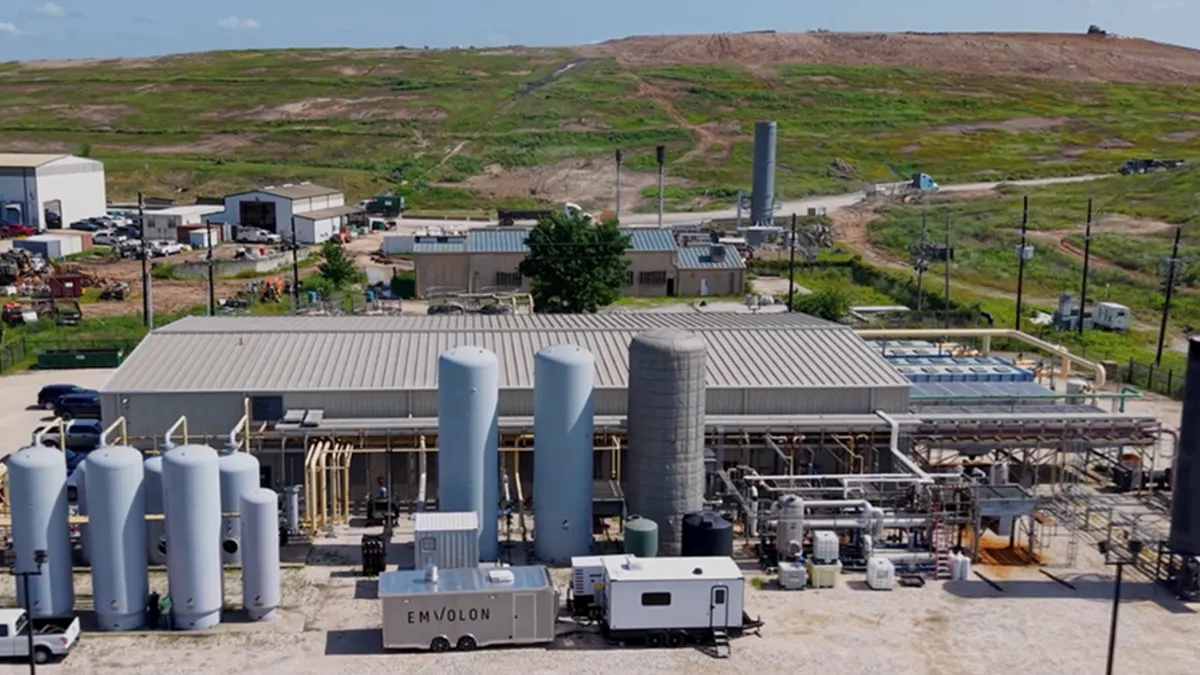
The report comes as some of the largest waste companies near completion of the landfill-gas-to-RNG commitments they've made in recent years, while the biogas industry shifts its focus toward finding more end uses for the gas.
Below is a selection of biogas news from September.
Montauk Renewables opens swine waste facility
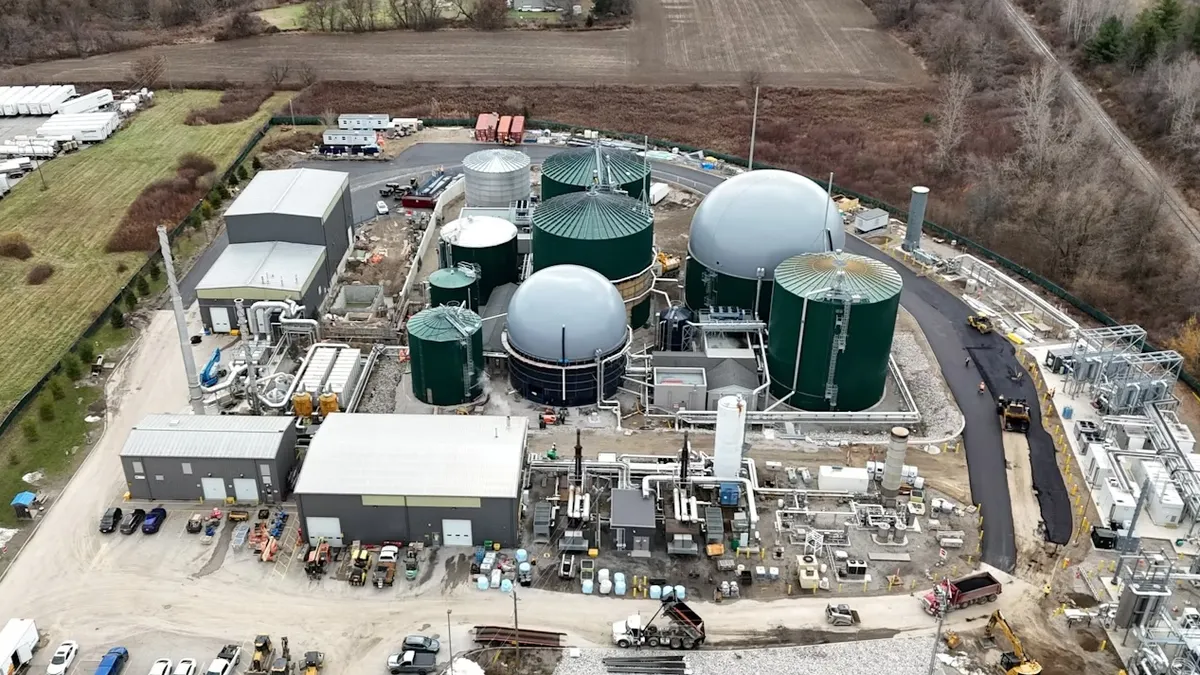
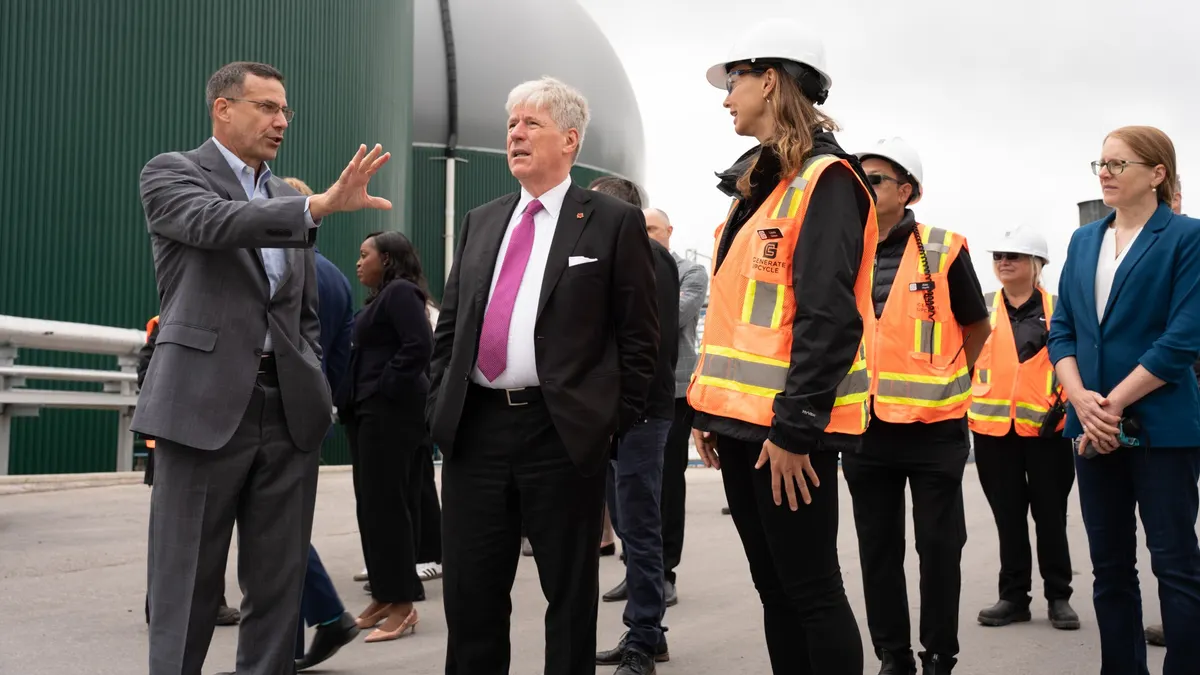
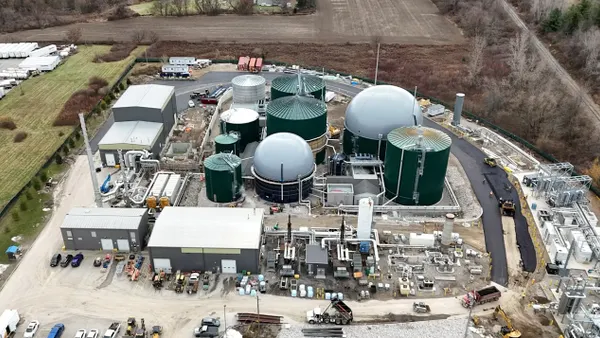
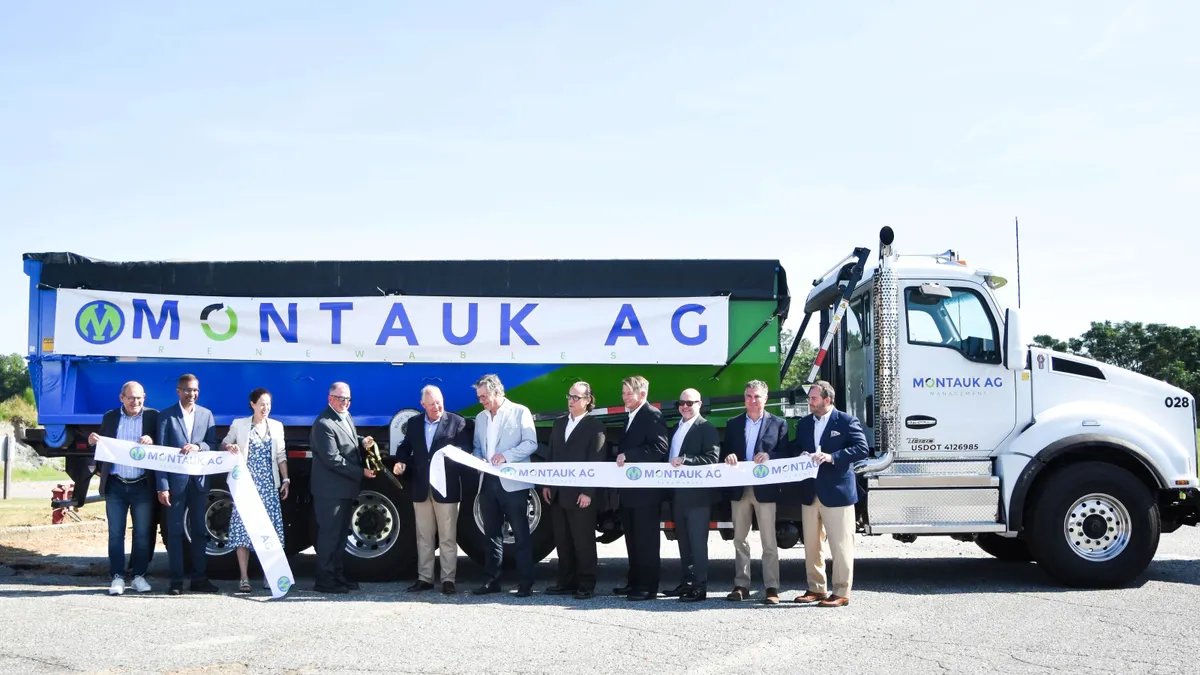
Executives from Montauk Renewables and local officials celebrated the opening of an anaerobic digestion facility in Turkey, North Carolina, on Sept. 15. The project, in which Montauk invested $200 million, is expected to harvest manure biogas to produce electricity.
The facility has long-term agreements with more than 80 farming locations, according to a statement from Montauk Renewables CEO Sean McClain. The facility also has a 10-year agreement in place to sell its electricity and a separate agreement to sell about a third of the renewable energy certificates generated by the facility to Duke Energy, according to Montauk's 2025 annual report. The facility is expected to produce up to 41 megawatt-hours of electric power annually at full capacity, plus 870 tons of organic fertilizer alternative, per the report.
Montauk ended the second quarter with revenue up 19.7% year over year to $54 million. RNG production in the second quarter was 1.5 million mmBtus, up 3% year over year.
Waga Energy announces LRS, Casella milestones
Waga Energy made a pair of September announcements regarding landfill gas projects. On Sept. 15, the private equity-backed French RNG developer announced that LRS had selected Waga to build, own and operate a facility at the Eco-Hill Landfill. Located in Atkinson, Illinois, the landfill is LRS' only such site and serves the Chicago area.
The project is expected to run with an initial capacity of 3,000 standard cubic feet per minute, producing as much as 610,000 mmBtus of RNG annually. LRS will receive a share of the revenue from the sale of RNG produced on site. The facility is expected to come online in 2028.
On Sept. 3, Waga and Casella Waste Systems jointly announced the start of their third landfill gas project. The facility is located at Casella's McKean Landfill in Mount Jewett, Pennsylvania. The site is expected to process 2,000 standard cubic feet per minute and produce up to 407,000 mmBtus of RNG annually at full run rate. Production is currently ramping up.
Casella and Waga's partnership encompasses three sites. Waga is funding the construction of each project and will own and operate them for 20 years. Revenue from RNG sales is shared between the two companies.
Opal Fuels' California projects
Opal Fuels announced positive updates in September related to its biogas business for two sites in California. On Sept. 16, Opal announced it had renewed its agreement with the city of San Diego to continue operating a landfill-gas-to-energy project at the Miramar Landfill for five years. The project has been in place since 1998 and generates about 400,000 megawatt-hours of electricity annually.
That came a few weeks after Opal announced upgrades to a CNG fueling station in Goshen, California. After a renovation, Opal added 1.7 million gallons of gasoline equivalent capacity, which will include RNG. Opal acquired the site in 2025. In the first half of 2026, it has invested $52.7 million in its overall project portfolio, including the Goshen station..
When Opal reported second-quarter results in August, it charted a 4% year-over-year increase in revenue. For the first half of the year, revenue was down 5% compared to the same period last year, and RNG production totaled 2.4 million mmBtu, up 6% compared to the prior-year period.