Dive Brief:
- A report published by the Sierra Club and Breach Collective last week accused Oregon gas utility NW Natural of making bad investments in renewable natural gas facilities that could cost ratepayers.
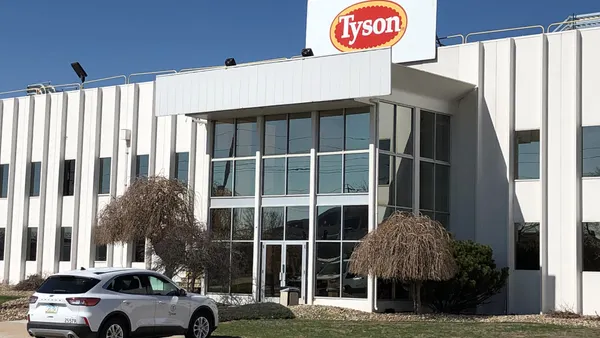
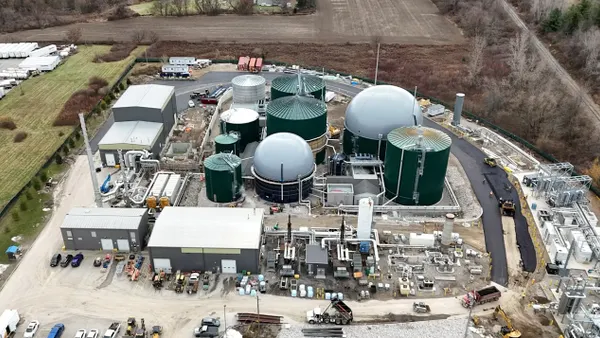
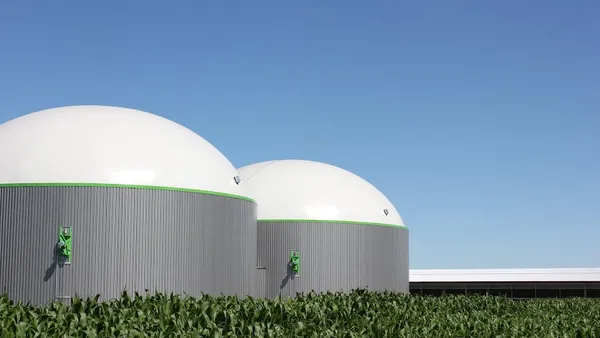
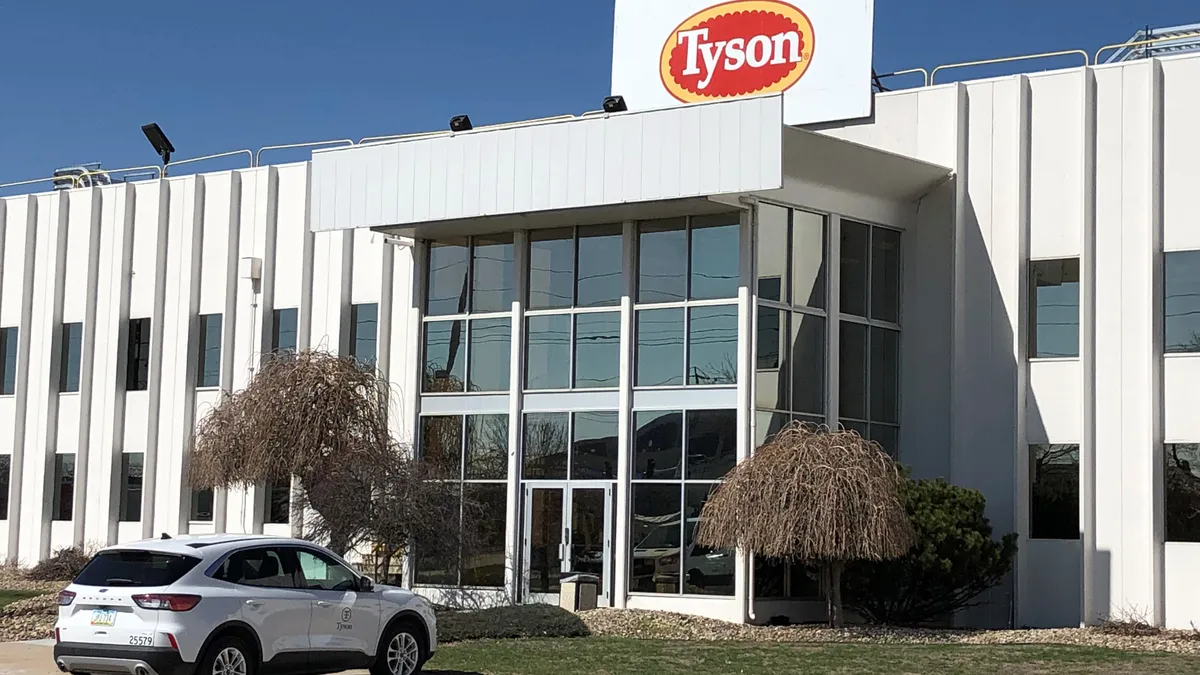
- The utility, which is the state’s largest, agreed to invest $20.8 million in a pair of anaerobic digestion projects at two Tyson Foods beef packaging plants, one of which has since been closed. Another project at WM’s Greater Wenatchee Regional Landfill is not moving forward, the landfill operator confirmed.
- The investments came after Oregon passed SB 98 in 2019 allowing utilities to invest in RNG projects. The bill was supported by NW Natural, as well as an environmental coalition that included the Sierra Club.
Dive Insight:
Spurred by regulation, natural gas utilities in several countries, including Canada and in the European Union, have begun exploring investments in RNG to offset their use of fossil fuels. The utilities acquire RNG, either through projects that feed directly into their grid or through carbon credit arrangements, to mitigate the climate impact of a percentage of their natural gas.
The waste industry has typically supported such arrangements, which can direct utility dollars to landfill gas projects or anaerobic digesters handling food or organic waste. The Oregon Refuse & Recycling Association backed SB 98 when it worked through the legislature, saying it would help build transmission infrastructure from landfill gas facilities to the grid.
Oregon enacted SB 98 in 2019. The law allows utilities to invest in RNG projects using funds from ratepayers, and sets escalating targets for gas utilities in the state to procure RNG. The law set an initial goal of 15% RNG by 2030, 20% by 2035 and 30% by 2050.
But the report’s authors wrote that the SB 98 regulatory regime has not led to meaningful positive impacts. Instead, they say it delayed action from utilities that could have lowered the amount of fossil gas they use.
“SB 98 was sold as a climate solution, but in practice it has become a subsidy for industrial animal agriculture and a lifeline for a gas utility trying to avoid real emissions reductions,” Danny Noonan, climate, energy and labor strategist at Breach Collective and co-author of the report, said in a statement.
NW Natural does not appear to be on track to meet SB 98 goals, per the report. The utility reported 3.35% of its gas load was offset by RNG in 2025 in an annual filing sent to the Public Utility Commission of Oregon in June.
That anemic growth has come amid troubled investments in renewable natural gas projects. NW Natural invested $8.3 million in an anaerobic digestion facility colocated with a Tyson Foods beef packaging facility in Lexington, Nebraska, beginning in 2021. That project was at one time projected to produce 190,000 mmBtus of RNG annually.
However, the facility is now set to close due to volatilities in the beef industry. The utility has asked Oregon's Public Utilities Commission to allow it to charge ratepayers for the costs of the shuttered project.
NW Natural also invested $12.5 million in a second Tyson Foods project in Dakota City, Nebraska. The utility has previously indicated the project could produce 100,000 mmBtus of RNG annually, though it has not publicly disclosed the volumes of RNG produced at the site over the last three reporting years.
The utility had also disclosed plans to invest in another project which would convert landfill gas to RNG at an East Wenatchee, Washington, landfill. The report noted that NW Natural has quietly removed references to the project from its website and recent filings.
WM confirmed discussions with NW Natural for the landfill project are not moving forward in a statement to Waste Dive. The operator said it would continue to explore options for landfill gas projects at the site.
In a December filing, the utility noted that it had shifted away from investing directly in RNG projects and is now prioritizing offtake agreements with third parties. At the time, it said it still planned to acquire an amount of RNG equivalent to 4% of its total sold gas.
"This shift mitigates the risk of similar plant closures affecting the rest of NW Natural’s RNG portfolio," the utility wrote.
The report also raised questions about the carbon intensity scores of the credits NW Natural has acquired for its RNG procurement program, noting the range of disclosed intensity scores in some cases appear higher than the carbon intensity of fossil gas.
Stefanie Week, the utility's communications senior manager, accused the report's authors of inaccuracies in an emailed statement. She did not respond directly to questions about where the credits were sourced from or the range in scores they include, but she characterized the report broadly as "a political pamphlet dressed up as research."
"Several of the stated conclusions in the piece rely on mismatched carbon-accounting boundaries, and casual claims that cited data does not support. The report also reflects a glaring lack of transparent methodology, was not peer-reviewed, and includes multiple inaccuracies," Week wrote.