Dive Brief:
- U.S. hazardous waste generation could reach 37.4 million tons by 2033, up 5 million tons from 2023, according to a Veolia-commissioned report written by Charles River Associates. The report warns that a capacity shortfall of 1% could affect at least $27.5 billion in economic output over that time period.
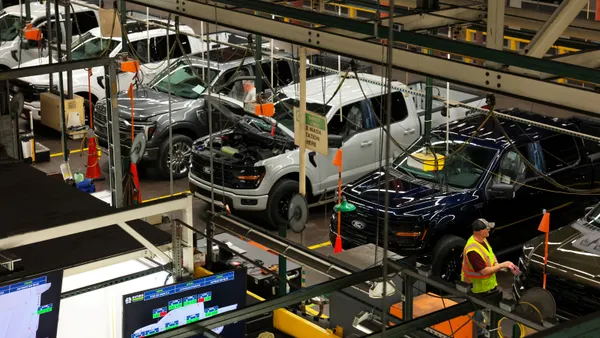
- Higher manufacturing activity is expected to account for 4 million of increased tonnage, driven by new investments in domestic production of semiconductors, pharmaceuticals, steel and more.
- This comes as the overall hazardous waste sector’s revenues have nearly tripled from $3.6 billion in 2021 to almost $9 billion in 2023, according to the report.
Dive Insight:
The hazarodus waste sector has seen heightened activity in recent years, including facility investments and notable M&A. Veolia North America, a division of the international environmental services giant, has been increasingly active with multiple acquisitions and an ongoing incinerator construction project in Arkansas.
The U.S. EPA currently estimates there is enough hazardous waste disposal capacity, but the report notes long timelines required to permit new facilities. It also cited the potential for surprise events such as the 2023 train derailment in East Palestine, Ohio; as well as extreme weather that can damage waste facilities or affect Superfund sites and in turn lead to new volumes.
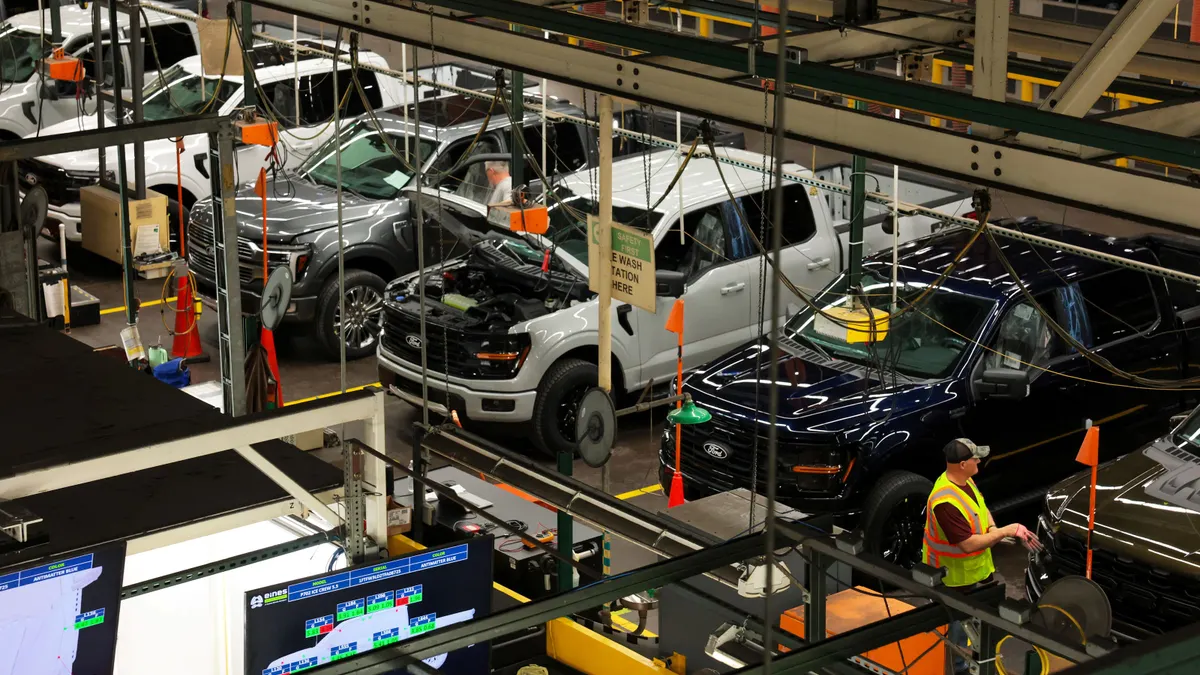
Domestic manufacturing investments have also grown due to the reshoring of auto manufacturing, federal funding for emiconductor fabrication facilities and an uptick in biotech sites to create vaccines and weight-loss drugs, among other examples. This, in turn, comes with more hazardous and specialty waste streams.
Bob Cappadona, CEO of Veolia’s hazardous waste business in North America, said the company has secured several large clients in those sectors. This growth, coupled with logistical challenges experienced during the COVID-19 pandemic and Winter Storm Uri in 2021, spurred Veolia to take a fresh look at its approach to the U.S.
“The volume of material that was being managed within the hazardous waste network and the capacity to support it got out of sync,” during the pandemic, he said.
At the same time, some manufacturers are choosing to exit their own hazardous waste processing operations, which can be used to handle excess volumes that otherwise would be shipped offsite. 3M closed a Minnesota incinerator in 2021, and Alcoa sold an Arkansas site to Veolia in 2020.
“I think at times there was an assumption that there was going to be a wave that they were all going to shut down at the same time. We haven't seen that,” said Cappadona. “There's some other facilities that are going through similar evaluations.”
Veolia is now in the process of finalizing a 100,000-ton-per-year hazardous waste incinerator at that former Alcoa location, which it says will be the first H050-qualified thermal facility in the U.S.
Manufacturing accounted for 90% of U.S. hazardous waste generation in 2023, followed by transportation. The report noted that its estimates of 2033 waste generation could be conservative if factors such as steel tariffs and artificial intelligence demand spur even greater investment.
Such investments present an opportunity for manufacturers to plan ahead for waste needs. Cappadona said some companies are approaching Veolia before they’ve even broken ground.
“The better decisions that are made at that point of generation have an impact on how that material may be able to be managed post-use of the original generator,” he said, citing one semiconductor client that’s been able to recycle 99% of its waste due in part to upfront sorting. In some cases, processes such as solvent recycling and wastewater treatment could also be handled on site.
In another example, Cappadona said Veolia is evaluating one opportunity to site its own operations in a neighboring facility to a semiconductor manufacturer to reduce transportation costs.
The EPA’s latest hazardous waste capacity assessment, released in 2025, estimated there’s enough permitted capacity to handle currently projected volumes through at least 2049. At the same time, it encouraged waste minimization efforts and suggested that states “to seek ways to develop new incineration and landfill capacity for the future.”
An EPA spokesperson said this current hazardous waste assurance — required under the Comprehensive Environmental Response, Compensation and Liability Act — expires Dec. 31, 2029. A new capacity assessment will be conducted at some point by then.
The Veolia-commissioned report notes there are currently 17 commercial hazardous waste landfills, 12 energy recovery facilities and 11 incinerators operating in the U.S. The number of hazardous waste landfills has declined, with sites owned by Arcwood Environmental, Clean Harbors, Republic Services and Veolia now managing the majority of tons. There have been more incinerator projects in recent years, led by Arcwood, Clean Harbors and Veolia.
To meet demand, Veolia is evaluating a potential expansion at its Port Arthur, Texas, incinerator, but there’s no set timeline. Cappadona said the company is currently taking steps to increase capacity through processing efficiencies at that site.
Acquisitions will continue to be part of the company’s capacity expansion plans. Cappadona cited two pending deals, one on the East Coast and one on the West, that are targeted to specific types of manufacturing needs.
Cappadona also encouraged the waste sector to think beyond just landfill, incineration and fuel-blending capacity and pursue other technologies.
He cited Veolia’s recent investment in an Arizona recycling facility for semiconductor material as well as the acquisition of a New England medical waste site for biotech material.
“Those are traditional treatment methods. What about the untraditional treatment methods?” he said, noting in some cases this could involve greenfield projects. “I think that's really the target for our group, how do we use those legacy older technologies in combination with some of the newer technologies to meet the demands of industry.”