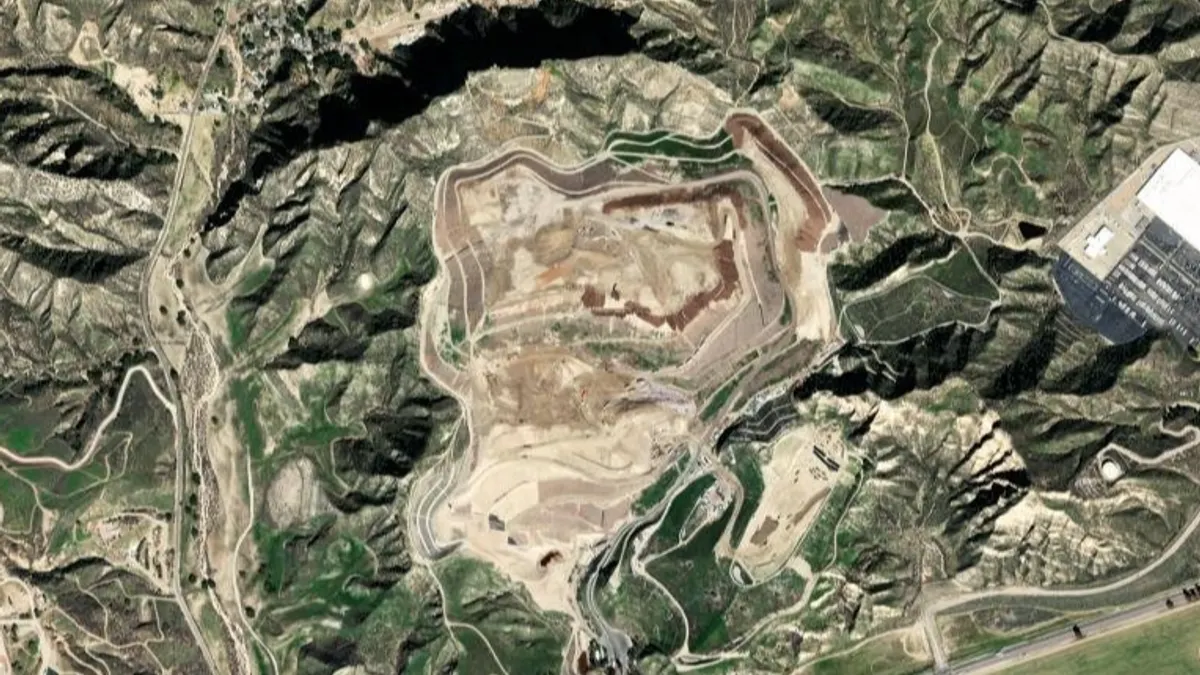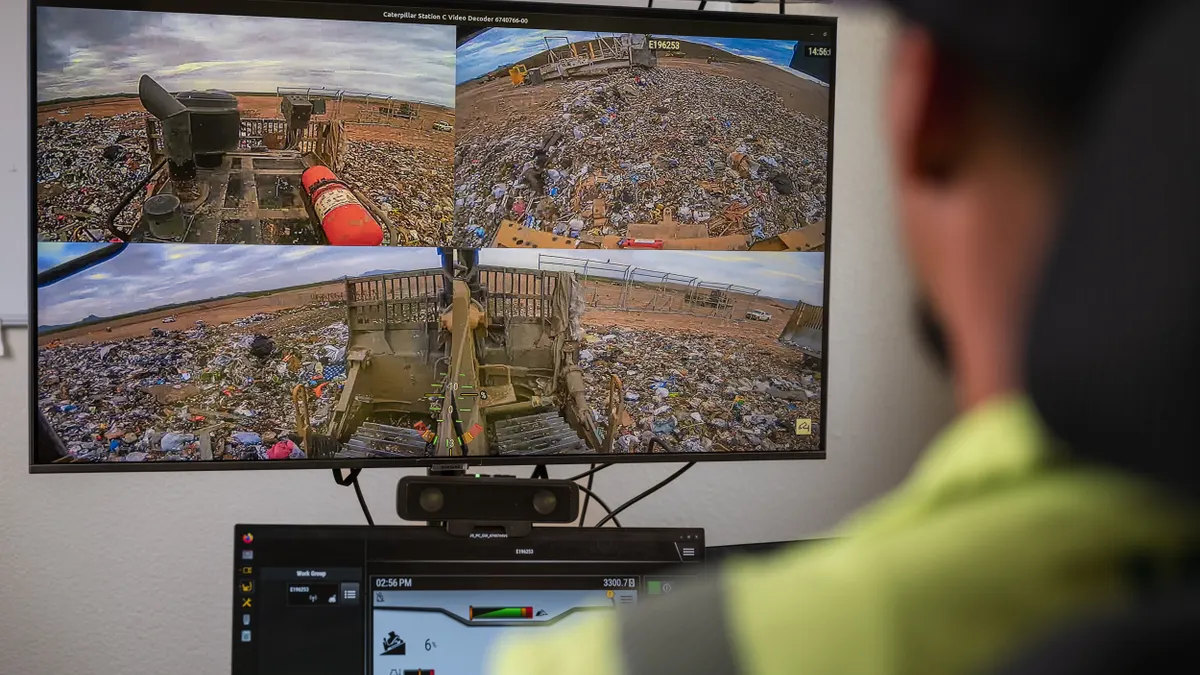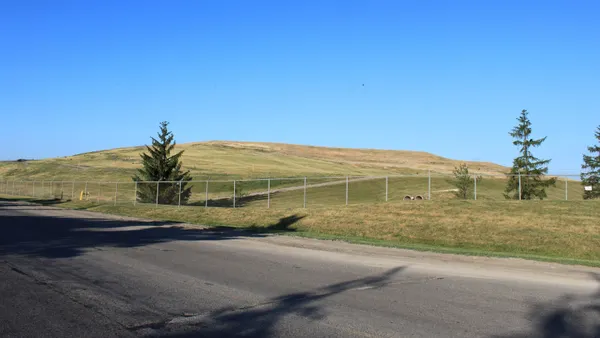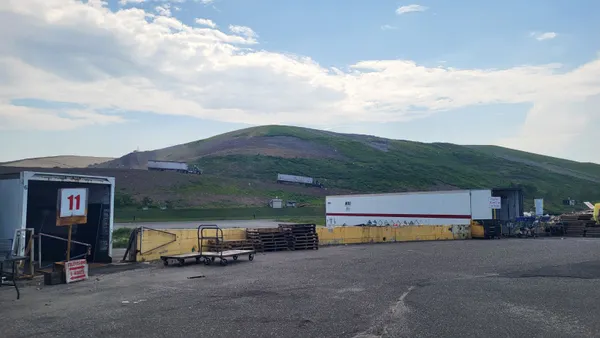
Another month brings a fresh round of landfill expansion news. This time it includes an early procedural step in Michigan, where GFL Environmental must convince local officials to incorporate an expansion of the Arbor Hills Landfill into the county’s pending materials management plan. Louisiana, meanwhile, has approved an expansion of an existing private landfill that makes the facility the largest in the state.
There’s also some notable landfill closure-related news, including in California, where the attorney general approved a Comprehensive Environmental Response, Compensation and Liability Act consent decree. Below is a selection of highlights from the past month.
Louisiana's largest landfill approved
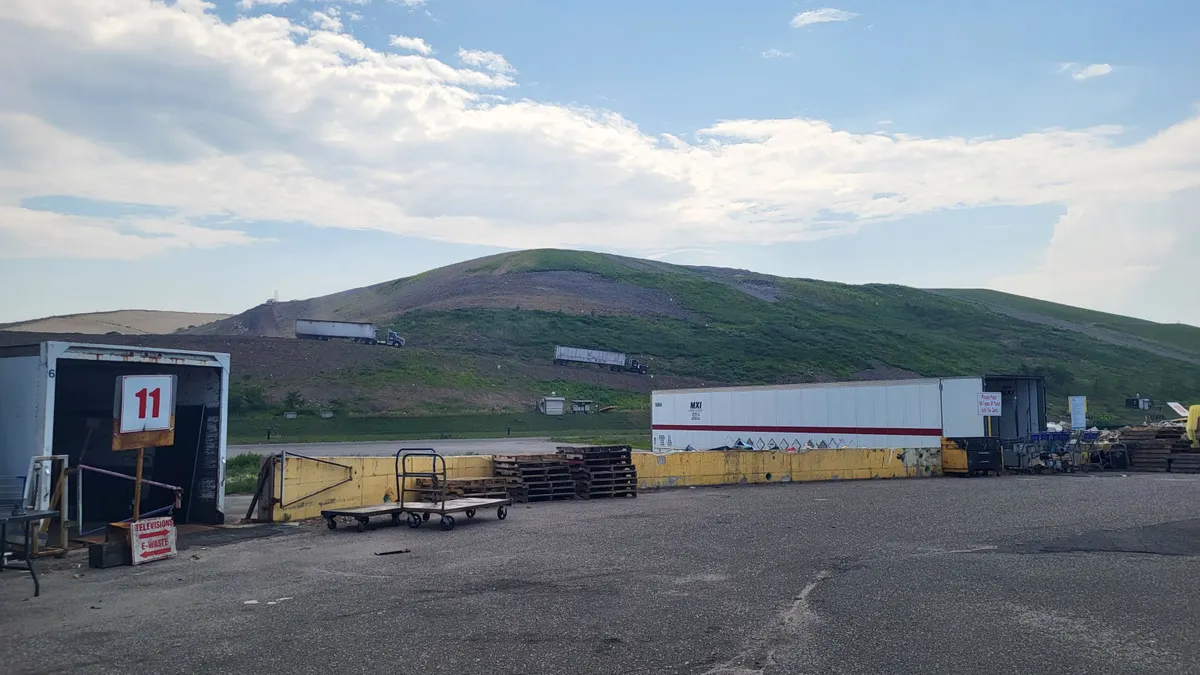
The Louisiana Department of Environmental Quality on Sept. 3 approved River Birch Landfill's expansion request, which allows the operator to take over the adjacent closed Greater New Orleans Landfill site and significantly expand its service area.
In fiscal year 2023, the River Birch landfill had a permitted capacity of 58.8 million wet tons, with nearly 28.2 million wet tons of capacity remaining, according to Louisiana DEQ’s biennial landfill capacity report. That put the landfill's estimated remaining life at more than 21 years, per the official account.
The approved permit sets the landfill's weekly capacity to 50,000 wet tons, totaling more than 2.6 million wet tons annually.
River Birch's operator plans to construct a liner on top of existing waste in place at the Greater New Orleans Landfill and install a leachate collection system over the liner. The operator plans to use existing groundwater monitoring wells on site as well.
The River Birch Landfill also has a landfill gas upgrading system that was first constructed in 2009, according to Geosyntec Consultants. The system later went through an expansion, and can now produce renewable natural gas at a clip of up to 16,000 standard cubic feet per minute.
The expansion has drawn pushback from local residents, which have complained about odor issues from the existing River Birch Landfill. River Birch's operators have also faced high-level legal scrutiny, including allegations of bribery brought by WM related to competition for New Orleans disposal contracts. That case reached the U.S. Supreme Court, but the parties settled in 2021.
GFL presents Arbor Hills expansion plan to local officials
GFL has begun lobbying local officials to incorporate a planned expansion of the Arbor Hills Landfill into the Washtenaw County, Michigan, materials management plan. A county planning committee held a meeting on Sept. 9 to discuss landfills and other issues related to the plan, which it is expected to complete in the coming months.
The planned expansion would add new capacity on a parcel directly north of the existing landfill in Salem Township, according to news station WXYZ. It would reportedly cover 91 acres with a cell up to 200 feet high at full buildout, and it would necessitate the construction of new wetlands to mitigate the destruction of existing wetlands on the site.
Arbor Hills has been the subject of odor and traffic complaints, and its operator settled with the state of Michigan to pay $2.3 million in penalties in 2022 related to those issues. It has neared capacity in recent years, with an estimated three years of remaining permitted airspace, according to a wetland permit application GFL submitted to EGLE in August. The expansion could add as much as 50 years of additional capacity, David Drinan, a member of the materials management committee and vice president of The Conservancy Initiative, told WXYZ.
Washtenaw County is in the middle of creating a materials management plan in compliance with Michigan state law.
The plan would build on a solid waste management plan the county adopted in 2019, which noted Arbor Hills was the only remaining MSW landfill active in the county. That plan noted 40% of waste generated in Washtenaw County at the time was disposed of in the Arbor Hills Landfill, with the rest going to other landfills in Southeast Michigan. Washtenaw County's waste comprised 10% of the total waste received at Arbor Hills, with the rest coming from Wayne County, Oakland County, and elsewhere, per the report.
The landfill currently receives about 2 million cubic yards of waste annually, per GFL’s permit application. The company projected the landfill would impact about 33 acres of regulated wetlands, and is reportedly offering to construct a 200-acre wetland preserve on existing farmland to offset the loss.
GFL claimed in its permit application that the construction of new landfill capacity adjacent to the existing facility allows the operator to integrate into existing leachate and landfill gas systems, thereby saving costs. Since 2023, the site has had a facility converting landfill gas into pipeline-quality natural gas.
GFL declined to share its presentation with Waste Dive. The company's proposal must be incorporated into Washtenaw County’s plans before GFL can file for a landfill expansion with state authorities.
Other landfill news
- USA Waste and Recycling and American Land Reserve filed a federal lawsuit against Pike County, Kentucky, after local officials approved then backed out of plans for a privately owned landfill and community host agreement. The companies are seeking damages, claiming the franchise agreement had at least a $20 million value prior to its rescission. (WMDJ FM)
- The city of Glasgow, Kentucky, opened a new cell at its landfill on Aug. 27. The expansion is set to ensure another 55 to 65 years of life. (City of Glasgow)
- The state of California reached a settlement with more than 70 parties related to cleanup efforts of a closed hazardous waste landfill known as the Vine Hill Complex in Contra Costa County. Responsible parties will be charged on a per ton basis to cover the $175 million in cleanup costs through he CERCLA consent decree. (Courthouse News)
- A private landfill operated by Worcester Associates in Southwest Harbor, Maine, has the financing in place to complete permanent closure activities. The site accepted municipal solid waste in the 1980s and C&D debris in the 1990s before going dormant. (Mount Desert Islander)