A Trump administration push to create soup-to-nuts nuclear energy and fuel management campuses could open up new business opportunities for the waste industry and hosting states, but many uncertainties remain about whether, how and when those facilities would be built.
In July, the U.S. Department of Energy announced that 28 states had applied to host “nuclear lifecycle innovation campuses” as part of a U.S. Department of Energy initiative that aims to encourage states to host nuclear infrastructure, including for waste management.
Having a plan for managing spent fuel is essential if the U.S. is going to meet its goal of boosting nuclear energy production, said Marla Morales, acting deputy assistant secretary for DOE’s Office of Spent Nuclear Fuel and High-level Waste Disposition.
“This RFI says if you want to have the front of the fuel cycle, if you want to be part of this conversation, you have to have an answer to the back end,” Morales said during the WM Symposia in March.
DOE selected five plans from Idaho, Louisiana, Oklahoma, Tennessee and Utah to advance to the next stage. In September, West Virginia was also added as a contender.
The initiative aims to “build a coherent end-to-end nuclear strategy” for the U.S. and advance the goals of four May 2025 executive orders to boost nuclear energy development, according to DOE.
In its request for information, DOE made clear that the campuses would need to be equipped to handle functions across the nuclear fuel cycle, such as fuel fabrication, enrichment, reprocessing of used fuel and waste disposal. New advanced reactors and power to serve co-located data centers could also be in the mix, according to the RFI.
In announcing the finalists, Energy Secretary Chris Wright said in a statement that the campuses will be “crucial to unleashing America’s nuclear renaissance.” The administration has set a target to increase nuclear energy capacity to 400 GW by 2050, up from 100 GW today.
Moves to expand nuclear energy development are happening at both the state and federal level.
Stacey Paradis, a commerce commissioner for the state of Illinois, said in a statement that DOE’s inclusion of nuclear waste disposal in the campus initiative could provide a long-awaited pathway to deal with the nation’s waste storage problem.
Paradis, who also serves as vice-chair of the Nuclear Waste Strategy Coalition, a group of utility regulators and local and tribal governments responsible for nuclear reactors, said the group is “actively watching” how negotiations proceed with the five states.
“The success of any initiative involving used fuel storage, transport and disposal will rely on a transparent and collaborative process that respects state, tribal and local interests,” she said.
New opportunities
More than 95,000 metric tons of nuclear waste remain in temporary storage at 70 reactor sites around the country, some no longer operating, and about 2,000 tons are generated each year, according to DOE.
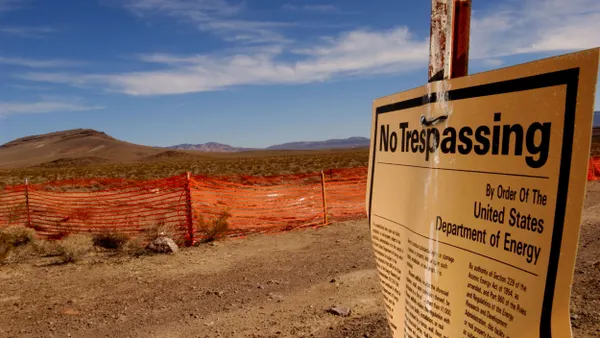
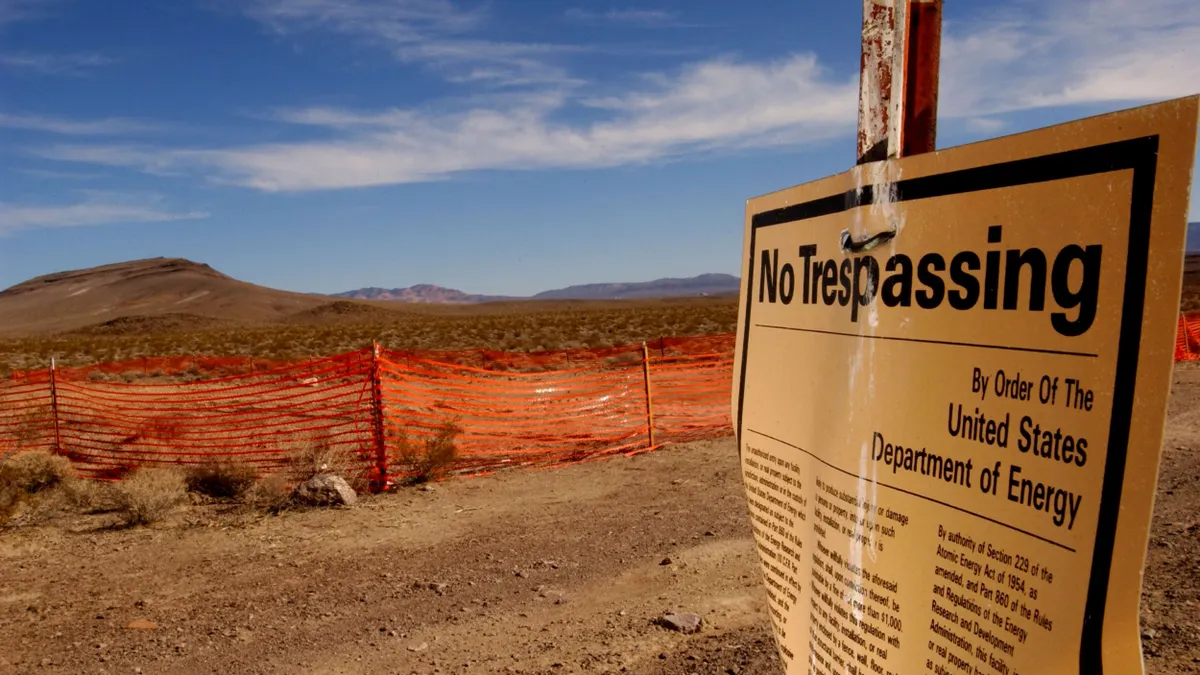
A 1987 plan to build a permanent depository at Yucca Mountain in Nevada sputtered after years of opposition, and Congress eventually defunded the project. Yet Yucca Mountain remains the nation’s only designated permanent nuclear waste disposal site.
The campuses could pave the way for a new permanent geological storage facility while providing a more consolidated and efficient way of managing the waste in the meantime, several sources said.
“We’ve learned we’ve got to have a balanced program that has technical work, yes, but also the social and political license to go with it,” said Lake Barrett, a retired nuclear engineer who oversaw the assessment of the Yucca Mountain site in the 1990s as director of DOE’s Office of Civilian Radioactive Waste Management.
There is a lot to be worked out, from facility specifics to legal questions to financing, he said, noting, “the devil is in the details.”
But there may be more support for rethinking waste storage now than there has been in decades, said James Walker, a nuclear physicist and CEO of Nano Nuclear Energy, an advanced reactor company that has a Nuclear Regulatory Commission permit pending to construct a microreactor in Illinois.
“The challenge after Yucca Mountain was that nobody wanted to house these things,” he said. “But the appetite for nuclear has changed dramatically, because of the demand for it.”
At the same time, concerns about potential dangers have faded since a partial nuclear meltdown at Three Mile Island in 1979 sparked regulatory reforms, and both political parties now express support for expanding nuclear energy amid high electricity demand from data centers, he said.
‘Good business’
Tech companies and startups are behind many of the efforts to build new, advanced reactors and restart older commercial plants, presenting a potentially lucrative opportunity for communities willing to host campuses, stakeholders said.
“If we had a contract with a campus and they were to provide us space for our own spent fuel, I would very happily lease that area or pay the monthly fees that [were] necessary to house it,” said Walker.
With their integration of front-end and back-end facilities, the campuses could help transform how companies and states see waste, added Rian Bahran, chief nuclear officer at Antares, a reactor company that recently tested an advanced nuclear reactor at Idaho National Laboratory.
“What the nuclear lifecycle innovation campus approach does is it tries to move away from a fragmented approach for nuclear waste and sees an opportunity, an asset, instead of a liability,” said Bahran, who previously oversaw advanced reactor research and demos as deputy assistant secretary for nuclear reactors at DOE.
“For a company like ours, when we think about that kind of broad ecosystem, we’re already very excited about the ability to deploy our technology for providing critical, resilient energy for the military and for anybody else who wants it,” he added.
“As the U.S. revs up nuclear to meet increasing electricity demand, the infrastructure needed to support the entire nuclear lifecycle has never been more important,” said Ellen Ginsberg, senior vice president and general counsel at the Nuclear Energy Institute, in a statement.
But getting input from a broad array of stakeholders will be key to the success of any new initiative, she added.
An uncertain timeline
Packaging facilities that states want, such as advanced nuclear reactors, with “back-end” fuel cycle facilities, such as waste storage, makes the latter more acceptable, Barrett said.
But licensing so many different types of facilities with varying timelines poses a challenge, Walker said. Many companies, including his own, have already identified the sites for their enrichment, fabrication or advanced reactor projects, and he said the immediate benefits of the campuses to the industry might not materialize “unless everyone builds there simultaneously together.” While the Trump administration has said it wants to build a campus as soon as next year, the licenses required would take several years to secure, experts said.
According to Barrett, a nuclear waste storage facility would take about three years permit, and a shale or salt disposal facility about 10 years.
One way to expedite construction for the facilities would be to license the entire campus as a whole, instead of each individual facility within it, Walker said.
Cost allocation is also a key question to resolve, several sources said. DOE suggested in its RFI that federal support would be limited and encouraged states to “prioritize private and state capital” in their proposals.
The campus initiative calls for allowing the NRC to change how nuclear waste is classified to make it easier for states to store it, and also for DOE to revive an annual fee on generation to pay for waste disposal.
But NEI’s Ginsberg said that the Nuclear Waste Fund, which has an approximate balance of $51 billion, “should be used for its intended purpose” of paying only for the permanent disposal of used fuel.” Restarting collection of the fee could potentially increase electricity costs, she warned.
Nuclear fuel can be safely stored for 100 years, according to the NRC. The current storage sites are licensed through the 2060s, meaning that the federal government will soon need to either begin the re-licensing process or build new storage facilities, which can take years.
‘A starting point’
Of the five states initially selected, only one — Louisiana — responded to questions about the nuclear campus initiative.
Patrick Courreges, the Louisiana Department of Conservation and Energy’s press secretary, said that the pitch the state submitted was “a starting point for continuing discussion of the kinds of activities the state could see hosting, not a definitive plan or offer.”
He said it is too early to say exactly what economic benefits may come from such an arrangement or what legal or regulatory changes may be required. Currently, the state prohibits storing nuclear waste within its borders. In mid-September, Louisiana asked the DOE for more time to submit a plan, according to local news reports.
Louisiana and Tennessee are the only two selected candidates that have existing commercial nuclear power plants, although Idaho and Utah recently tested advanced microreactors.
How much public pushback state officials could get is also an open question. While several of the states’ recent efforts to boost nuclear power development have received broad support, observers say that accepting more waste, particularly out-of-state waste, may not be as popular.
In Tennessee, widely considered to be a major contender because of its long experience with nuclear infrastructure and waste storage, three state lawmakers sent letters to the governor in August opposing a pledge to accept out-of-state waste as part of its campus concept. Two of the three are Republicans, suggesting that winning broad political support may be a challenge.
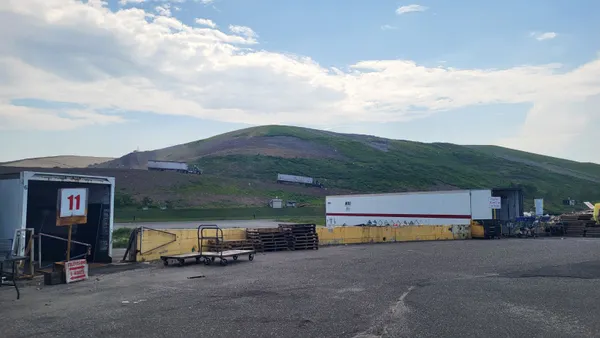
Utah has an existing Class A site owned by private-equity backed EnergySolutions. But it’s unclear whether the state would accept a Class C or greater site. Class A low-level nuclear waste has low concentrations of radioactivity and decays to safe levels in decades, while Class C waste contains higher concentrations and requires deep burial in structures designed to last at least 500 years.
Only one state, Oklahoma, included deep borehole disposal in its nuclear campus concept. Its in-state expertise in drilling wells for oil extraction could give it an edge in hosting such a disposal facility there, Barrett said.
DOE is expected to make a final decision on a host site later this year.