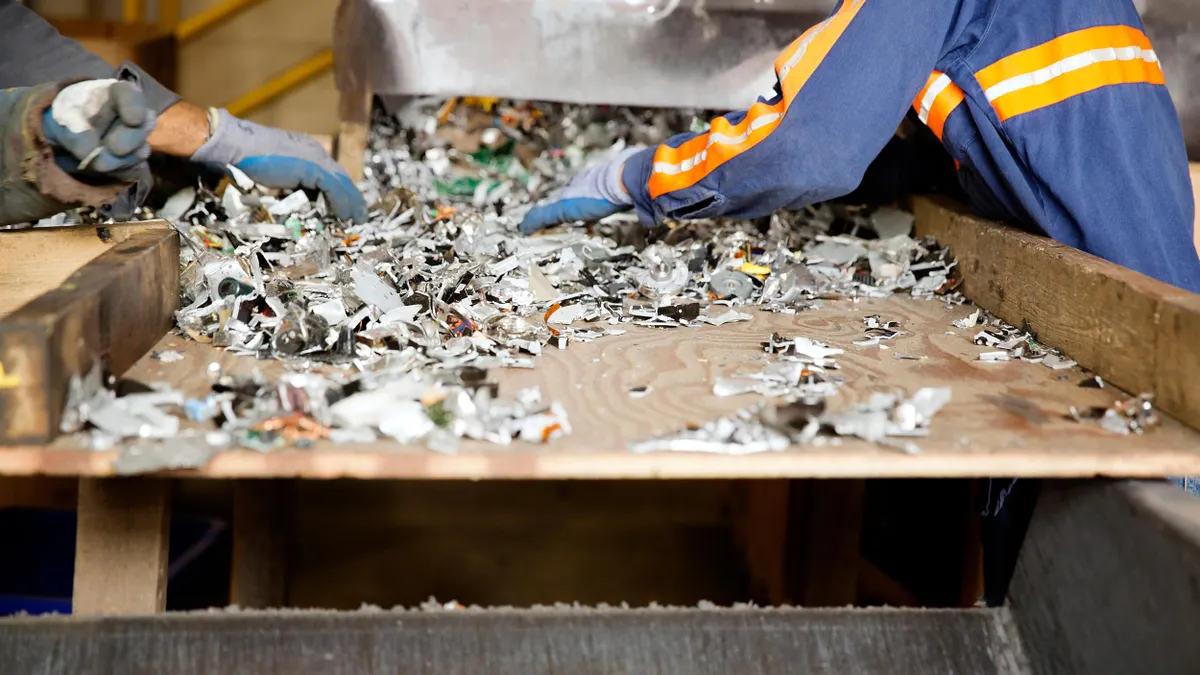
MRF operators must continuously decide if they want to take the leap into accepting new materials as technology adapts, markets shift and brand packaging changes in response to consumer preferences and new policy. That requires balancing the risks and the rewards.
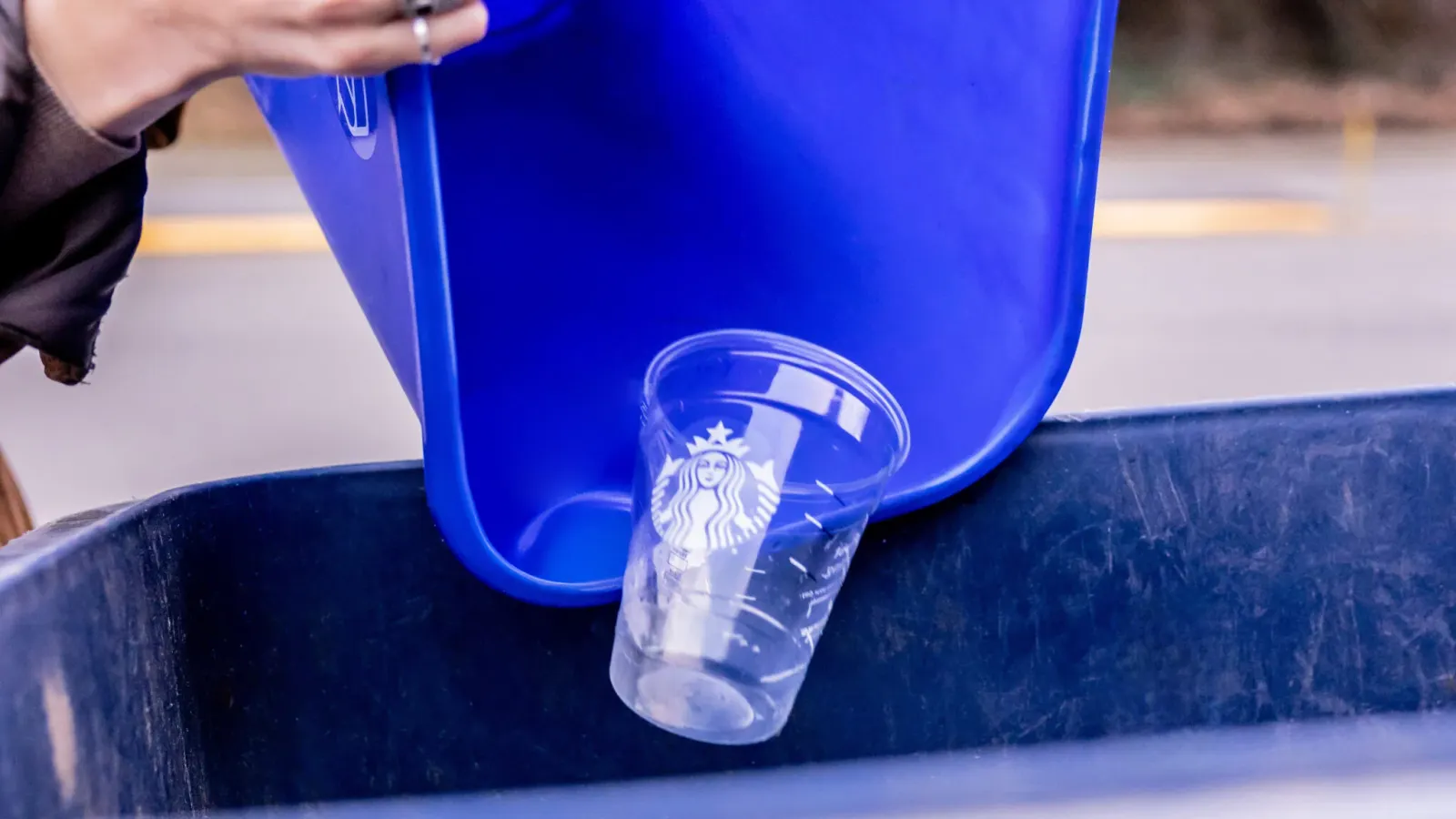
Materials once banned from recycling bins do sometimes make the transition to acceptance. For example, a standard part of recycling education used to be that pizza boxes were not recyclable curbside but that’s changed. In recent years, there’s also been regular debate around expanded polystyrene, cups, small-format plastics, cartons and more.
While some states have uniform recycling acceptance lists, many do not. Now, industry participants and policymakers are striving to make that happen via extended producer responsibility for packaging laws in seven U.S. states.
So how do MRFs typically make decisions about which materials to accept?
The first thing to understand, according to Kate Davenport, chief impact officer at The Recycling Partnership, is that a MRF is “fundamentally a manufacturing facility.”
“They’re getting feedstock in and having to prepare that to sell into a supply chain,” she said. A key difference from most other manufacturers is that MRFs “have no control over the quality, composition or volume of the material you’re getting on a day-to-day basis.”
For something to be truly recyclable “it has to be collectible, sortable and marketable,” said Zan Jones, executive director at Eco-Cycle, a Colorado mission-based recycler. “If all those three things aren’t in place, then something isn't really recyclable.”
Ultimately, the question of adding a material has both a mechanical answer and an economic answer. Commodity values and end markets are in constant flux, and any kind of facility upgrade or alteration that would require downtime must be carefully scheduled. Adding any material to the acceptance list requires research, planning and, sometimes, a leap of faith.
A multi-faceted decision
The process starts with some kind of push to add a material, whether that’s a request from a municipal customer, a new market opportunity the MRF has identified, a change in state policy, or a campaign from a material trade group.
The first thing a MRF operator needs to determine is whether multiple end markets are available for the material in question, Davenport said. It has to be multiple, not just one or two, and stable, affordable ways to move material to those markets must exist.
“You don't want to accept a material and sort it into bales if you have no one to send it to. And there have been examples where MRFs have accepted materials and then markets have disappeared and then they’re left holding the bag,” she said.
Another consideration is whether a MRF is already receiving a material not accepted in a recycling program, such as film and flexible plastics. Then, the MRF must determine how to remove the material from other commodity streams that it may be contaminating or manage that material on its own.
It’s important to get a sense of just how much of that material is in the stream first, said Spence Davenport, a MRF process improvement consultant who’s previously worked for recycling companies and has no relation to Kate Davenport.
“You need a period of transition where you figure out what's the incidental amount that’s already coming here,” he said, and a way to determine if there would be a bump in tonnage if accepted.
MRFs looking to add new materials often do studies to determine volume, added Sadie Gardner, MRF director at Eco-Cycle. However, the cost of managing non-accepted material does not automatically justify accepting it, Kate Davenport said.
Trade groups and brands often work to develop markets for materials, but Jones said “a lot of things have to come together before you take that leap,” even if there is some industry backing.
The Carton Council, for example, has been encouraging MRFs to take both gable-top and aseptic cartons for years. It has been particularly vocal in California about its belief that cartons do meet the recycling acceptance thresholds under labeling law SB 343 and EPR law SB 54.
“It's still not the strongest market, but they put a lot of effort into trying to stand that up,” Jones said. Gardner said Eco-Cycle takes aseptic cartons even though “they are a very low scale in terms of revenue so they do not cover their cost of processing — but because we’re mission based, we’re investing in doing this.”
Kate Davenport said while brands have done great work finding markets, the critical next question is “do the economics add up for the MRF to actually sort that into the bale for the quality it needs to be and the volume it needs to justify it?”
At most MRFs, space is at a premium and there’s no room for a material that doesn’t move on a daily basis. After that comes the cost to sort the material, including ongoing operating costs for energy and labor, as well as any capital improvements that might be needed to sort to the specifications the markets want.
“Upgrading equipment is not just a pure capital cost consideration,” said Kate Davenport, who previously worked at Minnesota-based Eureka Recycling. It’s rare that a facility could simply slot in a new machine. Adding new equipment usually requires completely reconfiguring the facility to expand the conveyor line, build a new bunker, add air compressors and make other necessary flow changes.
Spence Davenport said in his eyes, that’s where the decision process starts: What equipment does a MRF already have and what kind of space does it have to work with?
“For a lot of those small facilities it becomes really hard to justify,” he said.
The rise of AI and robotics also isn’t necessarily the answer because of the expense to purchase and power the equipment. And installing any kind of new equipment means downtime.
“MRFs are fundamentally providing a daily service to a municipality, that’s 365 days a year,” said Kate Davenport. “It's very hard to turn the system off.”
Contract considerations
Most commodities are part of global markets, but local pricing shifts also play a role in MRF acceptance decisions.
Spence Davenport said MRFs’ material decisions call for “a region-by-region response.”
For example, he’s been working with a client in the mid-Atlantic deciding whether to pull polypropylene into its own bale. In some markets, he would advise the client to create that PP-specific bale, but in that region there’s more demand for a Nos. 3-7 bale.
For Eco-Cycle, Gardner said the end markets have to be not only reliable, but responsible.
“Is that circular? Is that the end of its life? That can play a role into why something would be acceptable or not,” she said.
Even when markets have staying power, the commodity value of each material can ebb and flow drastically month to month. MRFs often have contracts with municipalities or subscription haulers that include processing fees and other buffers for the market swings, but that’s not always enough to cover the cost of adding another material.
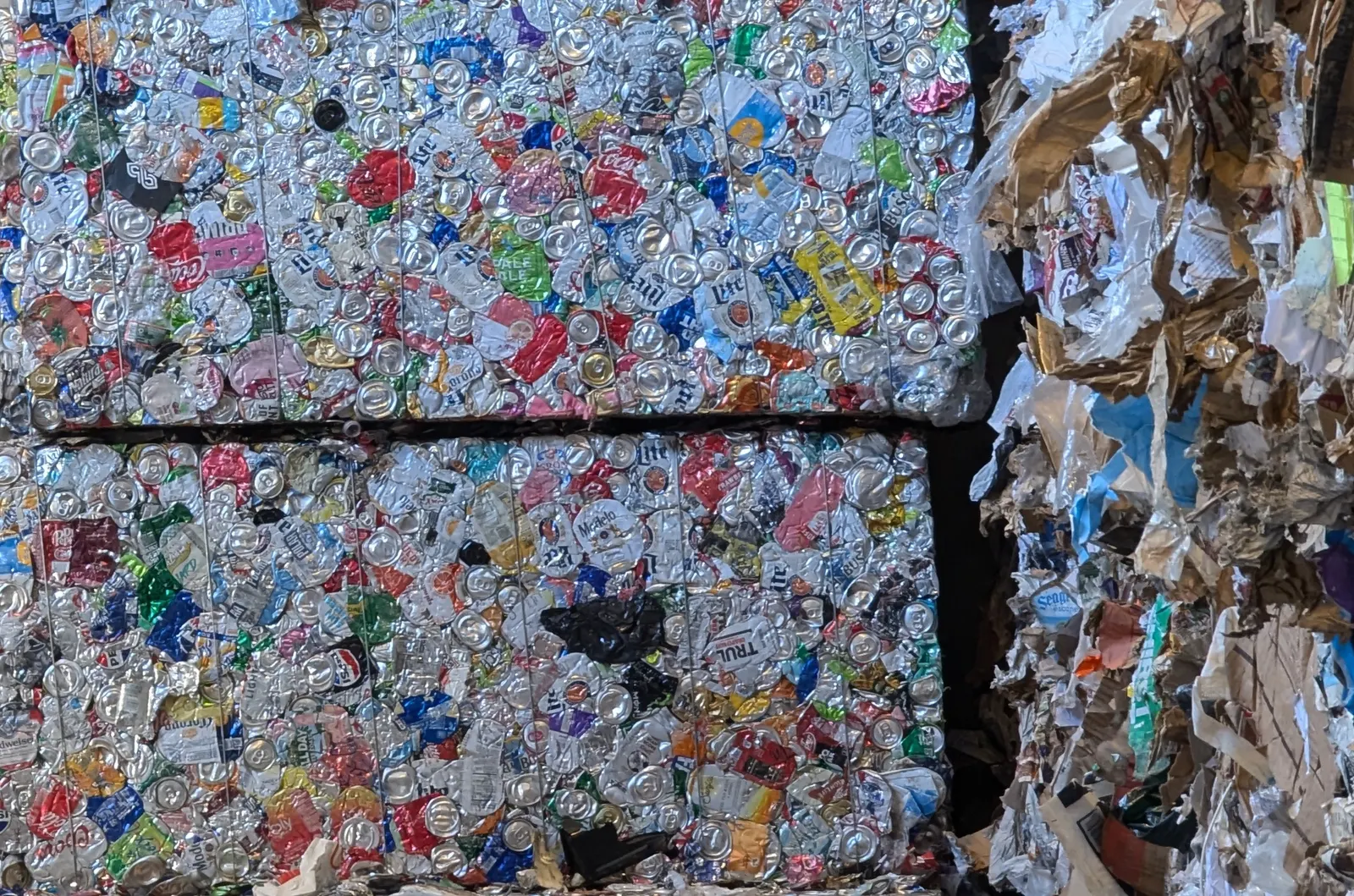
Because commodity values are so volatile, MRFs use a basket value perspective, Kate Davenport said, where they calculate what percent of each grade of material is coming in. Then they take the commodity value for that month or day and multiply the percentage of material coming in by its commodity value.
The cost of sending residuals to landfill or to an incinerator is also typically factored into that basket value, along with transportation costs, she said. While that provides a more holistic pricing average, it’s by no means stable, she added, and can still vary significantly between regions.
Processing contracts help even out those fluctuations, and many also include a revenue-share agreement with the customer when commodity prices are high.
While some have questioned whether MRF operators may choose to accept an item with limited end markets to increase their profits from disposal, operators say the way disposal fees factor in is far more complicated.
Whether or not residual tip fees are included depends on each contract, and often hinges on factors such as if the local government owns landfills and incinerators or if the MRF operator does. Counties tend to have set tip fees, while privately owned landfills may have more fluid pricing. All of that complicates the math on disposal versus end market.
“Every MRF looks at it a little differently and manages it a little bit differently. That's your special sauce as a MRF,” Kate Davenport said.
The policy potential
Spence Davenport said EPR is “what the system really needs,” but many MRF operators are waiting to see just how the funding, updates and end market developments play out. They’re hesitant to make big changes for what they consider fringe materials.
Larger companies are in a better position to make early changes, he added, pointing to WM’s new Portland, Oregon facility.
California operators have generally taken a different approach, he added. They know what they need to do, but are “waiting for that plan to get some subsidy or reimbursement for certain materials.”
There’s also a tangle of recyclability laws in California, and active lawsuits against those laws, that may make operators even more cautious.
However, California seems primed to develop a robust system of secondary sortation facilities under EPR, and Maryland’s largely publicly owned MRFs may see rapid updates, said Spence Davenport. “The economics are pretty wonderful for the player that's ready to take the tons.”
Aside from all the potential funding for MRFs, Kate Davenport sees another advantage with EPR programs. MRFs acutely feel changing consumer tastes and producer packaging trends, but “it’s not like producers were calling MRFs and saying ‘hey, by the way, we've changed our packaging and you’re going to get a lot more of this and a lot less of that,’” she said.
Now, EPR can create “a communication system that was never there before” for producers and MRF operators.
With that dialogue, MRFs can get better at predicting how the inbound material stream will change and prepare for it. They can also give feedback to packaging producers about how their materials are reacting to sorting equipment.
For example, Closed Loop Partners has worked with MRF operators on a small-format rigid plastics trial, said Beatrice Miñana, who heads the group’s communications. The goal is to “innovate around creating pathways to potentially accept materials that haven’t before been accepted.”
In Jones’ view, part of the policy conversation needs to center on transitioning to more sustainable materials overall. Policy can bolster that goal through ecomodulation, Jones said, but MRF operators need to be a strong voice for change.
“If something shouldn’t be made in the first place, if it's something you spend a lot of energy trying to recycle when it could be transitioned to reuse or refill or made of some other material that already exists,” Jones said. “Do that instead.”
This story first appeared in the Waste Dive: Recycling newsletter. Sign up for the weekly emails here.